CBAM vs. FTA: India’s balancing act to tackle climate costs and trade deals with EU
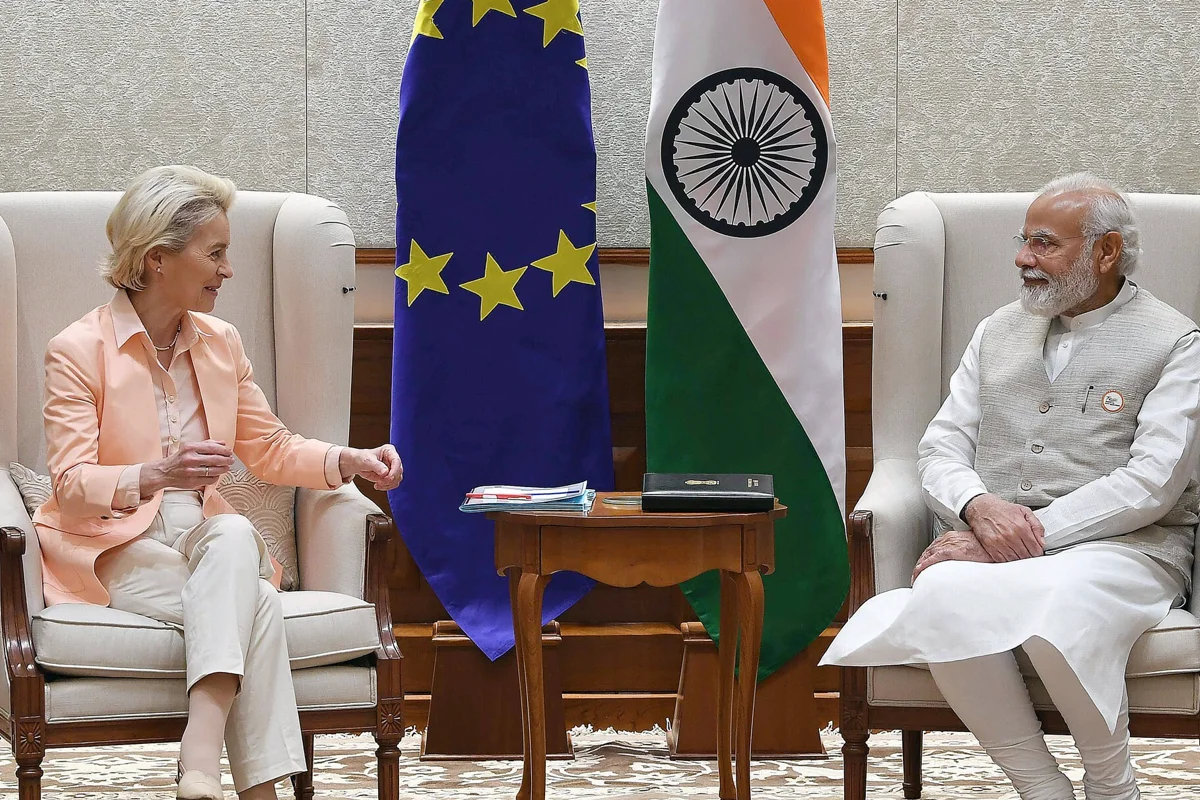
India is walking a razor’s edge. On one side, the promise of a Free Trade Agreement (FTA) with the European Union (EU) — a gateway to stronger economic ties. On the other, the looming shadow of the Carbon Border Adjustment Mechanism (CBAM) — the EU’s carbon tariff that threatens to squeeze India’s exports of steel, aluminium, and cement.
While several countries, including China, South Africa, Russia and Brazil, have taken the EU to the World Trade Organisation regarding CBAM, rather commonly known as ‘carbon tax’, India is yet to officially take any step mostly as both the parties are on the path of negotiation for trade tariff exemption.
However, India’s Finance Minister, Nirmala Sitharaman, and Commerce and Industry Minister, Piyush Goyal, have repeatedly referred to the carbon tax as an ‘unfair’ measure. They argue that it violates the principle of ‘common but differentiated responsibilities’ (CBDR) outlined in multilateral climate negotiations. This principle specifies that while all countries share the responsibility to combat climate change, this responsibility is not equal and varies based on each country’s level of economic development.
Unlock full access – sign up for FREE.
Key benefits
Vode Lighting, the first North American brand to integrate Hydro CIRCAL for sustainable innovation
Next articleTransforming the aluminium industry: How innovation, automation, and sustainability are shaping the future
Grow with
AL Circle