Kirsten Hillman, Canada's ambassador to the United States, expressed confidence that the two countries could successfully reach a trade agreement within the 30-day deadline set during last week's G7 summit in Kananaskis, Alberta. This was announced right after a disappointing outcome at the G7 summit, where Canada had signalled to take stricter action against the US.
Hillman stated it is "too soon to tell" whether all US tariffs on Canadian goods will be lifted and declined to clarify whether the federal government would accept the continuation of any tariffs. She emphasised that Canada is advocating for "open trade and stability" to support Canadian workers and businesses.
"We can't do anything to force the US side to come to a deal, but we do think we have a good path forward if we're able to take it. These are things that will work themselves out in the next number of weeks," added Kirsten Hillman. Sharing the same positive attitude, Prime Minister Mike Carney had also expressed somewhat positive sentiment regarding the 30-deadline set by Canada.
Since March 4, 2025, Canada imposed retaliatory 25 per cent tariffs on about USD 60 billion worth of US goods ranging from metals to consumer products in response to earlier US tariff actions. On June 19, Canada officially warned it would increase tariffs further on US steel and aluminium as early as July 21 unless significant progress is made in bilateral trade talks.
Anticipated plan to striking a deal ahead
Canada's talks with the US are covering a range of issues, including border security, and Arctic defence, though the primary focus for the leaders remains tariffs. Hillman noted that it's still uncertain whether defence and trade will be addressed in a single agreement expected within the stipulated timeline. She also remarked that President Trump has stated "many times" his preference for using tariffs.
A total of three meetings were held with her US counterparts since the discussion at the summit. The first took place immediately after the leaders' bilateral discussion, the second occurred the following day with US trade Representative Jayme Greer, and the third was held on Friday, joined by Intergovernmental Affairs Minister Dominic LeBlanc, who also oversees Canada-US trade relations.
The level of Canada's counter-tariffs on steel will be adjusted (either increased or decreased) based on progress in trade talks by the July 21 deadline in response to the US imposing 50 per cent tariffs on Canadian metals. Industry Minister Mélanie Joly told CBC Power & Politics host David Cochrane that Canada is taking "unprecedented measures" in the free-trade era to defend its steel and aluminium industries.
Brief about the 2025 tariff imposition
Canada initially imposed 25 per cent tariffs on US goods on March 4, 2025, targeting approximately USD 30 billion worth of imports, including commodities such as orange juice, peanut butter, wine, spirits, beer, coffee, appliances, apparel, footwear, motorcycles, cosmetics, and select paper items. This was followed by a second round of reciprocal tariffs on March 13, covering another USD 29.8 billion in goods, including USD 3 billion worth of aluminium products.
In April, Canada further escalated the trade dispute by introducing 25 per cent tariffs on non-CUSMA-compliant vehicles imported from the US as well as on the non-Canadian and non-Mexican content of CUSMA-compliant vehicles. However, before implementing additional tariff hikes, both Canada and the United States have agreed to reopen trade negotiations. While there are differences in opinion between President Trump and Prime Minister Carney, Carney has described them as not insurmountable, and both countries have committed to working toward a resolution within the next 30 days.
The start of this problem can be traced back to the incident when Ontario Premier Doug Ford warned of a possible 25 per cent surcharge on electricity exports to US states, including Michigan, New York, and Minnesota.
Trading scenario between US and Canada
As per trading economics, in 2024, Canada exported goods worth USD 435.17 billion to the United States, accounting for 76.4 per cent of its total exports. A large share of these exports comprised energy products, led by fuels and related materials valued at USD 131 billion. Other major export categories included manufactured goods, as well as machinery and transport equipment.
Out of this, Canada exported around 3.36 million tonnes of aluminium goods to the US between January to December 2024. During the same calendar year, Canada exported aluminium products worth USD 11.61 billion to the United States, according to data from Trading Economics and USImportData.com. These exports included a range of aluminium items such as unwrought aluminium, aluminium scrap, and aluminium structures. As a key supplier, Canada accounted for a significant share of total US aluminium imports.
What will happen if they reach a trade deal?
If the Canadian ambassador’s optimism turns into reality and Canada reaches a trade deal with the Trump-ruled US, it would help stabilise a critical cross-border economic relationship and prevent a costly tariff escalation to 25 per cent if no substantive deal is reached within the said time. Such an agreement would likely involve the US softening its recently doubled tariffs on Canadian metals, while Canada would, in turn refrain from imposing or increasing its retaliatory duties. This resolution would ease pressure on various phases like –
Canada’s metals industry directly supports over 23,000 jobs in steel and more than 10,000 in primary aluminium, with indirect employment pushing the total well beyond 100,000. The economic impact is both significant and immediate. The potential trade deal will help improve the demand across North America, which was previously under serious threat following the newly imposed tariffs. This will also help both the upstream smelters and downstream manufacturers.
Previously, Alcoa’s prediction of probable job loss in Canada was turned true, resulting in two Canadian companies from the aluminium and steel sectors announcing layoffs. The trade talks will also help to reduce further layoffs and create a positive job atmosphere in the country.
But what if the trade talks do not reach a positive outcome?
However in case the trade talks between Canada and the US does not reach a positive outcome, Canada will stand on its decision to impose stricter retaliatory measures like -
- Increasing the tariff value by 25 per cent to match America’s 50 per cent rates
- Starting June 30, all federal infrastructure and government contracts will require the use of Canadian-made steel and aluminium or materials from “reliable” free-trade partners including restrictive bidding rules that exclude U.S. firms
- Canada will set tariff-rate quotas allowing only up to 100 per cent of 2024 import levels from non‑FTA nations, to prevent trade diversion and dumping
- Aimed at supporting Canada’s metals sector, Ottawa will prioritize Canadian steel and aluminium in major public projects such as defence, energy infrastructure, housing, and automotive supply chains
Concurrently, US will take these measures -
- 25 per cent tariff (March 12, 2025) under Section 232, applied to Canadian metals. Additional 25 per cent IEEPA tariff could double this, reaching 50 per cent on content or whole articles
- 25 per cent tariff on passenger vehicles and light trucks not meeting U.S. origin requirements, effective April 3; components compliant with USMCA remain exempt
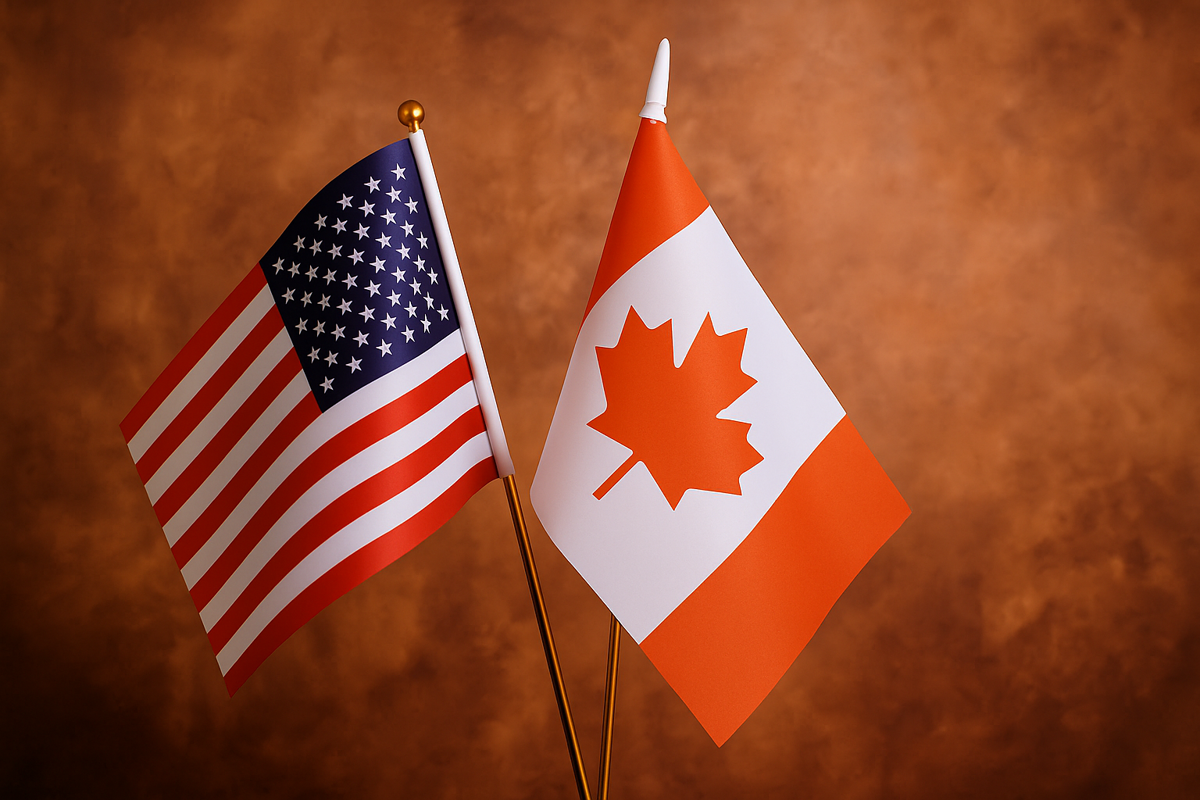
Image Source: AI Generated













_md.webp)
_md.webp)







