The Swiss government is actively backing key players as they navigate rising energy costs, focusing on boosting domestic production and promoting energy-efficient, recycled aluminium solutions. Even with challenges like skyrocketing electricity prices and fluctuating exports, Switzerland’s aluminium sector is proving its resilience, innovation and strong commitment to achieving its green transition goals.
Switzerland's powering up its aluminium game
Switzerland is putting a spotlight on the aluminium industry, recognising the metal's incredible versatility, sustainability and its vital role in various high-value sectors. Aluminium is prized for its lightweight nature, resistance to corrosion and its impressive recyclability, making it a key player in energy savings and the country's green transition goals. By honing in on aluminium, the Swiss government is looking to boost domestic production, improve competitiveness and gain strategic advantages in areas that are closely tied to innovation and energy efficiency.
A look at Swiss downstream and primary aluminium industry
Some of the Swiss key aluminium downstream players
- Angenstein AG: Specialised in aluminium manufacturing and processing for various industrial applications.
- Hydro Aluminium Walzprodukte AG: Produces aluminium rolled products for automotive, packaging, and industrial sectors.
- Johann Renfer GmbH: Provides aluminium extrusion and fabrication services for structural and architectural uses.
- GF Casting Solutions AG: Manufactures high-precision aluminium castings for automotive, industrial, and energy sectors.
- Schubarth + Co AG: Engaged in aluminium trading and distribution, providing materials for manufacturing and construction.
Apart from these, the country is home to several prominent aluminium facilities, including Dadco, recognised for supplying alumina-based products. Hydro Aluminium International SA manages sales offices for bauxite and alumina. Constellium Valais SA runs four production facilities in the Valais region, including billet casting in Chippis, slab casting in Steg and extrusion and plate shops in Sierre. International Innovation Technology Holding Trading and Services SA (IITH) with a focus on developing, executing and managing productive assets in the aluminium industry.
Current challenges of the Swiss aluminium industry
The Swiss aluminium industry is currently facing a variety of challenges, such as soaring energy costs and pressures on local production. To tackle these issues, the government has rolled out targeted public support for key companies, which includes a four-year exemption from certain electricity grid taxes.
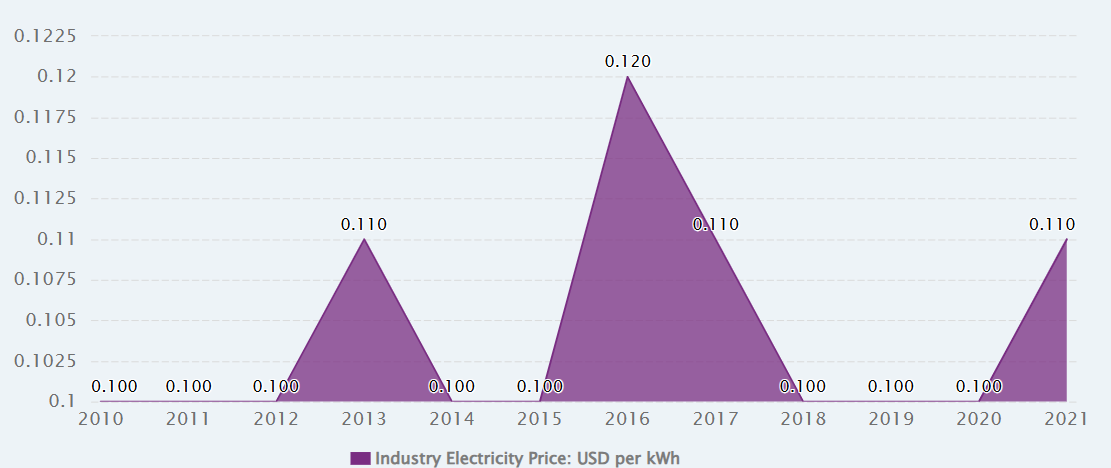
In 2023-2025, the average business electricity rate in Switzerland was approximately USD 0.285 per kWh. However, in 2021, the same was recorded to be approximately USD 0.110 per kWh, indicating an increase of almost 159 per cent in the overall energy cost.
This move aims to safeguard production and protect essential jobs. Experts point out that this intervention highlights the importance of aluminium as a strategic asset, not just for its industrial uses but also for its sustainability potential in sectors like packaging and automotive. In these areas, recycled aluminium boosts both efficiency and environmental performance.
In a bid to bolster energy-heavy manufacturing, the Swiss government has rolled out a multi-year subsidy program that will kick in from January 2025 and run through 2028. This initiative is designed to support the country’s domestic aluminium and steel industries. Under this plan, producers will benefit from lower grid-usage fees, starting with a 50 per cent reduction in the first year, gradually decreasing to a 12.5 per cent cut by the fourth year. The goal of this intervention is to protect local production, maintain jobs and boost competitiveness amid rising electricity costs and fluctuating raw material prices.
Switzerland's exports of aluminium
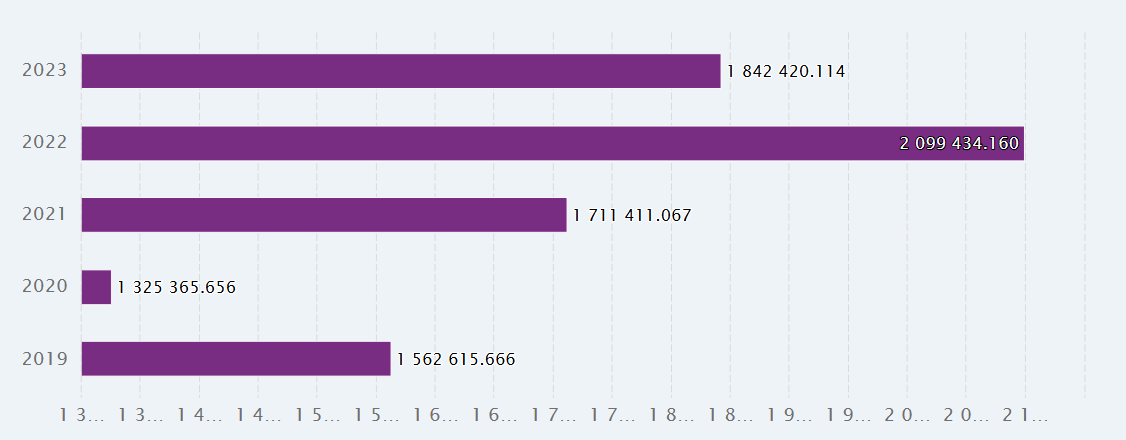
In 2023, Switzerland's aluminium exports reached a total of USD 1.84 million, reflecting a 12.24 per cent drop from the previous year, when they were at USD 2.01 million. The highest exports were witnessed in 2022 when the figure was USD 2.16 billion, showing a 22.7 per cent increase in exports compared to 2021.
The change in the energy cost could be a significant reason behind the dip in Swiss exports of aluminium globally.
Switzerland’s exports of aluminium bar, rod and profile
In 2023, Germany led as the top destination for Switzerland’s exports of aluminium bars, rods and profiles, making up 28 per cent of the total exports, which were valued at a whopping USD 67 million. France came in second with an 11.5 per cent share, translating to USD 27 million, while Italy was right on its heels with 11.3 per cent or USD 26 million.
Spain accounted for 10.2 per cent of the exports, worth USD 23 million, and Hungary added 8 per cent with USD 18.7 million. Austria and the Czech Republic contributed 7.61 per cent (USD 17.8 million) and 6.6 per cent (USD 15.5 million), respectively. Meanwhile, Poland held a 3.18 per cent share valued at USD 7.48 million, followed by the USA with 2.06 per cent (USD 4.85 million) and Serbia at 1.3 per cent (USD 3.07 million).
Switzerland's imports of aluminium
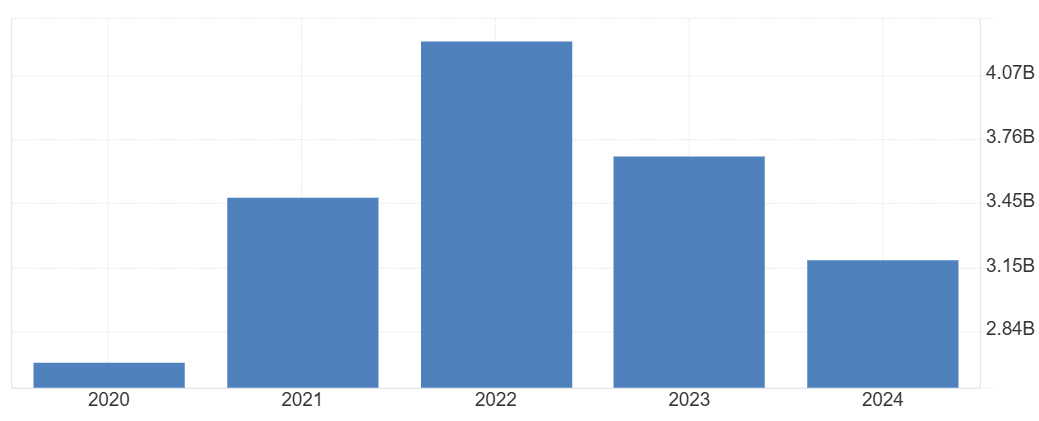
In 2024, Switzerland's total aluminium import globally stood at USD 3.19 billion, which represents a dip of 15.4 per cent from the year 2023, where it was recorded at USD 3.68 billion. 2024 mirrored the trend that occurred in 2023 when the total aluminium imports by Switzerland fell by 13.2 per cent, which in 2022 was at USD 4.24 billion, marking the highest imports in the last five years.
Switzerland’s imports of aluminium bar, rod and profile
In 2023, Germany exported aluminium bars, rods and profiles, marking a 48 per cent of the total imports by Switzerland, which amounted to USD 218 million. Italy came in second with an 11.9 per cent share, translating to USD 54 million, while Austria contributed 9.94 per cent, or USD 45 million.
Turkey provided 6.98 per cent of the imports, valued at USD 31 million, and China accounted for 3.75 per cent, totalling USD 17 million. The Netherlands and Belgium added 2.2 per cent (USD 10 million) and 2.13 per cent (USD 9.67 million), respectively, with France at 2.07 per cent (USD 9.4 million).
AL's contribution to the Swiss GDP
As per the data extracted from Wikipedia, Switzerland's GDP in 2025 is estimated to be USD 947.13 billion. According to an external source, the total contribution of Switzerland's aluminium market sales revenue in 2025 is estimated to be USD 1.706 billion. This marks the aluminium industry's total contribution to be 0.18 per cent.
Switzerland's UBC collection
Switzerland has really set the bar high when it comes to recycling aluminium beverage cans, boasting impressive recovery rates of 90 per cent. Switzerland's success can be largely credited to its different approach, with a voluntary prepaid recycling charge that helps fund its collection efforts.
This figure surpasses the global average of 69.1 per cent and puts Switzerland in the same league as top performers like Sweden and Germany. This remarkable recovery rate not only showcases the effectiveness of Switzerland's recycling system but also reflects the country's dedication to sustainable practices, serving as an inspiring example for other markets looking to improve their circular economy in the aluminium packaging industry.
Swiss imports of aluminium waste and scrap in 2022 were valued at USD 190.3 thousand, which represented a rise of 17 per cent from the previous year, where the import value was USD 157.9 thousand. The surge in imports could be a result of high domestic demand as well as the increased energy cost.
On the other hand, Swiss exports of aluminium waste and scrap in 2023 were valued at USD 258.3 thousand, which represented a decline of 9.4 per cent from the previous year, where the import value was USD 282.6 thousand. The decrease in exports could also indicate the rising domestic demand.
To know more about the global primary aluminium industry 2025 outlook, read “Global Aluminium Industry Outlook 2025”












_md.webp)