Bulgaria's aluminium cans import during 2019-21 illustrates significant growth; 2.5% drop estimated for 2022

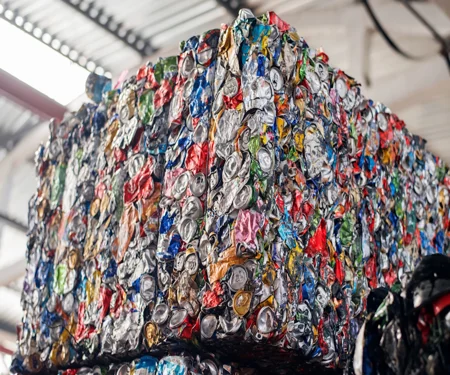
The most significant reason for the rapid growth of aluminium cans in the market is due to their extraordinary features of being strong, light in weight, highly resistant to corrosion, giving excellent barriers against air, light, & moisture and super-efficient to ship and store. Furthermore, beverage cans made of aluminium are infinitely recyclable. Aluminium cans chill quickly, provide a superior metal canvas for 360-degree labelling and perhaps most importantly preserve flavour and freshness.
The Balkan nation, Bulgaria has experienced a significant transformation over the past three decades, as it has progressed from a highly centralized, planned economy to an open, market-based, upper-middle-income economy securely anchored in the European Union (EU). As per the census of 2022, the nation has a population of 6.84 million.
Bulgaria imported 4191 tonnes of aluminium cans during 2019-21, attracting revenue expenditure of $19.12 million. In 2019, the Bulgarian import of aluminium cans was documented at 1013 tonnes, accounting expenditure of around $5.28 million, whereas in 2020, the import saw growth by 48.76%, as the import volume rose 1507 tonnes and the expenditure rose to $6.82.
_0_0.jpg)
In 2021, Bulgaria’s import of aluminium cans saw further growth of 10.88%, as the import volume scaled up to 1671 tonnes and the expenditure also grew to $7.02.
The import for 2022 is analysed with a marginal downfall of 2.57%, as the import volume is anticipated to drop at 1628 tonnes and the expenditure to stand at $4.72 million.

The major trading destinations for Bulgaria’s import of aluminium cans are Czech Rep., Austria, Croatia, France, Germany, India, Romania, Slovakia, Turkey, etc.
Vita Coco launches its first packaged coconut juice in sustainable aluminium cans
Next articleUS Department of Commerce initiates nationwide anti-circumvention enquiry on aluminium foil imports from China
Grow with
AL Circle