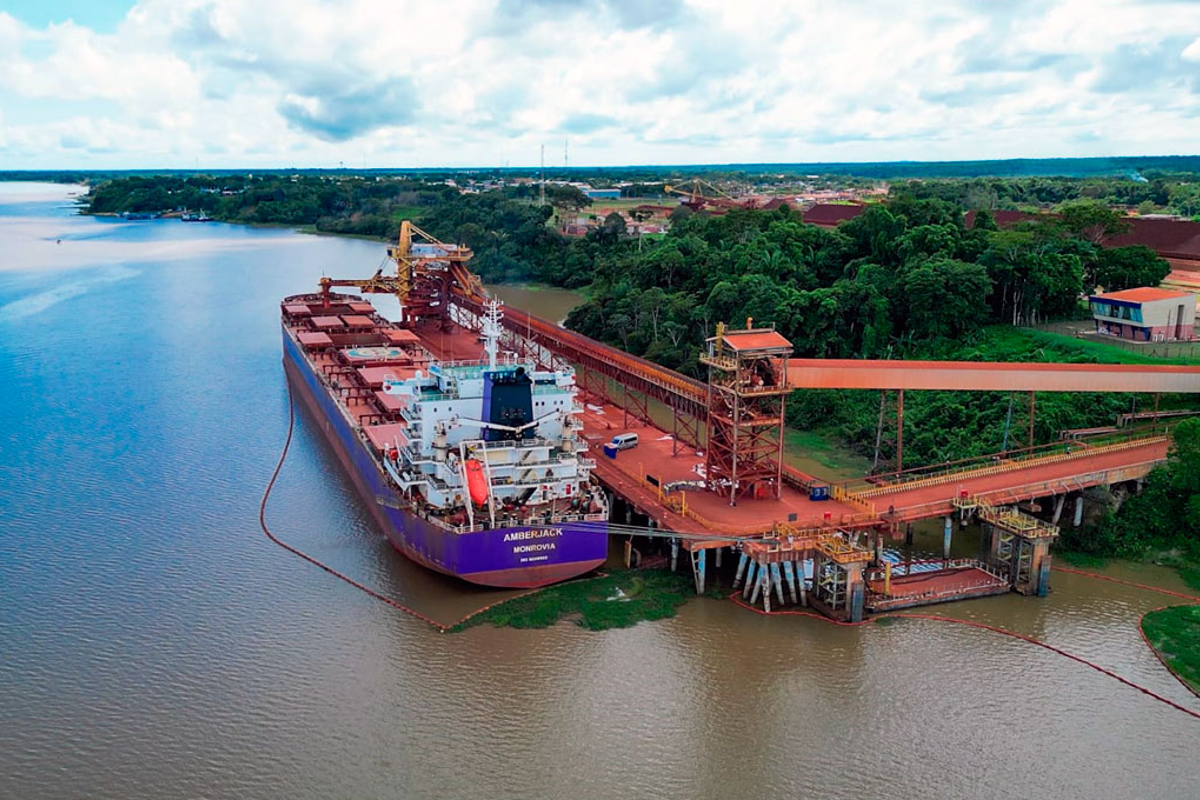
Alcoa declared force majeure on bauxite shipments from its Juruti mine in Brazil on November 7, 2024, due to a vessel stranded in the channel near the port obstructing transportation. This disruption poses significant challenges for global alumina supplies, which are already under pressure due to constrained production.
However, the statement did not provide an estimate for when shipments might resume. According to a trader source, the vessel has been stranded near the Juruti port since late October, and bauxite shipments have been halted for nearly or more than 10 days.
According to industry experts, the Alumar alumina refinery is currently grappling with significant challenges due to shortages of bauxite supply from the Juruti mine in Brazil. The bauxite source is vital to Alumar’s operations, and the supply disruptions could severely affect its ability to sustain consistent production. Alumar alumina refinery receives bauxite from Juruti Mines and MRN.
The Alumar alumina refinery is a joint venture owned by Rio Tinto (10 per cent), with the remaining 90 per cent owned by South32 and Alcoa. Alumar's production has doubled since 2009, and today, it produces approximately 3.8 million tonnes of alumina annually.
The Brazilian government website states that more than 80 per cent of bauxite in the country is extracted in Serra do Oriximiná in the state of Pará, which has the highest mineral concentration in Brazil, followed by Minas Gerais.
In September 2024, a leading Brazilian media outlet reported that Alcoa is preparing to launch its short-sea shipping operation in Brazil, with an investment of $200 million (around R$1.1 billion). This vertically integrated initiative is slated to commence between late 2024 and the first quarter of 2025, as stated by Mateus Tiraboschi, Alcoa’s global chief procurement and logistics officer. The operation aims to transport approximately 6 million tonnes of bauxite annually from the Juruti mine in Pará to the Alumar refinery in Maranhão, which is located about 1,500 kilometres away. While third-party providers currently service this route, Alcoa’s new operation will bring the process in-house. The four-day journey follows a path along part of the Amazon River, reaching the coast before continuing to São Luís, the capital of Maranhão state.
Recurring issues related to low river levels are exacerbating the situation at Juruti and Alumar, highlighting a pattern of cyclical logistical challenges that have also impacted MRN operations in the past.
Even two months back, Brazil reported that the Amazon drought drastically lowered water levels, meaning that bauxite ships at ports like Trombetas and Juruti couldn’t carry as much cargo as usual. With the shallow river, these ships must sail lighter to avoid getting stuck, which slows down bauxite transport and raises costs. This is incredibly challenging for companies like MRN and Alcoa, which depend on these routes to move bauxite from the mines in the Amazon to refineries and export locations.
The government has started emergency dredging to deepen parts of the river, but until water levels rise, bauxite shipments will be limited, which could impact supply for downstream aluminium production.
Although the immediate obstruction might be cleared in the near term, sustained low water levels are expected to hinder berthing and loading activities, posing a continued risk to supply chains.
Meanwhile, Hydro and Vale's strategic bauxite pipeline from Paragominas to Alunorte exemplifies a forward-thinking approach to securing reliable feedstock supplies.
Image credit: https://www.portosenavios.com.br/













_md.webp)