Cultivating restorative microbial activity to remediate metal-impacted mine wastes has retained some successes, mainly using man-made wetlands or passive bioreactors to generate (microbially mediated) anoxic and sulfidic conditions.
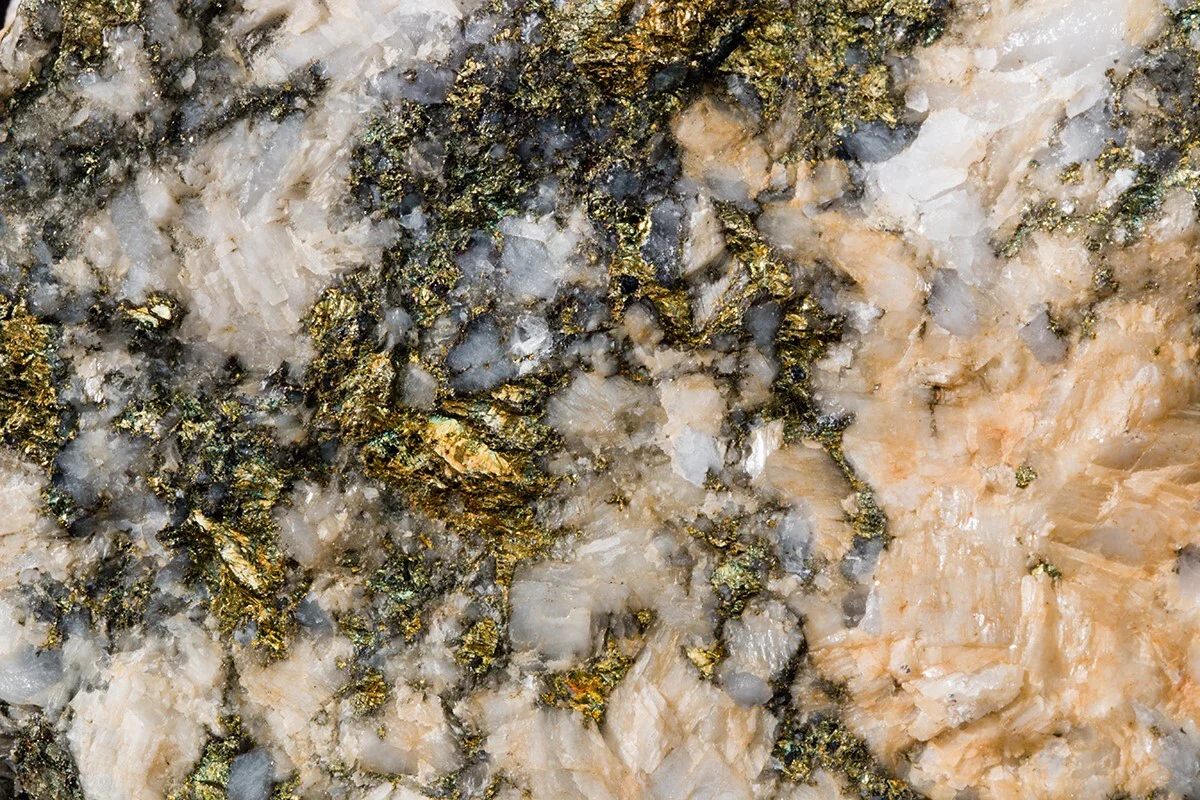
Image Source: American Geosciences Institute
Recently, researcher trio Dr Rosie Gillane, Fernanda Soto, and Luke Webster from the University of Queensland have come up with a method of detoxifying red mud, waste material yielded by the tonne at bauxite mining sites across Australia, a report shares.
"You would not usually associate bacteria or microorganisms with mine rehabilitation," says Luke, whose PhD thesis focuses on 'synbio' mining techniques like the one he describes.
The process is known as biohydrometallurgy, in which particular proteins can be used to extract critical metals from red mud and then used over in sustainable technologies.
"The process is greener but not yet competitive for the industry to adopt. If we can show that it can be done on an industrial scale, it is a huge win for mining companies and sustainability," Luke added.
Popularly, mine drainage and even waste are regaled with alkali to increase pH and precipitate metals. However, this method has the drawback that it has to be continually replicated to be fully effective.
The science of Biohydrometallurgy is not a new study path. However, Rosie, Luke, and Fernanda at the Australian Institute for Bioengineering and Nanotechnology (AIBN) have embraced it as a common practice to curb pollution and channelise value streams for mineral pioneers.
The process revolves around processing red mud from bauxite mining activities to recover concealed stashes of cobalt, nickel, and gallium, among other rare earth materials that are essential for electric vehicles and clean energy.
Rosie's radical study on extremophile microbes from mining territories unlocks new biomining possibilities. By isolating and cultivating these specialised organisms, she is paving the way for more streamlined metal recovery and environmental remediation practices.
Fernanda, at the same time, is focused on engineering fungal strains adapted to the extreme states of red mud to build organic acids that capably secure and separate critical elements, with a future of forming contemporary metal extraction techniques.
Dr Denys Villa Gomez from AIBN is leading the team's research. He is an advanced Queensland research fellow and associate investigator at the ARC Centre of Excellence in Synthetic Biology. He also directs synbio mining projects as the principal investigator at the ARC Training Centre in Critical Resources for the Future.
Using the equipment and expertise at the AIBN, the School of Civil Engineering, and the newly established UQ Biosustainability Hub, Denys says her team is working with industry to embed biomining as a sustainable and economically feasible waste treatment alternative.
He has stated, "Biomining has helped us recover a substantial portion of the world's copper and gold. With synthetic biology, we can engineer specific microbes that suit these extreme environments and allow us to carry out biomining processes at a larger scale. However, the mine environment does limit how efficiently we can do this."
The majority of the work done by Denys, Rosie, Luke, Fernanda, and the broader UQ Biosustainability Hub squad concentrates on harnessing biological approaches to produce more sustainable fuels, chemicals, ingredients, and other biomaterials.
The 'BioHub'—the first of its kind in Australia—aims to provide a one-stop store for industry desiring to partner with AIBN research teams to devise carbon-neutral and economically viable products.
Mining Rio Tinto is among the industry players already working with the BioHub. It has also come together with Denys on a three-year Advance Queensland project to harness synthetic biology to retrieve critical minerals.
For every 1 tonne of alumina production, 1.25 tonnes of red mud is yielded. Metal contamination from mining induces severe environmental consequences and harms human health. Microorganisms that colonise mine wastes and microbial activity can boost extraction of metals from mine wastes and sequester metals from contaminated slurries. Microbes have a range of resistance mechanisms to deal with metal toxicity and can also indirectly change metal speciation. These microbial functions impact the environmental fate of metals, transmitting them between the terrestrial and aquatic environments and, consequently, their mobility and probability of causing adverse impacts on planetary health.
According to AL Circle's industry-focused report, "A Comprehensive Analysis of Bauxite Residue - Red Mud", the multifaceted nature of red mud demands an immediate and thorough understanding to mitigate its adverse effects and harness its potential benefits. Red mud contains unreacted minerals, metal oxides, and caustic soda, making it a hazardous material if not managed properly. Its disposal has traditionally involved storage in large containment areas, which poses risks such as leakage, dam failure, and contamination of soil and water resources.
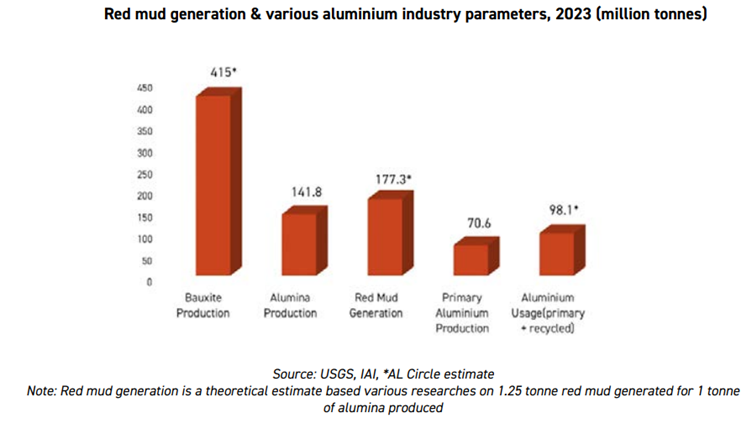
It is estimated that across the world 177.3 million tonnes of red mud was generated in 2023 against an alumina production of 141.8 million tonnes. Only 2-5 per cent of the total red mud generated annually is being utilised as a saleable by-product since most of it is sent to the tailing dams. Worldwide, it is estimated that more than 4 billion tonnes of red mud had been accumulated in various legacy and active tailing dams.
Despite these challenges, red mud also presents exciting opportunities for resource recovery and utilisation in various applications. Advances in research have explored its use in construction materials, soil remediation, and even as a source of valuable metals. This report aims to provide a detailed analysis of the current state of red mud management, innovative approaches for its utilisation, and future research and policy development directions. Get your copy today!