State environmental regulators have recorded fresh violations at Atlantic Alumina’s Gramercy refinery in Louisiana, the only operational alumina refinery in the United States. A compliance inspection by the Louisiana Department of Environmental Quality (LDEQ) on May 29 documented nine violations, including discharges from red mud waste lakes, unmaintained levees, and chemical overflows into public drainage systems.
This follows an earlier LDEQ report from March, which found that toxic waste from the site had entered a drainage ditch leading to the Blind River Swamp. Water samples from that ditch contained arsenic levels nearly 1,400% above the EPA’s safety threshold. Inspectors noted that “multiple discharges from Red Mud Lake 3 into Outfall 003” had occurred, while high grass and poor maintenance had compromised the integrity of the levees.
Additionally, inspectors found diesel leaking into outfalls that drain into the Mississippi River, with signs of petrochemical contamination. Despite the violations, no penalties have been issued so far. LDEQ said the company “has been cooperating with our staff through the investigation and is actively working toward compliance.”
Originally published on 04/06/2025: America’s last alumina refinery is riddled with unlawful waste disposal allegation. A wake-up call for the supply chain?
The United States has just received a seismic jolt to its aluminium backbone. A toxic disaster has been quietly brewing in Gramercy, Louisiana — home to Atalco, the country’s last operating alumina refinery — and has now erupted into a full-blown environmental and regulatory crisis. It’s a case of corporate concealment, environmental injustice, and glaring regulatory inertia. But more importantly, it’s a flashing red warning for America’s aluminium security.
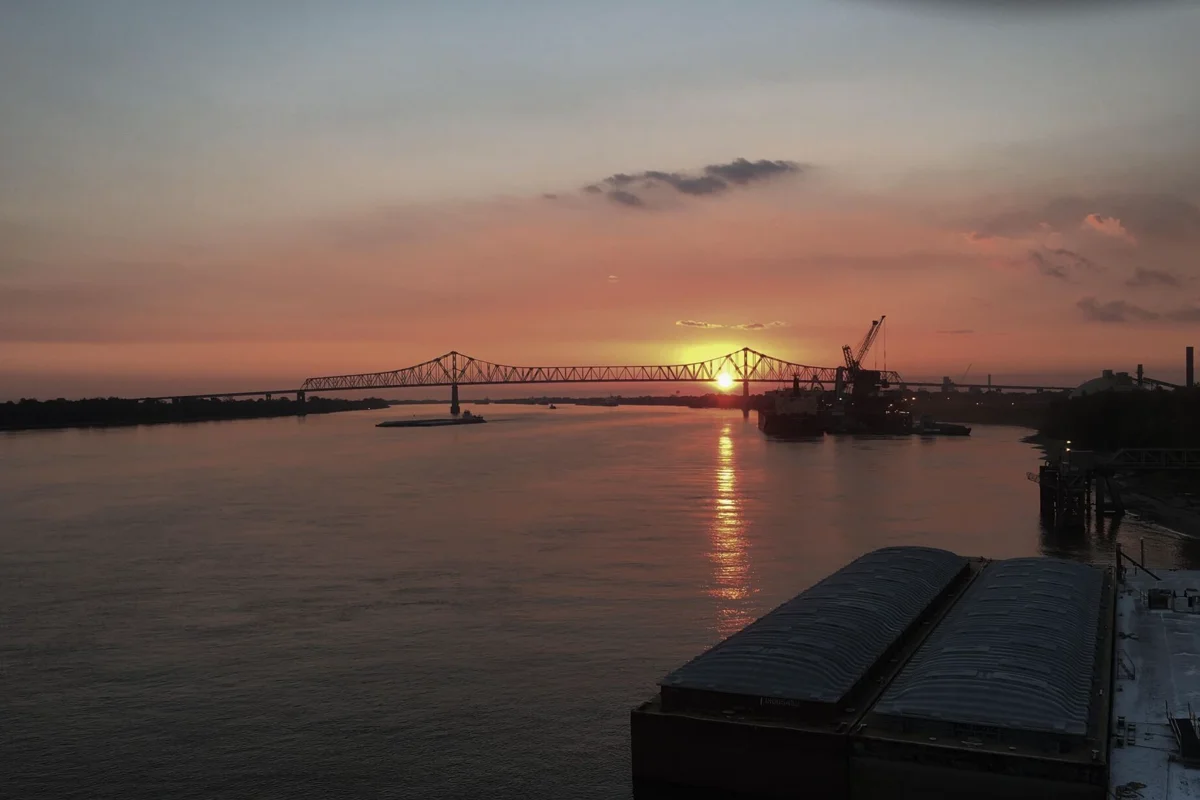
Image source: ATALCO (for referential purposes only)
The breach no one cared about
In August 2024, state inspectors discovered that Atlantic Alumina (Atalco) had spilt highly toxic red mud—a caustic byproduct of alumina production—beyond its containment levees. The waste, laced with carcinogens like arsenic, cadmium, and hexavalent chromium, seeped into wetlands and public lands, including the Blind River Swamp. Yet, the company didn’t report the incident. No public alerts. No containment steps. Only silence.
From August to May, Atalco received at least 23 Notices of Violation from the Louisiana Department of Environmental Quality (LDEQ). But the only formal action? A warning letter. Nearly a year later, no fines, no cleanup orders, and no independent investigation.
Red mud is no ordinary industrial sludge. It’s an alkaline mixture with a pH between 10 and 13 — strong enough to burn skin and sterilise soil. Globally, alumina refineries generate over 160 million tonnes of red mud annually. In Gramercy, an estimated 2.5 million tonnes of this waste is stored in open-air ponds behind clay levees — structures that, in this case, failed without notice.
According to satellite imagery reviewed by independent analysts, Atalco’s levee breach was visible as early as October 2024. Yet, nothing was disclosed to residents or local authorities. The area surrounding Gramercy is already part of Louisiana’s ‘Cancer Alley’ — a corridor riddled with industrial pollution and elevated health risks. This spill only deepens the systemic environmental injustice.
A water sample tested by LDEQ from a public ditch outside the plant revealed arsenic levels nearly 1,400 per cent higher than what is considered safe by state groundwater and EPA drinking water standards. The sample also showed cadmium concentrations exceeding those same limits.
Additionally, a soil sample from the same ditch contained mercury, beryllium, cadmium, and chromium, all at levels above the average background levels typically found in US soils. The cadmium concentration was nearly 400 per cent higher, and the chromium concentration was 900 per cent higher than the standards set by LDEQ for soil. In its hexavalent form, which is produced through industrial processes, chromium is the most toxic non-radioactive element on Earth and is approximately three times more poisonous than arsenic, according to EPA toxicity factors.
Historical water quality data for the Blind River, recorded from 1979 to 1999, indicate that heavy metal concentrations were nowhere near these elevated levels.
A case of regulatory paralysis?
At the centre of the firestorm is LDEQ, a body with a history of regulatory laxity. Not only did it fail to escalate the enforcement beyond routine notices, but internal records also revealed that inspectors observed ongoing seepage and vegetation death around Atalco’s waste ponds well into April 2025. Still, no emergency order. No revocation of permits. And no mention of the federal EPA stepping in.
This regulatory void is part of a bigger pattern. In 2023, the US Government Accountability Office (GAO) warned that state environmental agencies, especially in petrochemical-heavy regions like Louisiana, lack both independence and teeth. When the regulator plays watchdog and lapdog, disasters become inevitable.
“It is very dangerous,” said Slawomir Lomnicki, an environmental scientist at LSU. “There can be a lot of toxic metals leaching out of it and getting into the groundwater.”
Is America’s aluminium downstream in jeopardy?
Atalco is the last operational alumina refinery in the United States. With 550 workers, the plant processes Jamaican bauxite into alumina. It feeds smelters, wire manufacturers, rolling mills, and defence contractors. The Gramercy facility once processed 1.2 million tonnes of bauxite per year, much of it imported from Jamaica and Guinea. With no other domestic source, any production disruption here could cascade across the value chain, from beverage cans to Boeing fuselages.
Already, the US relies on imports for over 60 per cent of its alumina supply. Atalco alone supplies the rest 40 per cent of the nation’s alumina needs. In a geopolitical climate where China controls the lion’s share of global refining capacity, and Australia is locked in a tug-of-war with energy costs, losing Atalco, or even slowing it down, could be a strategic vulnerability.
Ripples in the market: How red mud pollution upsets aluminium supply
Until this reporting, the last known breach at a bauxite refinery occurred in Hungary in 2010. The failure of a red mud reservoir sent 35 million cubic feet of waste into nearby villages, killing 10 people and injuring 150 others.
With Atalco’s impoundment fenced off for emergency repairs (projected 3-4 weeks minimum), the refinery’s alumina output plunged by 42 per cent, from 90,000 tonnes per month to 52,000 tonnes per month. North American smelters reliant on Gramercy stockpiles faced depletion of on‐hand reserves by mid-July. Alongside, Point Comfort, TX Smelter, which depends on Atalco for 15 per cent of its alumina, shifted to Brazilian imports at a freight surcharge of USD 65 per tonne (vs. USD 28 per tonne from Gramercy), inflating raw material costs by USD 2.3 million per week.
On 3 June 2025, LME Aluminium 3-month futures jumped 1.8 per cent to USD 2,620 per tonne, marking the largest single‐day move since February 2024. By 6 June, premiums to CIF North America widened by USD 24 per tonne, the steepest premium shift in six months, reflecting anticipated alumina tightness.
Domestic recycled aluminium furnaces, particularly in Ohio and Pennsylvania, often blend scrap with fresh primary to maintain tensile strengths. With primary prices elevated, many recycling centres raised scrap‐buyback rates by USD 0.12 per pound on 5 June 2025, a 7 per cent increase chasing dwindling primary supplies.
Atalco’s red mud spill is more than a local environmental scandal. It’s a systemic failure across corporate governance, regulatory enforcement, and industrial transparency. For an industry that wants to be the backbone of the green transition, this is a credibility crisis.
Atalco’s refinery occupies approximately 3 square miles of land at the intersection of St. James and St. John the Baptist parishes on the east bank of the Mississippi River. The site specialises in refining bauxite, a rust-coloured powder composed of raw metals and minerals, into aluminium oxide, or alumina, which is produced in the form of an ultra-fine white powder. Atalco sells this alumina to metal smelters that require it for the production of finished aluminium.
Opened in 1958 as Kaiser Aluminium, the Gramercy facility is the only remaining bauxite refinery in the United States, making it the nation’s sole domestic source of this critical metal feedstock. According to state records, Atalco produced 669,261 tonnes of aluminium oxide last year. The US Environmental Protection Agency estimates that for every tonne of aluminium produced from Atalco’s operations, bauxite refining generates approximately 2.5 tonnes of waste byproduct.
This isn’t just red mud. This is a red alert.
Information credit: Louisiana Illuminator













_md.webp)
_md.webp)







