Yahoo Finance
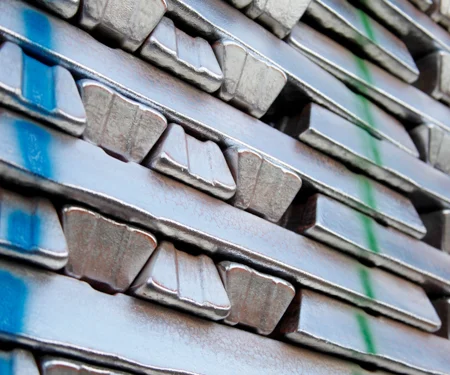
Aluminium writedown slashes Rio profit
Edited by : AL CIRCLE
5 min read
Rio Tinto has booked a 59 per cent slump in full year net profit due mainly to a writedown of its aluminium business, but underlying earnings jumped eleven per cent.
The mining giant on Thursday reported net profit of $US5.8 billion ($A5.39 billion) for calendar 2011, compared to $US14.32 billion ($A13.32 billion) for the previous full year.
The company said the result was primarily due to an impairment charge of $US8.9 billion ($A8.28 billion), related to its aluminium business.
Rio Tinto's underlying earnings for the 12 months to December 31 amounted to $US15.5 billion ($A14.42 billion), up from a record $US14 billion ($A13.02 billion) in 2010, and beat analysts' expectations.
Consensus among analysts was for underlying earnings of $US15.3 billion ($A14.23 billion).
Rio Tinto also reported record underlying earnings before interest, tax, depreciation and amortisation (EBITDA) of $US28.5 billion, up 10 per cent on 2010.
Cash flows from operations also broke records, up 16 per cent at $27.4 billion.
However, chief executive Tom Albanese said he felt it was right not to be considered for an annual bonus for 2011, given the acquisition of the Alcan aluminium unit happened on his watch.
Mr Albanese maintained that growth in demand for aluminium remained strong and the company was working hard to improve the performance of its aluminium business.
"Whilst we have today reported excellent underlying earnings numbers, we also have to recognise that we have taken a significant impairment charge in relation to our aluminium business," Rio Tinto chairman Jan du Plessis said in a statement.
"As this charge it largely relates to the acquisition of Alcan, Tom Albanese and Guy Elliott have notified the remuneration committee that they do not wish to be considered for an annual bonus and I think that is absolutely right," Mr du Plessis said.
Mr Albanese said Rio Tinto, along with the rest of the mining industry, was feeling the pressure of high-cost inflation on their operations.
"These pressures, together with the strengthening of the Australian and Canadian currencies, escalating raw material prices, the impacts of adverse weather conditions and lower grades squeezed our margins in 2011," he said.
"We are determined to tackle these cost issues and are accelerating a number of cost and productivity-improvement initiatives to control those costs we can influence."
Mr du Plessis said the miner expected that uncertainty in financial markets, particularly around the euro, together with elevated price volatility, would continue this year.
"This leads us to remain cautious about near-term prospects," he said, echoing comments by fellow mining giant BHP Billiton on Wednesday, when it reported its first half results.
However, the medium- to long-term outlook remained very positive for metals and minerals as strong demand growth from emerging markets continued, Mr du Plessis said.
This outlook, together with the strength of Rio Tinto's balance sheet, gave the company the confidence to press ahead with its organic growth plans, which Mr Albanese said would be complemented by targeted mergers and acquisitions, and exploration activity.
Mr Albanese said Rio Tinto was on track to expand its iron ore output in Western Australia's Pilbara region by more than 50 per cent by mid-2015.
The company said spot iron ore prices last year traded 15 per cent above 2010 levels but ended the year 25 per cent below where they started after price weakness in the fourth quarter, driven by Chinese de-stocking.
Aluminium prices averaged 10 per cent higher than 2010 but fell back sharply in the December quarter last year.
Prices for other major commodities produced by Rio Tinto improved, however, with copper prices up 18 per cent and gold prices surging 29 per cent.
On the production side, reduced volumes were due mainly to lower copper and gold grades at the company's Kennecott Utah operations in the United States, at Escondida in Chile and Grasberg in Indonesia.
This was offset partly by higher iron ore output volumes as Rio Tinto's WA expansion continues.
Rio Tinto also on Thursday said it would increase total capital expenditure this year to $US16 billion ($A14.88 billion), up from $US12.3 billion ($A11.44 billion) last year.
"Further project approvals, mainly in the Pilbara, are likely to increase this level of investment as the growth program continues," the miner said.
The mining giant is investing more than $US18 billion ($A16.74 billion) over the next five years expanding its Pilbara operations to 353 million tonnes per annum (Mtpa) by 2015, from 225Mtpa currently.
The expansion, which will be over several stages, is the largest integrated mining project in Australian history.
Rio Tinto also announced a 34 per cent increase to the full year dividend to $US1.45 per share, which it said reflected its confidence in the long-term outlook.
UBS analysts were expecting a full year dividend of $US1.30 per share.
The company said its $US7 billion ($A6.51 billion) share buy-back program remained on track for completion by the end of the current quarter.
Rio Tinto's shares closed down 16 cents at $71.60 on Thursday.
The result was delivered after the Australian Securities Exchange finished trading for the day.
Previous article
Rusal Australia chairman fears jobs loss from carbon tax
Next articleLME aluminium to fall to $2,228/T
Grow with
AL Circle












_md.webp)