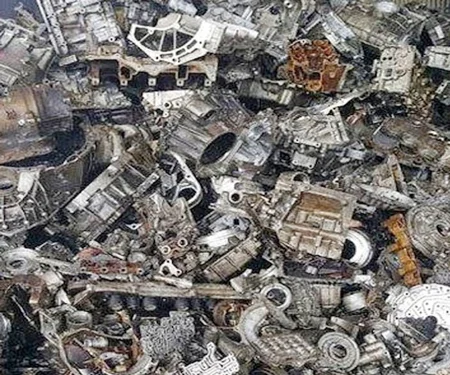
Aluminium scrap export of Lebanon shows a positive trend during 2017-20

The economy of Lebanon is classified as a developing, upper-middle-income economy. The nominal GDP was estimated $54.1 billion in 2018, with a per capita GDP amounting to $12,000. Government spending amounted to $15.9 billion in 2018 or 23% of GDP. The major industries of the country are banking, tourism, real estate and construction, food processing, wine, jewellery, cement, textiles, mineral and chemical products, wood and furniture products, oil refining, metal fabricating.
The aluminium scrap export of Lebanon in 2017 was recorded only 6319 tonnes and the revenue income stood at $9.09 million, whereas in 2018 the aluminium scrap export saw growth by 237.63%, as the total export volume reflected at 21,355 tonnes with Y-o-Y excess volume of 15,016 tonnes and the revenue generation surged to $34.96 million.
In 2019 Lebanon’s aluminium scrap export exhibited 18,407 tonnes, a dip by 13.80% and the revenue also showed a downturn and remained at $29.68 million, while the estimated export for 2020 has been analysed at 24,272 tonnes, rise by 31.86% and the revenue generation also climbed to $41.89 million.

The total export and revenue income of the nation during 2017-19 was recorded 46,081 tonnes and the income stood at $73.73. However, when the projected export and revenue income of 2020 has been added, it reflects 70,353 tonnes and $115.62 million.
The import countries for Lebanon’s aluminium scrap export are Belgium, Greece, Italy, India, Netherlands, South Korea, Turkey, UK, etc.
Recycled aluminium use in place of primary metal to gain back its pace: Rack Hu at 15th China Aluminium Processing Summit
Next articleEnvironment Agency reports improved aluminium packaging recycling rates in May
Grow with
AL Circle