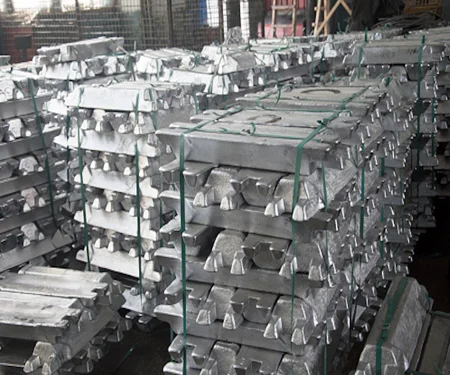
Calculate Embedded Emissions for Unwrought Aluminium (HS7601)
Enter your input
Notes:
There may be a difference when calculating the price with respect to
import volume, carbon price, and benchmark emissions, as the embedded
formula may result in minor variations due to decimal rounding.
Therefore, the actual value may vary.
CBAM is applicable to trade volumes starting from 50 metric tonnes. For trade volumes below 50 metric tonnes, CBAM does not apply.
Usage Procedure – How to use the CBAM Calculator Sheet
Enter or update values only in the
INPUT PARAMETERS section (Highlighted in blue) ,
including the carbon price, benchmark emissions, CBAM chargeable
percentage (as per the phase-in year), and imported quantity.
The system will automatically calculate the
payable emissions and the total CBAM cost (€)
based on the inputs provided.
Notes:
• Change any input value to automatically update CBAM cost.
• Formula used: Carbon price × payable emissions × quantity.
• Model aligned with CBAM supplier-side illustrative methodology.
Login now to unlock Calculate Embedded Emissions for Unwrought Aluminium
Aluminium prices in China will remain low for the next two years
1MINS READ
According to Fitch Ratings, for the next 2 years, Chinese aluminium prices will remain low as new cost advantageous plants are in line. Chinese companies have spent less on the structures of these new plants as they are located mostly in China’s western part where they can take advantage of cheaper power due to the region’s abundant coal supplies. Even the new aluminium facilities have their individual power plants to cut down the power costs as in order to keep their total production costs under control. In 2013 & 2014, the additional aluminium capacity will worsen the intense competition in a market that is already over-supplied.
In October 2013, the Chinese government released fresh guidelines to give more specific measures for tackling the aluminium sector’s persistent overcapacity. These measures include the closure of inefficient energy plants through different power tariffs as well as banning government subsidies. The government also plans to increase aluminium demand by promoting light-weight transportation vehicles.
We use cookies from our users to operate this website and to improve its usability.
You can find details of what cookies are, why we use them and how you can manage them in our
Cookies page. Please note that by using this site you are consenting to the use of cookies.
Necessary cookies help make a website usable by enabling basic functions like page
navigation and access to secure areas of the website. The website cannot
function properly without these cookies.
Preference cookies enable a website to remember information that changes the way
the website behaves or looks, like your preferred language or the region that you
are in.
Statistic cookies help website owners to understand how visitors interact with
websites by collecting and reporting information anonymously.
Marketing cookies are used to track visitors across websites. The intention
is to display ads that are relevant and engaging for the individual user and
thereby more valuable for publishers and third party advertisers.
Cookies are small text files that can be used by websites to make a user's experience more efficient.
The law states that we can store cookies on your device if they are strictly necessary for the
operation of this site. For all other types of cookies we need your permission.
This site uses different types of cookies. Some cookies are placed by third party services that
appear on our pages.
Your consent applies to the following domains:
google.com,
youtube.com,
doubleclick.net,
zopim.com