Aluminium coffee capsule market eyes 8.1% CAGR through 2033 - Read how aluminium shapes shelf life, performance and recycling
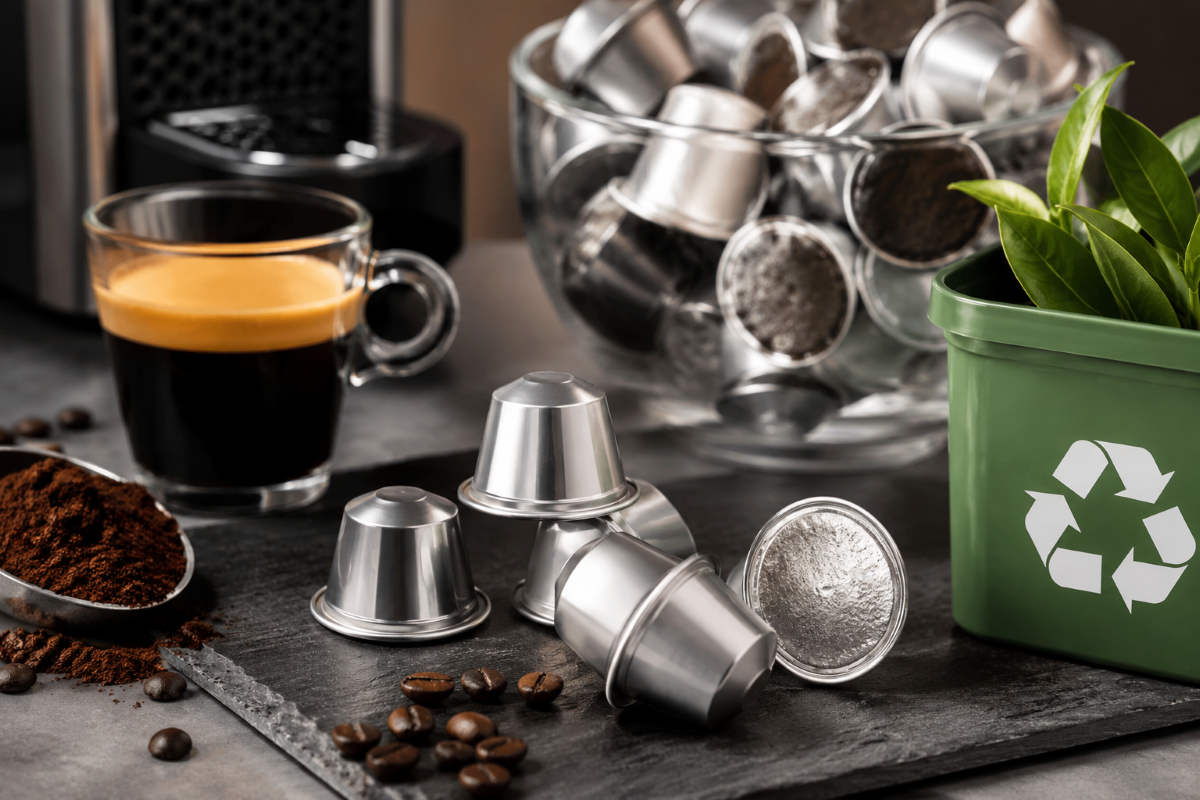
The image used in this article is generated with an AI tool and does not depict any real-time moment
Global aluminium coffee capsule consumption reached approximately 23–25 billion units in 2025, putting a small, one-gram package at the centre of a rapidly growing coffee market. Rising coffee consumption, particularly in urban areas, is driving demand as consumers increasingly look for coffee that is quick to prepare without compromising on quality.
The market numbers reflect this shift. The aluminum coffee capsule with recycle scheme market was valued at USD 2.48 billion in 2025 and is projected to increase to USD 2.68 billion in 2026 and around USD 4.5 billion by 2033, growing at a CAGR of 8.1 per cent during 2026-2033. According to various industry sources, North America, Europe, APAC, Latin America and MEA led the global market in 2025.
If we look at regional consumption, Europe accounted for 40 per cent of global aluminium coffee capsule consumption, while North America held a 32 per cent share. The rest of the world collectively represented the remaining 28 per cent.
Behind these billions of capsules, however, is a simple challenge: how to keep a few grams of ground coffee fresh from the production line to the consumer's coffee machine. This is where aluminium has become central to the capsule market.
Why aluminium became the material of choice
Once coffee is roasted and ground, exposure to light, oxygen and moisture can affect its freshness, flavour and aroma. Unlike plastic, aluminium provides an absolute barrier against all three. This barrier property is the main reason major producers selected aluminium for coffee capsules decades ago and have continued using it.
Nespresso, which manufactures approximately 14 billion capsules a year, is among the major producers using aluminium. The material's barrier performance directly translates into a longer sealed shelf life. Aluminium coffee capsules typically offer a shelf life of 9-12 months, compared with 3-6 months for standard plastic capsules.
For further insights into aluminium packaging trends and market dynamics, explore our report, Aluminium in Packaging: Consumer Trends and Market Dynamics.
For coffee roasters and private-label brands selling through retail outlets, this difference is significant, particularly when the time a product may remain on a store shelf is uncertain.
But protecting the coffee before brewing is only one part of the capsule's job. During espresso preparation, capsules are generally exposed to temperatures of 90-95°C and pressures of 9-19 bar. Aluminium can withstand these brewing conditions without distortion or imparting bitterness or other off-flavours to the drink.
The material advantage is clear, but achieving this performance depends on how the capsule itself is designed and manufactured.
A 1.0–1.2 gram capsule built around precise specifications
Aluminium coffee capsules are typically manufactured using 8011-O or 8079-O aluminium alloys. The foil used for the capsule body generally has a thickness of 0.07-0.12 mm, or 70-120 μm, while an empty capsule weighs approximately 1.0-1.2 grams. Find aluminium foil for various applications across global markets here.
Inside this lightweight package, each capsule holds around 5.5-7 grams of coffee, depending on the format. Keeping that coffee fresh also requires control over the atmosphere inside the capsule.
During nitrogen flushing, residual oxygen is maintained below 2 per cent, with a target of less than 1 per cent. The process helps preserve the freshness and quality of the coffee before the capsule is opened and brewed.
These specifications then have to be maintained at commercial production speeds. Depending on the machine model, aluminium coffee capsule production lines can operate at between 50 and 300 capsules per minute.
Yet, the same aluminium grade is not necessarily suitable for every capsule or container design. As shapes become more complex, alloy selection begins to matter.
_0_0.png)
8011 or 3003: How capsule design changes the alloy requirement
For most Nespresso capsule and holder formats, 8011 alloy is the expected norm across the industry for aluminium capsule applications. With iron and silicon additions, the alloy provides the high plasticity and corrosion resistance required at a purity of 99 per cent.
The 8011-O aluminium alloy typically has a tensile strength of 100-130 MPa and an elongation of at least 12 per cent. These properties make it suitable for standard aluminium coffee capsule cups and lid foils.
Thickness also varies according to the part of the capsule. The 8011-O aluminium used for the capsule body typically ranges from 0.07 to 0.12 mm, while lid foil generally has a thickness of 0.03–0.04 mm.
The material requirement changes when a capsule or container has a more complex shape, requires multi-cavity forming or needs to withstand higher mechanical loads during transportation. In these applications, 3003 alloy with manganese additions may be required to provide higher tensile strength and greater mechanical performance.
3003-O aluminium contains around 1.0–1.5 per cent manganese as its primary alloying element. It offers a tensile strength of 110–150 MPa and an elongation of at least 15 per cent. The alloy is generally suited to complex shapes and deep-drawn trays, with a typical thickness of 0.10–0.15 mm.
The difference between the two alloys shows how a seemingly simple coffee capsule is closely linked to material properties, forming requirements and the final shape of the product.
Attend the webinar Hedging for recyclers - Become an expert in 6 hours to learn metal price risk management for recycling
Coffee capsule production varies across manufacturers
Coffee capsule production differs significantly across companies. Nespresso produces approximately 14 billion capsules annually, illustrating the scale that the single-serve coffee market has reached.
Other manufacturers operate at different levels of the market. AIKOU Packaging has a production capacity of up to 1.1 billion capsules per year, while Kaffa Cafés produces around 310 million capsules annually. Cravium Gourmet records an annual production volume of approximately 35 million capsules.
However, as capsule consumption rises into the tens of billions of units, another question is becoming harder to separate from the market's growth: what happens to the aluminium after the coffee is consumed?
The capsule journey continues after brewing
Aluminium’s role in coffee capsules continues even after the coffee is brewed. As the metal can be repeatedly recycled and remelted without losing its properties, the collection and recovery of used capsules have become an important part of the aluminium coffee capsule value chain. The global capsule recovery rate stood at 35 per cent in 2024.
To expand capsule recovery, Nespresso has introduced collection programmes across 71 countries and outlined plans to increase the recovery rate to 60 per cent by 2030. Over the past 15 years, more than 100 eddy current separators have also been installed at public sorting stations to support the sorting and recovery of used capsules.
In Switzerland, Nespresso collaborates with the BAREC Group to collect used capsules from 3,700 collection points across the country. The partnership enables aluminium coffee capsules to be processed on an industrial scale, with their different components separated for further use.
Once the capsules are collected, the aluminium is extracted and sent for remelting. The remaining coffee grounds are mixed with organic matter and converted into biogas and fertiliser. In this way, both the aluminium and the coffee grounds move into separate recovery streams after the capsule has served its primary purpose.
Explore the position of aluminium at the intersection of sustainability and strategy in Sustainability & Recycling: Aluminium's Dual Commitment
The story beyond energy race: Data centres as a new-age demand driver of aluminium to over 1Mt by 2030
Next articleToyota urges Japanese automakers to join forces as Chinese EVs gain ground globally
Grow with
AL Circle