您想继续阅读英文文章还
是切换到中文?
是切换到中文?

THINK ALUMINIUM THINK AL CIRCLE


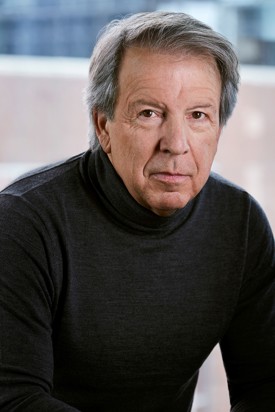
In an interview for the 8th edition of LeaderSpeak 2026, , Jean Simard, the President and CEO, Association de l'aluminium du Canada (Aluminium Association of Canada) outlines Canada’s aluminium sector as a reliable, low-carbon and strategically important supplier to North America, while acknowledging that current tariff pressures have made the US-Canada trade relationship more difficult. He stresses that Canada’s strength lies in long-term investment, hydro-powered production, operational excellence and its ability to supply aluminium that the US would struggle to replace domestically due to massive energy requirements.
The conversation also highlights Canada’s efforts to strengthen domestic aluminium use, support value-added industries, advance circularity and move from low-carbon to no-carbon production through innovation such as the Elysis project. Read the interview below -
AL Circle: As the largest exporter of primary aluminium to the United States, how would you describe the current health of the US-Canada aluminium trade relationship? Are recent tariff developments cause for long-term concern, or are they being effectively managed through bilateral engagement?
Jean Simard: We’ve seen better days! Our relationship with the US, resulting from decades of dedicated investments in operational excellence, smart and reliable just-in-time logistics, is highly prized both by Canadian producers and US customers. These are testing times, and while we strive to maintain the link to market, 50 per cent tariffs are a barrier to entry since the premium doesn't internalise the full cost. Our seaborn plants are accessing other markets, instead of losing money shipping to the US when and if possible.
Long-term concern is an oxymoron these days. When you look at the recurrent billions of dollars invested in our assets over the past two decades, Canada is in a long-term play to the benefit of our clients. Our competitiveness does not depend on putting tariffs on other countries; it is based on our capacity to reinvest in our assets.
AL Circle: The Canadian government has expressed interest in retaining more aluminium for domestic use to support value-added industries. How is the industry adapting to this evolving policy direction, and what opportunities do you see for strengthening internal market linkages?
Jean Simard: We are working with our Government to foster new initiatives for aluminium applications in our economy. We won't replace a market of 340 million people with a Canadian market of 40 million; we must leverage government procurement, which is by far our largest domestic market, accounting for nearly 15 per cent of our GDP.
As Prime Minister Carney and the Provincial Premiers have embraced, Canada must become One Economy – and this should include going beyond eliminating interprovincial trade barriers. By leveraging scattered federal and provincial procurement markets, Canada can offer scale and market density for private sector investments, which in turn will dial up innovation and strengthen our competitiveness
AL Circle: With global supply chains being reshaped, is the Canadian aluminium sector looking to diversify its export portfolio, or does the U.S. remain the most strategic and irreplaceable market in the near future?
Jean Simard: Not that America needs our metal more than we need their market, but Aluminium, a critical mineral, is an excellent example of a product where Canada has leverage. Producing aluminium requires a large, dependable, long-term supply of competitively priced energy. Energy accounts for 40 per cent of what it takes to make aluminium.
Drawing on vast amounts of hydro power, Canada produces 80 per cent of North America’s primary aluminium. Today, we export 90 per cent of what we produce, mostly to the US, where it is processed into products such as cars, aeroplanes and appliances for the US consumer market.
To explore the full interview and gain deeper insights on the global aluminium market, click here


A proud
ASI member
AL Circle Private Limited | CIN: U72200WB2017PTC221175
Registered Office: Ecospace Business Park, Block 3A, Unit 401A, New Town, Rajarhat, Kolkata, WB 700160
Corporate Office: Ecospace Business Park, Block 3A, Unit 401A, New Town, Rajarhat, Kolkata, WB 700160
© 2026 AL Circle. All rights reserved. AL Circle is not responsible for content from external sources.