您想继续阅读英文文章还
是切换到中文?
是切换到中文?

THINK ALUMINIUM THINK AL CIRCLE


In a conversation with Harvey Kaye, Executive Chairman of U.S. Critical Materials Corp., AL Circle discussed the United States’ growing push to strengthen its domestic critical minerals supply chain and the company’s role in supporting this strategic objective. During the interaction, Harvey said U.S. Critical Materials Corp. is advancing plans to become the first new rare earths mine in the United States to begin supplying heavy rare earth elements within the next two years. Referring to LSU reporting from March 2026, he noted that more than 30 million tonnes of red mud, or bauxite residue, remain on the grounds of the Atlantic Alumina, formerly Alcoa, plant in Gramercy. He further confirmed that Sheep Creek is currently the only economically viable source of virgin ore gallium in the United States. Based on sampling tests, the deposit averages 300 ppm gallium, a concentration six times higher than typical Chinese source levels found in aluminium bauxite tailings.
To know more such facts about the United States rare earth deposits and capacity, read the full interview below.
AL Circle: Rare earth elements (REEs) are indispensable to US defense systems, advanced electronics, semiconductors, EVs, wind energy, and precision manufacturing. With demand expected to accelerate over the next decade, how do you assess the United States’ current rare earth consumption trends and future growth trajectories? Where does U.S. Critical Materials Corp. see itself in closing the widening gap between domestic demand and secure domestic supply?
Harvey Kaye: U.S. Critical Materials Corp., headquartered in Salt Lake City, UT (USCM), is on a plan to be the first new US Rare Earths mine that will begin supplying Heavy Rare Earths (HREEs) within two years, starting with Yttrium and then moving to Dysprosium, Gadolinium, Scandium, Europium, and Terbium. These metals have immediate strategic relevance to US defense applications, as outlined in the attached Table. There are almost too many examples to highlight, each more important to US national security than the next.
USCM loadstar is its deposit at Sheep Creek, Montana, which has been studied for decades and is what we call a "geological unicorn." The Sheep Creek TREO (Total Rare Earth Oxides) concentrations reach to 9 per cent and above based on Idaho National Lab and Actlabs sampling assessments. The deposit covers the HREEs alongside world-class concentrations of Gallium and Samarium, as well as Neodymium, Praseodymium, Lanthanum, and Cerium. The attached Table provides the TREO concentrations that INL and Actlabs have certified through ore sampling at Sheep Creek, MT, over the last year. The defense applications and strategic relevance of each mineral are provided.
| Available at Sheep Creek, MT | Sample Concentrate Average PPM in Sheep Creek, MT Ores (INL & Actlabs, 2025-2026) | Military Uses |
| Gallium | 300 |
AESA radars (GaN GaAs MMIC transmit/receive modules) Electronic warfare/jammers (high-power RF GaN amplifiers); Missile/aircraft fire-control radars and seeker electronics; Space-based and ground surveillance sensors (high-frequency RF transceivers); Tactical communications and secure radios (wide‑band, high‑power GaN RF); High-power microwave and directed‑energy components (power electronics, RF sources); Satellite payload electronics and space-qualified power devices (radiation‑tolerant GaN/GaAs). |
| HREEs total | 750 | |
| Terbium (Tb) | 34.6 | Magnet alloys to improve high‑temperature magnet performance (motors, actuators); Phosphors for night‑vision displays and signage; Magnetostrictive sensors/ actuators (precision aiming/stabilization); Optical materials for lasers and sensors; Dopants in specialized ceramics for hardened electronics. |
| Dysprosium (Dy) | 46.6 | Coercivity and high-temp. dopant for Nd‑Fe‑B permanent magnets used in missile, aircraft motors, actuators and guidance systems; Neutron‑absorbing materials in control/shielding components. |
| Europium (Eu) | 170 | Phosphors for low‑light and night‑vision displays (high‑contrast, long‑life screens); Red/blue phosphors in secure cockpit and instrument displays; Neutron‑capture and detector materials in some radiation sensors. |
| Gadolinium (Gd) | 400 | Neutron‑capture shielding and detectors (reactor/sensor systems); Magnetocaloric regenerative cooling for thermal management; Specialized alloys for radiation‑hard components; MRI‑class magnetic materials for trauma care; Contrast agents in nondestructive inspection tools. |
| Scandium | 85 |
Aluminum‑scandium (Al‑Sc) alloys for airframe and structural components: improved strength, fatigue resistance, and weldability for aircraft, missiles, and UAVs High‑performance additive manufacturing powders (Al‑Sc) for lightweight, high‑strength parts and rapid prototyping; Solid‑oxide and fuel‑cell materials for compact power systems and auxiliary power units. |
| Yttrium (Y) | 97.3 | Yttrium‑iron‑garnet and YAG lasers (targeting, range-finding, countermeasures); Thermal‑stable ceramics and coatings for missiles and jet engines; Phosphors for displays and night‑vision systems; High‑temperature structural ceramics for hot‑section components. |
| Other REEs total | 161,655 | |
| Lanthanum (La) | 59,733 | Battery and capacitor materials for power systems in vehicles and UAVs; Catalyst/supports in propulsion and fuel processing research; Optical glass and lens materials for sensors and targeting optics. |
| Cerium (Ce) | 76,950 | Surface polishing (optics finishing) for high‑precision lenses and windows; Catalysts in propulsion/emissions control; Oxygen storage materials in thermal management and sensors; Corrosion inhibitor and alloying agent for durable components. |
| Praseodymium (Pr) |
6,407 | High‑strength alloys and high-temp. permanent magnets for actuators and motors; Optical glass and fiber dopants for sensors and communications; Protective coatings and colored ceramics for sensor housings; Specialized laser and photonic materials |
| Neodymium (Nd) | 16,783 |
Primary rare‑earth for high‑energy Nd‑Fe‑B permanent magnets used in motors, generators, actuators, and guidance systems; Precision electric motors in missiles, UAVs, radar positioning, and servos; High‑strength magnetic assemblies for naval and weapon systems; Magnetic sensors and flux concentrators in guidance and stabilization. |
| Samarium (Sm) | 1,016 | SmCo permanent magnets for high‑temperature, radiation‑ resistant motor and actuator applications; Precision motors and gyro assemblies where thermal stability is critical; Magnetic bearings and sensors in guidance systems. |
AL Circle: Bauxite residue (red mud) is a critical source of rare earth elements, with roughly 0.5 kg to 2.5 kg of REEs potentially recoverable per tonne. However, the United States has a limited number of alumina refineries, with weakening domestic alumina production, which restricts the volume of red mud generated locally. Does this structural decline undermine the US opportunity to extract REEs from red mud at scale, and how can the country realistically overcome this raw material constraint?
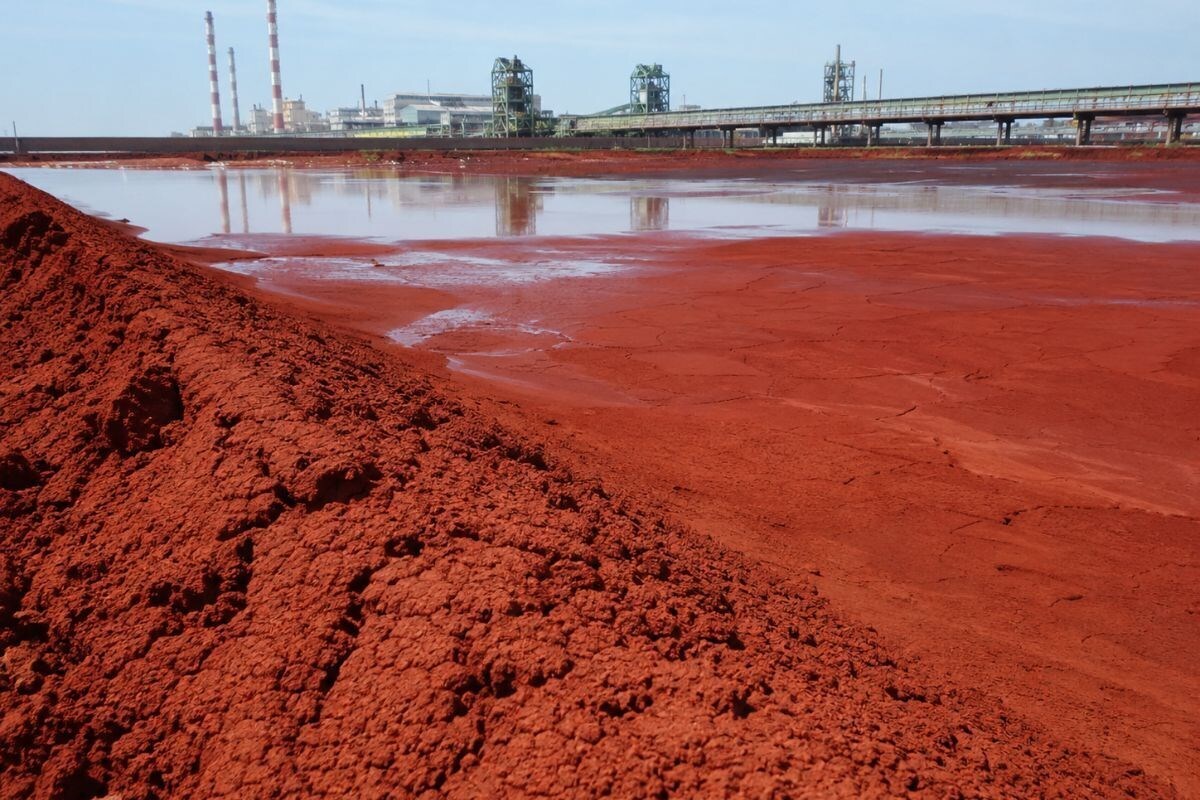
Harvey Kaye: LSU reporting (March 2026) shows there are more than 30 million tonnes of red mud or bauxite residue on the grounds of the Atlantic Alumina (Alcoa) plant in Gramercy. The question is less whether there is sufficient red mud, and more about the costs in time and energy of extracting gallium (the main target) from red mud, as compared to the potential of getting it from very rich virgin ore at Sheep Creek. That is something USCM is looking at very closely, and we have strategic partnerships with leading technology developers, such as Dr. Greeshma Gadikota at Columbia University, to explore breakthrough processing technologies and approaches for the Red Mud opportunity.
AL Circle: U.S. Critical Materials has confirmed that Sheep Creek is the highest-grade rare earth and gallium deposits in the United States, averaging 300 ppm. Is this deposit sufficient for meeting the domestic demand for gallium and rare earth? Also, does this mean that the United States has the highest demand for gallium and rare earth elements among all other critical minerals?
Harvey Kaye: Sheep Creek is currently the only economically viable US source of virgin ore gallium, averaging 300 ppm based on sampling tests, which is six times higher than typical Chinese source levels in aluminium bauxite tailings. This has the potential to strengthen domestic defense and advanced manufacturing supply chains by a leap-ahead contribution, which is what we call "25/5" : a 25-year leap ahead in critical mineral metallisation capabilities within 5 years. This is what we are working 24/7 to deliver. Our Sheep Creek deposit serves as the anchor for a transformational precision mining and precision processing strategy, which has the capability (based in part on our growing in-house data analytics) to deliver on the promise of lab-verified gallium (and other critical minerals) in a time period that matches their strategic importance to US supply chains.
The US has substantial and fast-growing strategic demand for these materials across defense, aerospace, advanced manufacturing, and clean energy, which is why an "all of the above" strategy regarding domestic sources, including recycling, new ores, red mud, and very unique deposits like Sheep Creek, is so important. The US defense establishment does not have the option to be caught in a vulnerable position because rare earths are in short supply for jets, missiles, radars, and satellites. USCM is in a very strong position to prevent that from happening.
AL Circle: Could you please introduce us to more such rare earth projects of U.S. Critical Materials Corp.? Do you think all the projects cumulatively will help the United States reduce dependence on imports?
Harvey Kaye: USCM is working with many strategic partners to achieve results, developing domestic sources and working with federal agencies to align with national priorities. We will have more announcements soon.
AL Circle: The US government has introduced various policy initiatives aimed at reinforcing its position as a leading critical minerals developer and supplier. How effective are these policies in facilitating the growth of domestic mining operations, particularly in terms of exploration and process development? Are these measures sufficiently addressing the challenges miners face in scaling up production and innovation in the critical minerals sector?
Harvey Kaye: There is always reason to debate the effectiveness of US government policy, and REE industrial strategy is no different. U.S. Critical Materials is advancing on all fronts through a data-driven approach and results-based actions, including world-class collaborations, technology development, and precision mining and precision processing strategies. We call this our fully integrated ROCK-to-DOCK (™) strategy. USCM seeks concrete results, and that is what we are building towards in the background with all of our partners, backstopped by the Sheep Creek, MT, ore deposit. In general, US government policies are helping of course, and we are grateful for all the positive momentum behind our industry, but there is always room for improvement, and we are in close consultation with numerous federal agencies to ensure our unique, technical, precision-mining and precision-processing points of view are heard. In addition to advancing critical materials extraction, USCM is committed to advancing AI models to advance energy- and material-efficient processing pathways. Chris Whaling, Senior Advisor, and Chad Miller, VP Processing at US Critical Materials are co-leading, and Greeshma Gadikota is collaborating on developing AI approaches to match REE and gallium separation strategies with resource mineralogy using physics-informed models to advance REE flowsheet design, testing, and engineering.
The AI-enabled data analytics and RDT&E capability creates flowsheet multigraphs computable at the atom-scale, in a fully retraceable and adjustable system that eliminates the risk of hallucinations or black box AI thinking. Nodes cover unit operations (crushing, grinding, flotation, high-temperature kilns), edges represent material streams (composition vectors, flow rates, temperature, pH), and n-dimensional semantic node features cover operating conditions and reagents.
AL Circle: Given that gallium and rare earth element (REE) production is highly carbon-intensive, what specific strategies are in place to manage and reduce carbon emissions throughout the production process? Are the current measures sufficient to align with global sustainability goals, and how are you addressing the long-term environmental impact of these activities?
Harvey Kaye: Allowing for a minimal emissions footprint, maximum efficiency, cost-competitiveness and quality in securing US sovereign critical mineral supplies is at the core of USCM's precision mining and precision processing strategy. Through our Cooperative Research and Development Agreement (CRADA) with Idaho National Laboratory (INL), USCM is advancing the world's most environmentally sustainable and energy-efficient electro-membrane separation (EMS) reactor-aligned processing technologies for rare earths and gallium. In 2025, we extended the agreement to develop a pilot beneficiation plant, a modular facility designed to optimise recovery, validate scalability, and benchmark environmental performance. This is a multi-phase project to develop a process for handling, separating, and extracting value-added metals from carbonatite ore. INL brings deep expertise in advanced separation science and engineering and is recognised by the Department of Energy as a Separation Sciences R&D Testbed. Sheep Creek has measured gallium grades ranging from 180 to 385 parts per million and up to 18 per cent total rare-earth elements, underscoring the project’s technical significance and strategic potential to deliver sustainable processing solutions.