您想继续阅读英文文章还
是切换到中文?
是切换到中文?

THINK ALUMINIUM THINK AL CIRCLE


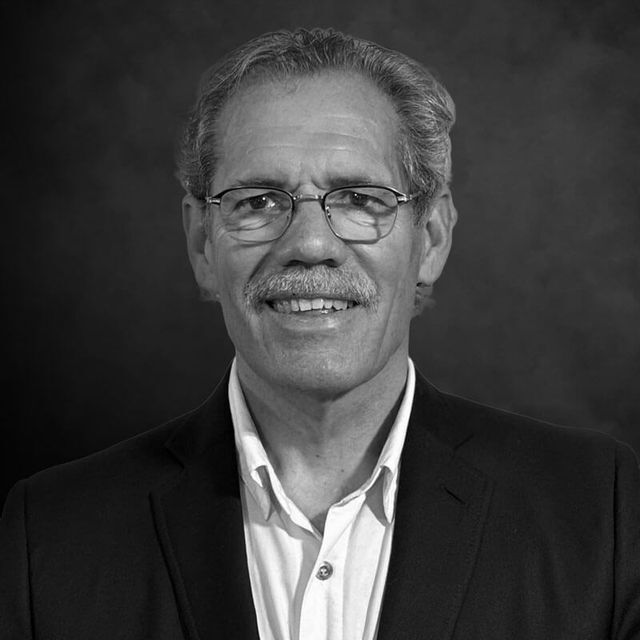
Welcome to the interview with Christopher H. Hopkins, President and Chief Executive Officer of Canadian Energy Metals Corp., where he has outlined the true scope of the Thor Project as a multi-metal asset. He has emphasised that the immediate priority is advancing the Pre-Feasibility Study (PFS), which is expected to cover CGA, HPA, and Smelter Grade Alumina (SGA), with the potential to include additional metals.
Christopher H. Hopkins is a Canadian energy executive and entrepreneur with over 40 years of experience building and leading companies in oil sands, oil shale, and critical minerals. A pioneer in unconventional resource development, his work has evolved from traditional fossil fuels to the emerging critical metals driving the global energy transition.
His career experience brings a unique combination of environmental stewardship and strategic business acumen. Hopkins is the current President and Chief Executive Officer of Canadian Energy Metals Corp., a private company with an unencumbered 100 per cent interest in the Thor Project, advancing the development of its alumina resource and associated metals.
AL Circle: Amidst the growing worldwide bauxite supply constraint, is the bauxite-independent Thor Project adopting a special approach to place Canada in a strategic position as a path-bearer to a new take on alumina refining process?
Mr Christopher Hopkins: The Thor Project is multi-metal, multi-product, multi-generational asset. It represents a potentially transformative project for the province of Saskatchewan and Canada. There is a real opportunity to seize a mine-to-metal strategy. The combination of resource and infrastructure can sustain multiple development options. The global supply-demand picture only reinforces this story.
AL Circle: The National Aluminium Company (NALCO) CMD, Shri Brijendra Pratap Singh, has stated that though NALCO is advancing its alumina production, the lower demand for alumina would not fetch substantial revenue. If that applies to Canada as well, how is the project going to financially benefit from alumina production?
Mr Christopher Hopkins: We understand NALCO recently stated it achieved record performance in production and sales. There is a range of alumina products and prices which are stratified by technical specifications. CEM’s resource base is suitable for multiple products, possibly increasing margin and scale, while at the same time mitigating marketing risk.
AL Circle: As Thor is set to produce Chemical Grade Alumina (CGA) and High-Purity Alumina (HPA), does CEM plan to diversify from primary aluminium production and strategize its alumina output and supply targets to align with evolving market demand such as in the sectors of EV, aerospace, or energy storage?
Mr Christopher Hopkins: As outlined in the January 29, 2026, press release, CEM’s next focus is the Pre-Feasibility Study (PFS). CEM has not confirmed the feasibility of production. It is expected the PFS will include CGA, HPA and Smelter Grade Alumina (SGA) and potentially other metals. Through 2026, CEM will further develop its market studies. The scale of the resource combined with the processing model presents a range of products suitable for a wide range of markets.
AL Circle: Adherence to environmental norms has become a must across the majority of industries. That said, how is the project being designed to meet low-carbon, ESG standards and community impact benchmarks?
Mr Christopher Hopkins: With Project Thor, the opportunity to produce a clean, green, high purity product is very real. Key differentiators include:
AL Circle: The PEA highlights strong economic potential. Are there plans for the key cost or efficiency advantages that make Thor globally competitive?
Mr Christopher Hopkins: The PEA is a conceptual study, not a feasibility study or valuation. CEM’s current intent is to complete a Pre-feasibility Study (PFS). In tandem with the PFS, CEM is focused on developing its financial model with input from its technical, market and infrastructure advisors.
AL Circle: What are the next milestones following the PEA, particularly regarding pilot facilities, pre-feasibility studies, and offtake discussions?
Mr Christopher Hopkins: Coincident with the PFS, CEM plans to achieve a point of readiness for its Commercial Demonstration Plant (CDP), likely with a focus on CGA and HPA. In conjunction with the CDP, CEM is engaging in discussions with strategic and financial partners on a variety of financial and development options.
AL Circle: Could you elaborate on the technological or metallurgical innovations that differentiate Thor from conventional bauxite-based alumina production?
Mr Christopher Hopkins: CEM’s black polymetallic shale deposit is noteworthy for its size and consistency. The chloride-based process flowsheet contemplates a shale feed that undergoes leaching, removal of impurities, crystallisation and ultimately calcination. It includes both hydrometallurgical and pyrometallurgical processes with certain proprietary elements.
AL Circle: How does Saskatchewan’s infrastructure and policy environment support faster commercialisation of the Thor Project?
Mr Christopher Hopkins: Saskatchewan has a long track record of supporting industrial development. On a global basis, the province ranks #1 and #2 in potash and uranium production, respectively. The Fraser Institute consistently ranks Saskatchewan as a top mining jurisdiction in the world. (Annual Survey of Mining Companies, 2025, Fraser Institute, February 2026.) Launched in March 2023, Saskatchewan’s “Securing the Future: Saskatchewan’s Critical Minerals Strategy” aims to establish the province as a global hub for critical minerals by 2030.
AL Circle: Owing to the tariff impositions, Canada’s aluminium supply to the US has reduced. In that case, does CEM envision the Thor Project diversifying towards another market, or is the alumina production expected to contribute to a more resilient and circular aluminium ecosystem in North America?
Mr Christopher Hopkins: The tariff and trade disruptions, in addition to geopolitical tensions, are clearly impacting the near-term aluminum and alumina trade flow. It is expected that a source of supply and production base in Saskatchewan will create a supply chain that is more resilient to logistical impairments. At present, there is no bauxite or saleable equivalent production in North America. The combination of CEM’s resource with existing energy and transportation infrastructure is a key differentiator.