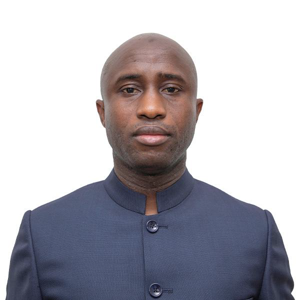
Daouda Diakite: “Guinea never intends to stop raw material exports”
- Category
- Interview
- Date
- Source
- AlCircle.com
Mr Kamal Prakash, founder of AL Circle, recently engaged in an insightful conversation with Mr Daouda Diakité, Senior Advisor to the Guinean Minister of Mines and Geology, at Fastmarkets Bauxite & Alumina 2026, where they discussed extensively about Guinea’s plans with bauxite exports, exploration of untapped reserves, and developing an integrated upstream value chain. In the interview, Mr Diakité has clearly stated that Guinea has no intention to stop bauxite exports but they will take necessary precautions to stabilise the prices. Mr Diakité also said the revenue generated from mining would be reinvested in developing other strategic projects, while the state will continue to seek foreign investments for the aluminium value chain.
Daouda is a geological engineer who studied in Morocco and France. In August 2024, he was appointed Senior Adviser to the Ministry of Mines and Geology, supporting the Minister in implementing priority projects, including local processing of mining products, developing of local content, and identifying critical minerals. Formerly Deputy National Director of Geology, he led a 2022 prospecting project on strategic metals such as lithium, cobalt and nickel, and managed the Ministry's geoscience GIS database. He also serves as the focal point for monitoring the SIMFER project in Simandou on the behalf of the Ministry of Mines and Geology.
To know the conversion in more details, read the full interview.
AL Circle: As Guinea's bauxite production is growing relentlessly and has already crossed 182 million tonnes and you still hold the world's biggest bauxite deposit, what are your plans for exploiting the untapped potential of the country in terms of bauxite mining and export in 2026 and beyond?
Daouda Diakité: In 2025, Guinea’s exports exceeded 180 million tonnes, about 20 per cent more than in 2024, a volume that fundamentally shifted global bauxite dynamics. Moving into 2026 and beyond, our strategy is evolving from simple extraction to strategic market stewardship.
We are intently expanding our geological research to build a robust National Strategic Reserve. This is not merely about identifying more ore; it is about providing the State with the data needed to manage our wealth intelligently. To prevent market saturation and ensure price stability, we will implement more sophisticated oversight of raw material exports.
Our ultimate goal remains clear: we are transitioning from a raw material exporter to an industrial processor. The revenue generated from our current upstream success is being directly channelled into the infrastructure required for local refining. By balancing disciplined export growth with a focus on value-addition, we ensure that Guinea’s bauxite wealth creates long-term prosperity rather than just short-term volume.
AL Circle: If you plan to potentially limit exports to control prices, how do you think you are going to incentivise foreign investors to develop an integrated aluminium value chain by 2030?
Daouda Diakité: Guinea has no intention of halting raw material exports. Our strategy is to simultaneously develop the upstream, sidestream, and downstream sectors.
The upstream is the engine; we must reinvest mining revenue into the country's strategic backbone—specifically, power infrastructure and national technical expertise. By doing so, we create the environment necessary for a robust downstream sector to flourish. Our goal is to maximise the revenue generated by the mining sector to fund this evolution.
To that end, we will continue to welcome downstream investors, providing them the flexibility to export within agreed-upon frameworks. This ensures that the upstream remains a viable source of growth while we collectively build Guinea’s industrial future.
AL Circle: Would you consider following Indonesia’s approach of limiting bauxite exports and incentivising companies to put up alumina refineries? Of course, Indonesia has a huge amount of coal, and it has a close proximity to China, which is why many Chinese companies are putting up integrated facilities there. In your case, due to energy deficiency at present, would you similarly incentivise people for putting up alumina refineries to start with?
Daouda Diakité: From the start, our strategy has been to align investor interests with the state’s industrial objectives. Given the current energy landscape, our immediate priority is to develop alumina refineries. By addressing our energy challenges alongside these projects, we are laying the necessary groundwork for the eventual transition to aluminium smelters. We already have four refinery projects underway, marking the clear path toward our smelting targets.
It is important to note that our model differs from that of Indonesia: we do not intend to halt raw material exports to focus exclusively on the downstream. Instead, we are pursuing an integrated growth model—simultaneously developing the upstream, sidestream, and downstream sectors. This ensures that revenue from bauxite exports is directly reinvested in the strategic infrastructure required to power our industrial future.
AL Circle: You mentioned regulating export prices and the exploitation of Chinese consumers due to the price gap between FOB and sale prices. How do you plan to bridge this gap to ensure consumers pay a fair price? Additionally, with rising freight costs and limited vessel availability due to geopolitical issues, how do you plan to support your largest consumer, China?
Daouda Diakité: Our partnership with Chinese consumers is a cornerstone of our mining strategy, and maintaining that stability is a priority for the state. To address the price gap and the volatility of freight costs, the government is taking a dual approach: transparency and infrastructure.
First, we are working to stabilise bauxite prices through, Guinea Bauxite Index, clearer regulatory frameworks that ensure the state receives a fair share of the value created, while protecting our partners from market saturation and extreme price swings. Second, to combat rising freight costs, we are investing in deep-support logistics projects. By improving port efficiency and achieving greater economies of scale, we can lower 'land-to-sea' costs, helping offset the high freight rates driven by global geopolitical issues.
Unlike other nations that might use export bans, Guinea remains a reliable supplier. Our goal is to ensure that while our production benefits the national economy and secures state revenue, the 'delivered price' remains competitive and fair for our international partners.
AL Circle: You mentioned about launching of Guinea Bauxite Index. When is it likely to come into effect?
Daouda Diakité: We are currently in the final stages of launching the Guinea Bauxite Index (GBX) and are finalising the contract with our partner. This index is an important step forward in bringing transparency and market-driven fairness to the bauxite sector.
While I cannot disclose the exact signing date, all necessary internal agreements are in place, and we expect it to go live very soon. Once implemented, the GBX will serve as the official benchmark for the FOB (Free on Board) price in Guinea. Our primary objective is to align our local selling prices with global market realities, effectively narrowing the artificial gap between FOB and CIF prices while accounting for freight and maritime volatility. This ensures that Guinea’s bauxite is priced competitively on the global stage while securing the state's rightful share of its mineral value.
AL Circle: Given that Guinea has varying bauxite grades across different regions, with some deposits being inland and others closer to ports or railways, do you take these differences into account when developing the price index?
Daouda Diakité: Absolutely. The Guinea Bauxite Index (GBX) is designed as a dynamic platform that accounts for the inherent variability of our deposits. We recognise that bauxite is not a monolithic commodity; therefore, the index will calculate value based on the specific chemical and physical characteristics of each shipment.
Factors such as alumina and silica content, moisture levels, and shipment volume are all integrated into the platform’s algorithm. Essentially, the system will offer a standardised valuation: while bauxite of identical quality will be priced consistently, premium grades with higher alumina content will naturally command a higher price. By allowing users to input specific variables—grade, volume, and logistical factors—the platform provides a precise, transparent price that factors in the global CIF and freight environment. This ensures that every batch of Guinean bauxite is priced accurately according to its unique market value.
AL Circle: For the downstream bauxite and alumina industry, has the government of Guinea got any special incentive or policy for the investors?
Daouda Diakité: Our Mining Code provides clear, tiered incentives designed to de-risk large-scale industrial commitments. For downstream investments less than $1 billion, the State typically maintains a 15 per cent free carried interest in the project. However, for transformational investments exceeding $1 billion, we offer the flexibility to reduce this state participation to as low as 5 per cent. This is a deliberate mechanism to allow investors to accelerate their return on investment (ROI) and recover the high capital expenditures associated with refinery infrastructure.
Beyond fiscal terms, we offer strategic priority. Investors who commit to local value addition through refineries align with the State's core objectives, fostering a deeper partnership. This commitment is rewarded by a balanced increase in the volume of bauxite exports within a specific timeframe. Essentially, the State acts as a co-pilot: if an investor proves their commitment to Guinea’s industrialisation, we are prepared to support their expansion with the necessary administrative backing.
AL Circle: Suppose there are investors committed to building an alumina refinery and seeking bauxite mining concession, do they need to go through the auction process, or there is a possibility for direct government-to-government or government-to-investor negotiation?
Daouda Diakité: Both pathways are available, depending on the project’s strategic alignment. While we maintain a standard competitive process, our Mining Code allows for direct government-to-investor negotiations when a project is tied to significant downstream industrialisation.
If an investor targets a concession with well-defined resources and makes a firm commitment to build an alumina refinery there, our mining code stipulates, among other things, that a tendering process is required. If all the State's expectations and conditions are met by the investor, B2B discussions allow for the adaptation of incentive mechanisms and logistical support to the scale of the investment. When a concession is dedicated to local processing, it directly serves our national mandate; therefore, we prioritise these discussions to ensure the investor has the resource security they need to break ground on a refinery. Our goal is to be a flexible partner for those who share our vision for a fully integrated value chain.
AL Circle: The last question is about the energy. Obviously, the downstream will require significant energy. In that regard, what is your plan to make globally competitive energy available to downstream investors on a long-term basis?
Daouda Diakité: Energy is undoubtedly our most significant strategic challenge, and we are addressing it with a diversified, 'all-of-the-above' power strategy. Our current foundation is built on 680 MW of hydropower, which provides a clean, renewable base. However, to ensure the high-duty cycles required for alumina refining, we are aggressively expanding into Solar and LNG (Liquefied Natural Gas). We are also engaging with neighbouring countries to strengthen sub-regional energy integration.
Our objective is a hybrid energy mix that delivers the three pillars that industry requires: sustainability, reliability, and, most importantly, global cost competitiveness. While we are committed to a long-term green transition, our immediate priority is industrialisation. To that end, we have not excluded coal as a transitional baseload power source to stabilise the grid. We believe in a pragmatic evolution: securing our industrial base first, then optimising for a cleaner energy future as our economy matures.

