您想继续阅读英文文章还
是切换到中文?
是切换到中文?

THINK ALUMINIUM THINK AL CIRCLE


In this exclusive interview with AL Circle at India Energy Week 2026, Sachin Chugh, the Hydrogen & Energy Lead at ARUP in India, explains in detail how green hydrogen can be converted into usable electricity and why it could prove transformative for energy-intensive industries like aluminium. Against the backdrop of an oil crisis and rising prices, the discussion carries added relevance for the aluminium sector.
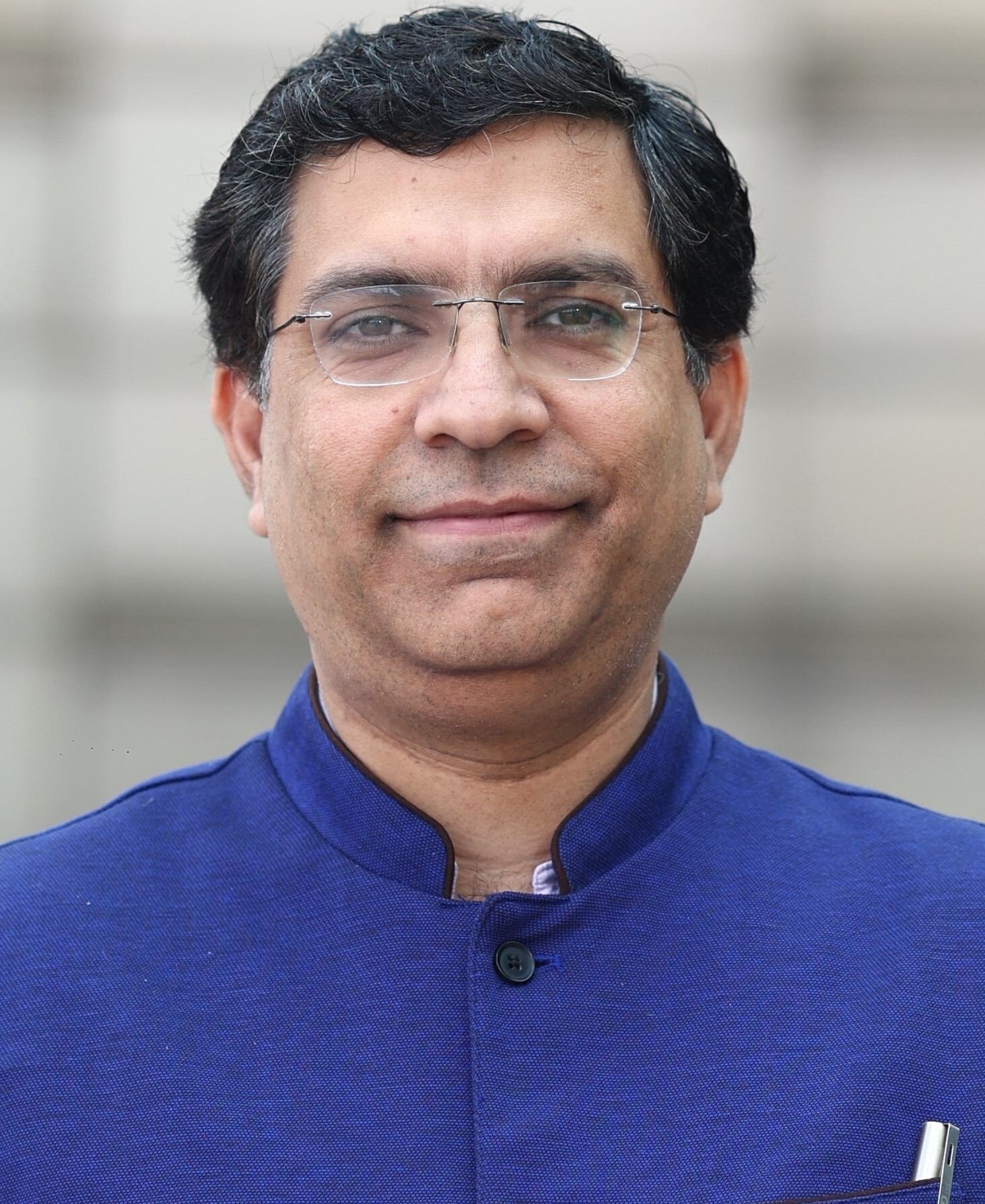
As the Hydrogen & Energy Lead at ARUP in India, Sachin Chugh drives the hydrogen and energy agenda using his 20+ years of expertise in the hydrogen and downstream energy sector. His role involves delivering innovative solutions for stakeholders in India, focusing on hydrogen production, storage, transportation, and techno-economic assessments of new energy technologies.
Previously, Sachin worked at Indian Oil R&D Centre, leading initiatives in green hydrogen, electrolyser and fuel cell technologies, alternative fuels, automotive emissions, and carbon management. He was instrumental in advancing hydrogen research at Indian Oil and worked towards adoption in refineries, proposing integration schemes for green hydrogen plants, and developing blended models for inclusion of hydrogen in the process industry. He also pioneered setting up of India’s first hydrogen production and dispensing stations and conducted feasibility studies wind to green hydrogen.
As Vice President of the Hydrogen Association of India, Sachin plays an active role in shaping India’s hydrogen ecosystem through close engagement with policymakers, industry leaders, ports, and technology providers. Through the Association’s initiatives, he has contributed to advancing national dialogue on hydrogen standards, safety frameworks, and market-creation mechanisms, including emerging applications in the hard to abate sectors.
Sachin has extensive experience in hydrogen blended CNG technologies, high and low-temperature green hydrogen technologies, and establishing research labs for fuel cells and electrolysers. He led the introduction of India’s first fuel cell buses in Delhi and has 12 patents and over 25 research papers to his name. Sachin holds advanced postgraduate certification in Business Analytics and a Masters in Thermal Engineering and over these years has guided 3 PhD students and mentored 3 start-ups in the hydrogen space.
AL Circle: As India targets an ambitious goal of producing 5 million tonnes of green hydrogen by 2030, what share will green hydrogen command within the country's overall renewable energy mix?
Sachin Chugh: India has set up a very aspirational target of producing 5 million tonnes of green hydrogen. As per the electrolysis process calculations, to produce a kg of hydrogen, about 50 to 55 units of electricity are required. And if you convert this particular electricity requirement into capacity additions of renewable energy that India aims for, then it would be somewhere around 25 per cent of the country’s total renewable energy generation by 2030.
While this goal appears highly ambitious, the focus right now is on decarbonising hard-to-abate sectors. In the future, however, the emphasis should shift towards broader sector-wide decarbonisation. If these targets align with green hydrogen adoption, the goal could be achievable.
That said, scaling up renewable energy capacity presents a significant challenge. Additionally, the diversion of renewable energy for hydrogen production, as opposed to direct electricity use, is a complex issue that policymakers will need to address.
AL Circle: What infrastructure is required to convert green hydrogen into usable electricity at scale? If India achieves 5 million tonnes of green hydrogen production over the next four years, how much power would it potentially generate?
Sachin Chugh: I would like to place this question differently because primary focus of India’s green hydrogen strategy is not to convert hydrogen back into electricity. So. India is currently looking at the electrons, which are going to come from the renewable energy, to translate and transform green hydrogen molecules. Reconverting green hydrogen into electricity is not the mandate of the government.
While the technology to reconvert hydrogen into electricity exists, it’s not commercially viable for industries or end-users. The more viable business case, although challenging, is to use the electrons to create green hydrogen and apply it directly in sectors where electricity cannot replace gas. Industries like fertilizer production, which require hydrogen as a molecule, and petroleum refineries, where hydrogen is needed for desulfurisation to meet fuel quality norms, are the primary targets for India’s hydrogen strategy.
To produce 5 million tonnes of green hydrogen, about 250-275 terawatt-hours of electricity would be required. However, if this hydrogen is converted back into electricity, only 80-100 terawatt-hours could be extracted, depending upon the mode of conversion and thereby, making the process economically unfeasible.
Hence, careful selection of applications is crucial. Our role at Arup is to guide clients and end-users in making the right decisions by leveraging our engineering expertise and deep understanding of green and low-carbon molecules. National policies, like India’s focus on green hydrogen, shape these strategies, but in the UK, where we advise the government on low-carbon hydrogen, we are exploring multiple production pathways. The key remains to prioritise sectors where molecules, not electrons, are the requirement.
AL Circle: In what ways can energy intensive industries like aluminium benefit from the increased green hydrogen production?
Sachin Chugh: We have to see aluminium production from two perspectives - one is the mining of bauxite and second is the process of converting bauxite to alumina and alumina to aluminium. The first challenge is in bauxite mining, which is a diesel-intensive process. A key application here is reducing diesel reliance by transitioning mining trucks to hydrogen-powered alternatives. While this may be a distant goal, it could serve as a valuable starting point in the value chain.
When it comes to bauxite to alumina and alumina to smelting, we need to consider two distinct requirements: one for direct electricity and one for heat, traditionally provided by fossil fuels. For processes that rely on direct electricity, approximately 13 to 15 megawatt-hours of electricity are required to produce one tonne of aluminium. In these areas, hydrogen will not replace electricity. Instead, renewable energy can replace fossil-based or grid-supplied electricity.
Aluminium production typically emits 12–16 tonnes of CO₂ per tonne of aluminium, largely due to electricity generation and the use of carbon anodes in the smelting process. Hydrogen can intervene by providing this heat and, in turn, decarbonisingsing the production process.
To replace fossil fuels with hydrogen, approximately 25 – 40 grams of hydrogen is needed per kg of aluminium to provide the equivalent thermal energy output.
Producing this quantity of hydrogen through electrolysis would require approximately 1 to 2 units of electricity per kilogram of aluminium, assuming an electrolyser consumption of about 50–55 kWh per kilogram of hydrogen. In comparison, the aluminium smelting process itself requires around 13 to 15 units of electricity per kilogram of aluminium, which is used directly in the electrolysis process that converts alumina into aluminium metal. This illustrates that while hydrogen adds some additional electricity demand, its role is complementary rather than substitutive. Renewable electricity will continue to power the smelting process, while hydrogen can help replace fossil fuels used for process heat in stages such as alumina calcination and anode baking.
However, hydrogen could play an even more prominent role in secondary aluminium production, particularly in recycling furnaces, where aluminium scrap is melted using high-temperature thermal energy. In such cases, hydrogen can replace natural gas or other fossil fuels used in the furnaces, potentially requiring 10 to 30 kilograms of hydrogen per tonne of recycled aluminium, depending on furnace design and operating conditions. This highlights that hydrogen’s strongest opportunity in the aluminium value chain lies in thermal processes, while renewable electricity remains the primary energy source for the electrolysis stage of primary aluminium production.
AL Circle: Given that green hydrogen is produced via electrolysis powered largely by intermittent solar and wind energy - the same intermittency that keeps aluminium producers reliant on fossil fuels. How viable is green hydrogen as a dependable energy source for continuous aluminium operations?
Sachin Chugh: This challenge, in particular, is not specific to the aluminium industry. In any process industry, hydrogen interventions require a continuous supply of electricity or molecules. Given that solar and wind energy generate intermittent electricity, the key is to smoothen, balance, and make that energy available continuously, especially when renewable sources are unavailable due to weather conditions. The real question is how to deliver this energy to processes that require 24/7 power.
In response, the Indian government has been pursuing several initiatives, particularly in energy storage. Technologies such as pumped hydro storage and battery energy storage systems are being explored, and similar solutions could benefit the aluminium industry as well. The challenge here is to provide electricity at the lowest possible cost to the consumer, whether industrial or end-user. As the value chain becomes more complex—spanning production, storage, and application - optimisation becomes key. This is where energy optimisation models play a crucial role, and engineering insights are essential to guide the process.
The government has introduced concepts like "renewable energy around the clock" and "firm and dispatchable renewable energy" to address peak demand. However, the industry won’t differentiate between peak and off-peak hours, making it essential for policymakers to meet peak demand. This is where the difficulty lies: when everyone switches on their equipment at the same time.
Arup has been advising clients on power supply scenarios, guiding them on how process interventions and equilibrium will shift. We help them navigate the efficiencies and inefficiencies that arise and how to optimise their processes. This is going to be a significant challenge for the aluminium industry, and understanding the best operational model within this integrated value chain will be crucial moving forward.
AL Circle: Norwegian aluminium company Norsk Hydro has successfully conducted world’s first industrial-scale tests, using green hydrogen in aluminium smelting in Navarra, Spain. What is the success rate of green hydrogen energy integration in the Indian aluminium industry so far?
Sachin Chugh: I would like to give this answer from a larger process industry perspective. We’ve seen interventions in industries like fertilizers, where natural gas is predominantly used, with efforts underway to replace it with green hydrogen. Successful bidding rounds for green ammonia production allocation to various stakeholders are a step in the right direction, and we can expect these projects to start on the ground soon. Another area of intervention is in refineries, where there is a continuous need for hydrogen.
In the aluminium sector, we haven’t yet seen such pilot projects in India, but the steel industry is already taking steps to decarbonise its processes. I foresee similar initiatives being extended to the aluminium industry, especially considering India's aspirations to boost exports of aluminium and steel. With regulations like the CBAM (Carbon Border Adjustment Mechanism) looming for exports to European nations, the transition to greener methods is inevitable for the industry. While the aluminium sector has not yet seen large-scale pilots, they are on the horizon.
AL Circle: Green hydrogen in aluminium smelting reduces CO2 emissions by up to 4,541 tonnes per year. What policy, financial and technological interventions are needed to accelerate its adoption across India's aluminium sector?
Sachin Chugh: As Vice President of the Hydrogen Association of India, which collaborates closely with the government on policy matters, I can share that the government is taking a holistic approach rather than addressing sectors individually. Policies are being crafted to explore how green hydrogen interventions can help decarbonise various process industries. While the CO2 reduction potential is clear, the real challenge lies in the availability of the hydrogen molecule and its synchronisation with renewable energy. The key issue is maintaining grid balance when both hydrogen and renewable energy demand are high.
Europe has approached this challenge through concepts like additionality, temporal and geographical correlation , which dictate specific time periods for withdrawing renewable energy for such projects. In contrast, India is following the measurements averaged over time scale, to estimate energy needs. While this is a work in progress, the primary challenge lies in the supply chain rather than sector-specific issues.
Each sector will mature based on its unique requirements, influence, and how it aligns with international policies. For the aluminium industry, particularly for exports, reducing its carbon footprint will be essential. This is where renewable energy and hydrogen interventions will be crucial, and the government will assess these as part of the broader strategy.
AL Circle: Producing green hydrogen requires large volumes of solar and wind power. At a time when aluminium producers are already competing with data centres for access to low-cost renewables, can green hydrogen add up to this competition and drive up renewable energy prices for industrial users?
Sachin Chugh: The concern is valid because green hydrogen production requires large amounts of renewable electricity, and sectors such as aluminium, data centres, and hydrogen projects will inevitably compete for low-cost renewable power. However, it is important to recognise that not all energy uses should be treated equally from an efficiency perspective.
In the case of aluminium production, electricity is required directly for the electrolysis process, which typically consumes 13 to 15 megawatt-hours per tonne of aluminium. From a system efficiency standpoint, it always makes more sense to supply this electricity directly from renewable sources rather than converting renewable electricity into hydrogen and then using it indirectly.
Therefore, the first priority should be to secure renewable electricity for direct industrial use, and mechanisms such as long-term power purchase agreements (PPAs) and open-access renewable procurement allow aluminium producers to do exactly that. Hydrogen should then be deployed selectively in areas where electricity cannot easily replace fossil fuels, particularly in thermal processes such as alumina calcination, anode baking, and recycling furnaces.
AL Circle: India’s aluminium plants are largely inland and coal-linked, while green hydrogen economics favour coastal or high-renewable zones. Does this geographical mismatch limit hydrogen uptake in the aluminium sector?
Sachin Chugh:. The real question is what makes the most business sense - whether you transport electrons to aluminium plants and use them to produce hydrogen in-house with electrolysers located at or near the smelters. That’s a different scenario. However, when you start transporting hydrogen from coastal areas to inland locations, the technology becomes impractical. Therefore, the goal should be to produce and consume at the same location, and when it comes to molecules, it’s more efficient to transport electrons rather than hydrogen itself.
This approach is more sustainable for shorter distances within the country. But when it comes to intercontinental transport, further study is needed. At Arup, we recently conducted a study examining hydrogen transport from the UK to Europe. This included pipeline transportation, , and the transport of electrons. The choice between these methods depends on distance and the intended applications. These factors will be the key criteria for determining the best solution for the aluminium industry.