您想继续阅读英文文章还
是切换到中文?
是切换到中文?

THINK ALUMINIUM THINK AL CIRCLE


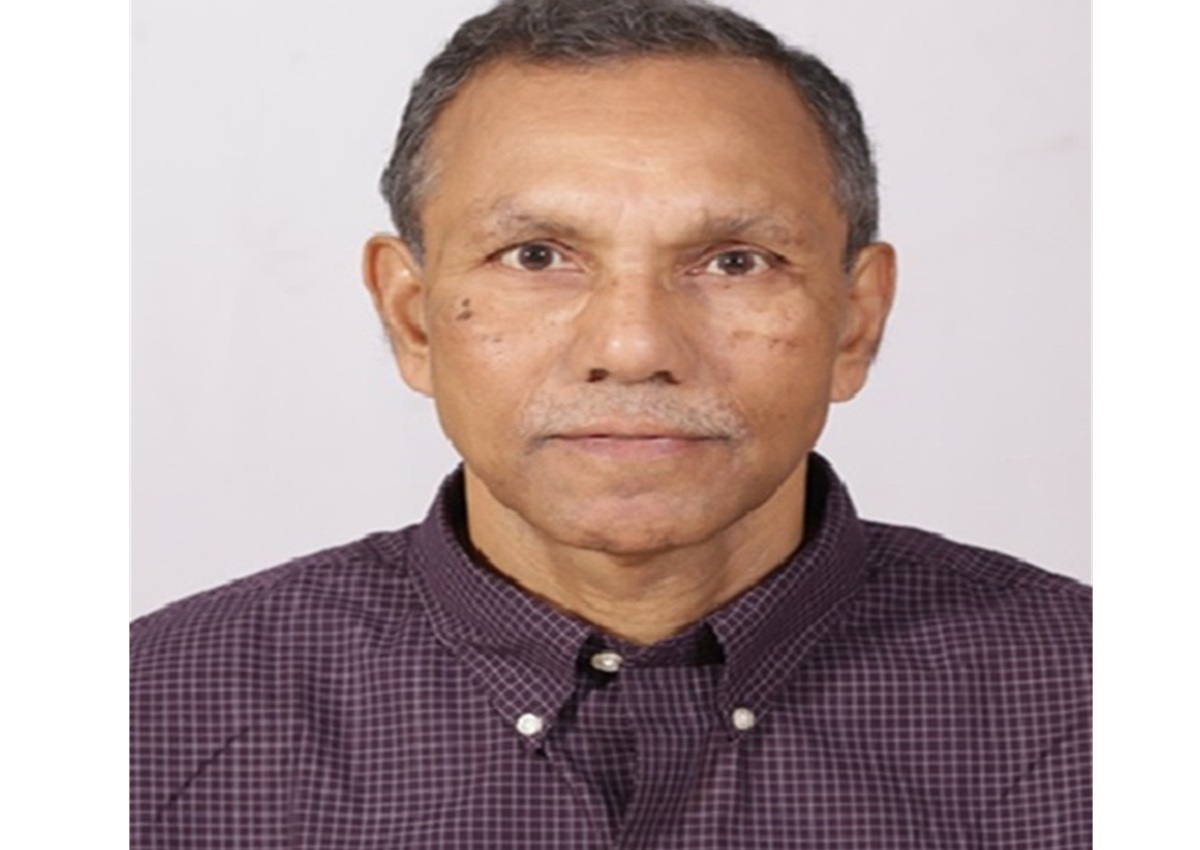
Dr Ashok Nandi, President of the International Bauxite, Alumina & Aluminium Society (IBAAS), in an exclusive interview with AL Circle, discussed how India’s aluminium industry is shifting from efficiency gains to systemic transformation. He highlighted key drivers such as decarbonisation, circular economy practices, digitalisation, and the potential of nuclear energy for green aluminium. Dr Nandi also emphasised IBAAS’s role in fostering collaboration, supporting emerging markets, and engaging young talent to advance sustainability across the aluminium value chain.
AL Circle: Guinea continues to account for more than a quarter of global seaborne bauxite trade. What seems to be changing year-on-year for Guinea’s production, export volumes and capacity utilisation between 2023, 2024 and the revised 2025 estimate?
Dr Ashok Nandi: Although bauxite mining and export of Guinea are continuously increasing, thanks to improvement in the infrastructure, the bauxite quality is slowly deteriorating. Most of the large mine owners are high-grading, leaving behind medium and low-grade ores, against the mineral conservation law. This is an unfortunate situation as these low-grade materials are rejected and backfilled. Countries like Australia, China and India are continuously bringing down the alumina and silica cut-off grades to increase the resources in the domestic mines to save the valuable reserves. Many bauxite deposits of Guinea are declared exhausted, leaving behind about 40 per cent alumina and 3 per cent silica, which is now considered average-grade bauxite in India.
AL Circle: Australia and China together contribute over half of the global mined bauxite. How have their mine output growth rates diverged since 2022, and what does your 2026 baseline forecast suggest in percentage terms for each?
Dr Ashok Nandi: Well, Australia can export low to medium alumina- high silica boehmitic bauxite to China thanks to its developed infrastructure and lower freight cost compared to Guinea. Chinese domestic bauxite quality is continuously deteriorating, and it is cheaper to process the imported Guinea ore for alumina production. With about 200 million tons of imported ore per annum, Chinese alumina refineries are becoming more and more dependent on Guinea, Australia and other countries.
AL Circle: Alumina refinery throughput is the primary demand signal for bauxite. How did global alumina production change between 2023 and 2025, and what refinery utilisation assumptions support your 2026 bauxite demand forecast?
Dr Ashok Nandi: With the deteriorating domestic and imported bauxite quality, alumina refineries are slowly adopting the lower-grade ores for survival. Technology is now evolving in the world to use high-silica ore (6 to 10 per cent) economically, and in this connection, Sumitomo/ILTD processes should be considered for implementation in India. Some of the Chinese alumina refineries are adopting the IB2 process to extract alumina from high silica low-grade ores in the high temperature digestion plants. Time may come when alumina will be economically extracted from aluminous laterites and laterites, which are presently rejected in the mines or if these deposits are not mined.
AL Circle: What has been the average CFR China bauxite price trend from Q1 2024 through Q4 2025, and under your base-case scenario, where do you see the price range settling in 2026, assuming no major supply shocks?
Dr Ashok Nandi: As the alumina prices are quite low in the world market today (almost 11 per cent) of metal in place of the usual 14 per cent, thanks to relatively cheap capsized bulk bauxite shipments from Guinea to China. More than 80 per cent of Guinea bauxite is mined and exported by Chinese companies. During 2026, there may bean increase in ore prices and/or quality may deteriorate. Except CBG, most of the mine owners are exporting a maximum of 44-45 per cent alumina ore with less than 2.5 per cent silica.
AL Circle: BMI has flagged infrastructure and permitting risks in West Africa. Quantitatively, how much latent capacity (in million tonnes per annum) remains stranded in Guinea and neighbouring exporters due to logistics, licensing or community bottlenecks?
Dr Ashok Nandi: As time passes, large Chinese mine owners, similar to CBG, prefer export of high-grade ore (+45 per cent alumina) from Guinea, leaving behind below 42-44 per cent alumina ore. There are cases where Chinese companies have abandoned bauxite mines after extracting high grades, and small/local mine owners are further working in these mines and are scouting for bauxite from low-grade dumps. Due to various reasons, about 20-30 per cent of bauxite remains in the mines, and sometimes they are simply backfilled and wasted.
AL Circle: Inventory behaviour is often under-reported in bauxite analysis. How have port and refinery stock levels changed over the last 18 months, and what stock-to-consumption ratio are you building into your 2026 balance sheet?
Dr Ashok Nandi: The alumina refineries importing bauxite must keep at least a 2-month inventory to safely run the plant. Some of the refineries are blending different qualities of ore imported from two or more sources. Depending on the requirements of each refinery and season, the port and refinery stock levels are maintained for smooth functioning. In the rainy season, higher inventory is being maintained compared to the dry season.
AL Circle: From a cost-curve perspective, which producing regions are currently operating in the top quartile of delivered-to-China cost, and how much of the 2026 global supply would become uneconomic if prices fall by 10–15 per cent from 2025 averages?
Dr Ashok Nandi: The modern alumina refineries specially set up in Shandong province in China, based on imported Guinea bauxite, are likely to be profitable. Well, Indian alumina refineries like Utkal will continue to be the lowest cost producers in the world. Some of the Australian and old alumina refineries of China processing the domestic bauxite may become uneconomical if alumina prices fall by 10-15 per cent.
AL Circle: Looking beyond headline tonnage, what are the three variables in your 2026 bauxite model with the highest forecast sensitivity, and by how much would global production deviate if any one of those assumptions shifts by a single standard deviation?
Dr Ashok Nandi: The three likely variables in the bauxite model are the political and country risk issues in Guinea, a further drop in alumina prices and an increase in the oil prices in the world market. It is difficult to predict the deviation in the global bauxite market if any of these assumptions take place.