您想继续阅读英文文章还
是切换到中文?
是切换到中文?

THINK ALUMINIUM THINK AL CIRCLE


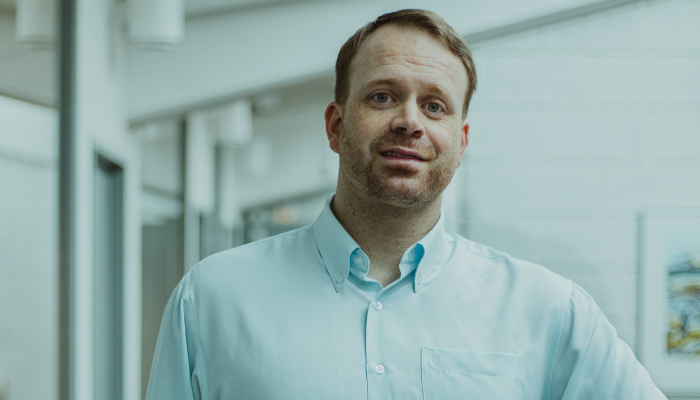
With over 16 years of extensive experience in the metals industry, Karl Matthíasson is a visionary leader at the helm of DTE, a leading solution provider for molten metal processing, including aluminium. As a co-founder, CSO and the former CEO, his knowledge of the industry is central to DTE’s long term business strategy for growth and market normalisation. Karl's journey with DTE began as a joint co-founder, where he has played pivotal roles such as COO, CFO, and CEO. Instrumental in securing over USD 25 million in Seed and Series A funding and multiple grants, Karl was the driving force behind DTE's journey to commercial readiness. His strategic acumen laid the foundation for DTE's corporate strategy, business model, and overall development and his commitment to values is evident in the establishment of a value-based commercialisation and go-to-market strategy for DTE.
In 2025, Karl moved into a Chief Strategy Office role, focusing on pursuing the company’s next funding round. His successor as CEO, Jakob Asmundsson, a specialist in scaling operations of successful businesses, builds on the solid foundation that Karl established. Karl remains an integral part of DTE’s leadership team and his deep industry knowledge lies at the heart of the company’s strategy decisions. Before his leading role at DTE, Karl consulted on projects with industry giants like Alcoa, Century Aluminum, and Rio Tinto whilst at Iceland's largest engineering firm. His diverse industry experience positions him uniquely to lead DTE towards innovation and excellence.
Karl holds an M.Sc. in Production Engineering and Management from the Royal Technical University (KTH), Sweden, and a B.Sc. in Industrial Engineering from the University of Iceland. He is a proud board member of the Icelandic Society of Maintenance and Reliability Professionals (EVS). In 2017, Karl's exceptional entrepreneurial spirit was recognised when he won Deloitte Iceland's Rising Star pitching competition, showcasing his dedication to driving innovation and making a lasting impact in the industry.
AL Circle: Could you walk us through the key features of your solutions, particularly your breakthrough LP-LIBS™ technology, and explain what sets them apart from other solutions currently available in the market?
Karl Matthíasson: Our Liquid-Phase Laser-Induced Breakdown Spectroscopy (LP-LIBS™) technology analyses molten metal. It works by generating a high-energy pulse focused on the surface of the sample. The atoms of each chemical element present in the plasma emit a unique spectrum of discrete spectral lines, characteristic of the elements. LP-LIBS™ most often replaces Spark-OES techniques found in traditional lab analysis, but is superior to other LIBS solutions on the market.
Our solution offers real-time data due to a high measurement frequency, making it a game-changer in industries where rapid and precise elemental analysis is critical. However, the insights provided by the technology also let us install it as a gateway between molten metal and the analytics platforms used by operators. Our IRIS cloud platform can use those real-time data streams to inform an unprecedented level of process control and predict faults and anomalies before they happen. While cutting out time-consuming lab analysis on its own improves efficiency to a substantial degree, the enhanced process control helps to eliminate inefficiencies caused by errors and enables a much higher percentage of scrap in the melt that can otherwise be incorporated.
AL Circle: Decarbonisation has become central to aluminium processing. To what extent do your solutions reduce greenhouse gas emissions in casting and remelting operations? Are there plans to integrate more advanced features to further optimise carbon reduction across these processes?
Karl Matthíasson: Our solution reduces greenhouse gas emissions in casting and energy-intensive remelting operations by safely increasing scrap content batch-by-batch without risking spec and reducing downstream rework. With the Carbon Border Adjustment Mechanism (CBAM) having come into force in the EU on January 1 of this year, carbon costs and leakage will be important for European producers in particular. Decarbonisation is also driving the demand for recycled aluminium, but turning mixed, variable scrap consistently into in-spec metal is challenging for secondary producers due to the constraints of measurement technologies, leading to wasted energy and subsequent emissions. DTE enables secondary producers to reduce the incorporation of primary aluminium by up to 10 percentage points. In addition, the instant readings mean that the aluminium does not have to be kept molten for hours while waiting for the laboratory results. The integration of measurement technologies into an analytics platform leads to further carbon reductions thanks to the predictive insights and unprecedented real-time process control, where operators are no longer blind to what is happening.
AL Circle: Rising aluminium input costs, including energy, have led many aluminium smelters across the world to scale back their operations or cut down production capacities. Has this trend affected demand for your technologies so far, and how do you assess market demand for your solutions heading into 2026?
Karl Matthíasson: Yes, the demand for better operational efficiency and the need to offset rising costs are both important reasons why many of our customers choose to implement our solutions. Heading into 2026, energy costs will continue to be high, and if anything, pressures for producers and recyclers will intensify, furthering the demand for our solutions. The increasingly tense geopolitical situation means that recycled aluminium’s value as a strategic material in civilian and military applications is being increasingly appreciated, and the small amount of energy secondary aluminium requires compared to primary production will drive demand in that area. Furthermore, aluminium scrap is being used as a margin protection tool in volatile scrap markets. The industry is facing a crucial inflexion point where the implementation of innovations is critical to business success and future growth.
AL Circle: What automation features do your technologies offer? How do they enhance operational efficiency and energy optimisation?
Karl Matthíasson: Our technology enables the fully automated analysis of molten metal, reducing the need for physical handling of molten metal by human operators. Coupled with the analytics platform, we can offer operators far more real-time information about the state of the process than they currently receive and provide suggestions based on the information being gained, even to the point of predicting and heading off issues before they happen. In the future, this will lead to automated decisions being made with human operators overseeing rather than adjusting the process by guesswork. The tighter control over the process makes it easier to achieve the right metal compositions and prevents reworks, lessening energy usage. When it comes to operational efficiency and energy optimisation, they go hand in hand.
AL Circle: As innovation remains a key to staying competitive, what new technologies or solution upgrades do you plan to develop and inaugurate in 2026 and the years beyond?
Karl Matthíasson: We plan to move from a system that can recommend solutions and adjustments to human operators to one that can be integrated into the hardware of a producer’s systems and make automatic adjustments to parameters such as alloy additives, furnace actions, and scrap blends. This would reduce the decision time to seconds from the minutes a human operator presently takes. When faced with a scrap-heavy melt containing a variety of different additives and contaminants, for example, it could very quickly decide which additives are needed and in what quantities to compensate for impurities introduced to the melt from the aluminium scrap’s previous applications.
In addition, we will continue to improve the predictive analytics of complementary platforms such as IRIS™ and improve the performance of the physical hardware in the extreme conditions of the foundry environment based on feedback and gained experience from users. We are no longer a sampling company but a key enabler of metals intelligence for the industry.