您想继续阅读英文文章还
是切换到中文?
是切换到中文?

THINK ALUMINIUM THINK AL CIRCLE


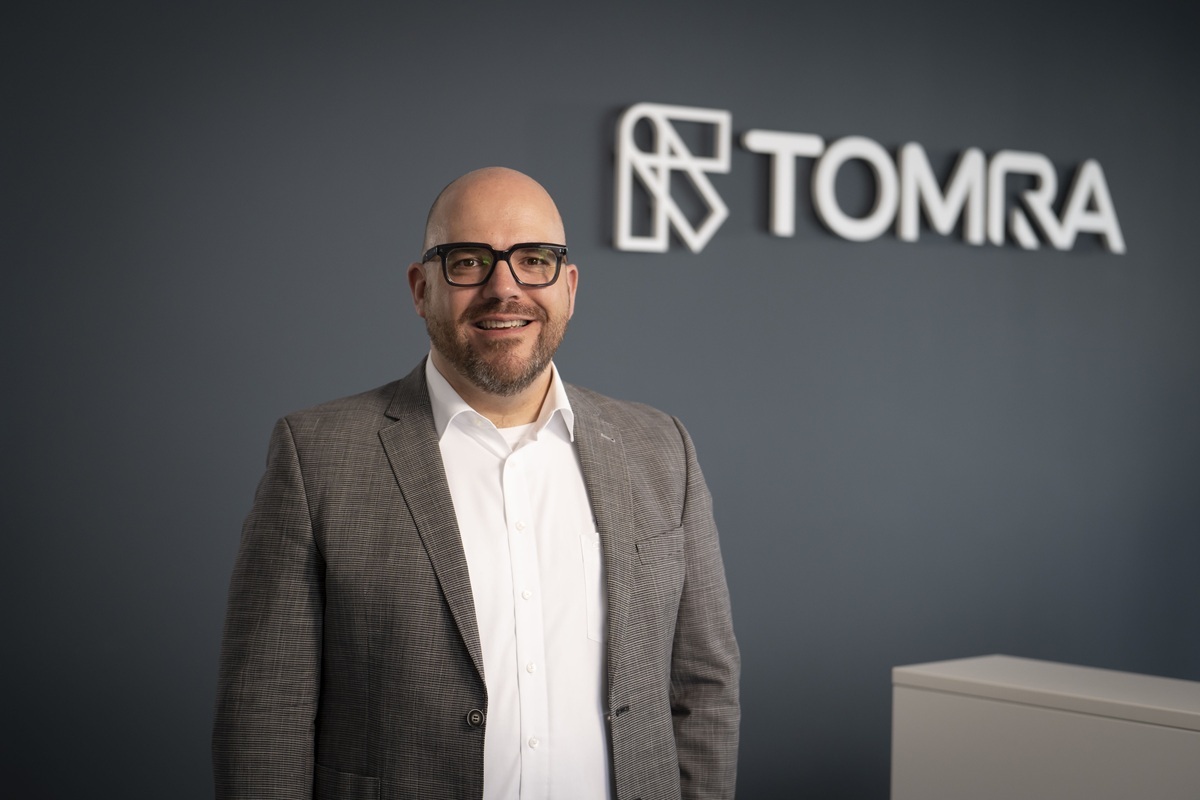
Frank van de Winkel is TOMRA Recycling's Business Development Manager – Metal, and an expert in aluminium recycling with 20 years of experience in the industry. He has demonstrated a history of working in the industrial automation industry, possessing strong business development and professional skills in negotiation, management, continuous improvement, product development, and engineering.
Frank van de Winkel explains how TOMRA’s sensor-based and AI-driven mechanism assists high-purity, alloy-specific aluminium recycling for ensuring a circular manufacturing. Driven by decarbonisation and scrap demand, advanced technologies are used to support automotive, packaging and construction sectors helps to reduce carbon footprints and maximise scrap value.
AL Circle: TOMRA has been positioned as a global leader in sensor-based sorting. How has your technology roadmap evolved in response to the industry's shift from basic recovery to high-value material purity and circular manufacturing?
Frank van de Winkel: The transition to circular manufacturing has fundamentally changed what recyclers need. It’s no longer just about volume; it’s about delivering furnace-ready scrap with precise chemical compositions and full traceability.
Our roadmap has evolved into a multi-layered ecosystem that solves the industry's toughest purity challenges:
AL Circle: As global scrap demand rises sharply with industries racing toward circularity, what macro trends, from carbon regulations to raw-material shortages, are most aggressively reshaping the future of metal recycling?
Frank van de Winkel: Three macro trends are currently reshaping the industry and driving the shift toward true circularity:
AL Circle: As aluminium becomes a centrepiece of low-carbon manufacturing, how do you see the global aluminium-scrap market evolving over the next decade? Which segments look most poised for accelerated growth?
Frank van de Winkel: We expect a strong growth surge over the next decade, driven by global decarbonisation, the increase in electric vehicles (EVs) and the rise of circular economy initiatives.
Key segments driving this growth include:
Ultimately, the market is moving toward closed-loop, alloy-specific recycling where the value of the metal is preserved for its original high-end application.
AL Circle: How critical is advanced sorting in enabling traceability and alloy-specific recycling at industrial scale?
Frank van de Winkel: Advanced sorting is the engine behind alloy-specific recycling and industrial-scale traceability. Technologies like X-TRACT™ and Dynamic LIBS are now essential for accurately extracting major alloy groups (like 6xxx and 5xxx) and even specific alloys directly from mixed scrap streams.
In the automotive sector, this precision allows recycled aluminium to move into high-strength, safety-critical components where strict alloy specifications are non-negotiable.
For extrusion profiles, Dynamic LIBS technology recovers high-purity 6063 and 6061 scrap. This prevents cross-contamination and provides the clean feedstock needed for new architectural and precision-engineered parts without the need for significant primary dilution.
AL Circle: In emerging markets like Southeast Asia, which are expanding their recycling ecosystems, what structural barriers must be solved for large-scale adoption of high-tech sorting?
Frank van de Winkel: The primary obstacle in emerging markets is the lack of a reliable, standardised supply chain. Without a consistent flow of quality material, recycling facilities cannot achieve the economies of scale necessary to justify investing in advanced technology. This issue is driven by regulatory gaps; while markets like Malaysia and Thailand are increasing purity requirements, other regions lack the legal framework to manage complex waste. Consequently, high-value alloys are frequently lost to 'material leakage' through unregulated channels. To secure future investment, these markets must formalise the informal collection sector and enforce Extended Producer Responsibility (EPR) frameworks to stabilise the material supply.
AL Circle: AI-driven sorting solutions such as GAINnext™ promise continuous learning on the line. How transformative is AI becoming for yield improvement, quality assurance and operational efficiency in metals recycling?
Frank van de Winkel: AI-driven sorting solutions such as TOMRA’s GAINnext™ are transforming recycling operations –
whether in metals or other materials – by increasing sorting granularity and solving previously impossible sorting tasks. This directly contributes to significant yield improvements.
By utilising deep learning technology and artificial neural networks, GAINnext™ delivers:
AL Circle: With sustainability performance becoming a competitive differentiator, how does TOMRA work with recyclers and OEMs to help them meet decarbonisation targets through better scrap utilisation?
Frank van de Winkel: Sustainability performance is a key competitive differentiator, and TOMRA partners closely with both recyclers and OEMs across the value chain to help them meet ambitious decarbonisation targets by enabling superior scrap utilisation. Our advanced sensor-based sorting and AI-driven platforms empower recyclers to produce ultra-high-purity recycled aluminium which reduces the reliance of OEMs on primary extraction –which is extremely energy-intensive – thereby significantly lowering the carbon footprint of the final products.
Additionally, we prioritise value chain collaboration with OEMs and stakeholders. We actively facilitate knowledge exchanges through workshops and technical forums that bring together manufacturers, recyclers and major end-users like Novelis. This ensures our sorting solutions are aligned not just with the technical requirements of our direct customers, but also with the stringent expectations of their downstream consumers, the OEMs, regarding material quality, traceability and circularity.