







The aluminium industry is being tested in ways few could have anticipated. The ongoing Middle East crisis has triggered more than just supply disruptions, it has exposed a fundamental gap between information and intelligence. In today’s environment, knowing what is happening is no longer enough. The real advantage lies in understanding what it means, what comes next and what to do about it.
This is where the intelligence layer comes into play.
Traditionally, business market research in aluminium focused on historical trends, production volumes, demand cycles and price movements. But in a crisis-driven market, backwards-looking analysis has limited value. Intelligence today is built by connecting multiple signals in real time: energy price volatility, shipping disruptions, regional supply risks and buyer behaviour. When these variables are analysed together, they reveal patterns, early warnings of shortages, pricing inflection points and demand shifts.
LME aluminium stock, February, 2026
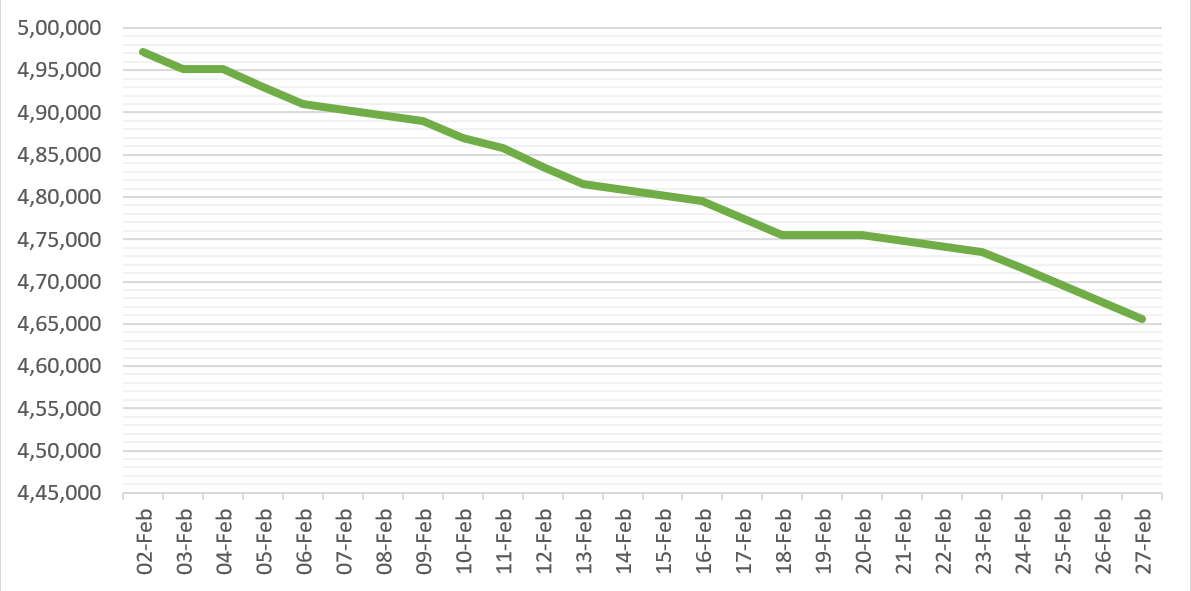
Source: LME
For example, a delay in shipments from the Middle East is not just a logistics issue. Through an intelligence lens, it signals tightening supply in the US markets and the European nations, rising premiums and potential margin pressure for downstream industries. This is how data transforms into decision-making power.
At the same time, the competitive landscape analysis is evolving rapidly. The crisis is not affecting all players equally. Intelligence helps identify who is gaining and who is losing, often before it becomes visible in financial results. Energy-secure producers, regionally diversified players and secondary aluminium suppliers are strengthening their positions. Meanwhile, companies dependent on single-region sourcing or exposed to high energy costs are becoming increasingly vulnerable.
LME aluminium stock, March, 2026 (as on March 24)
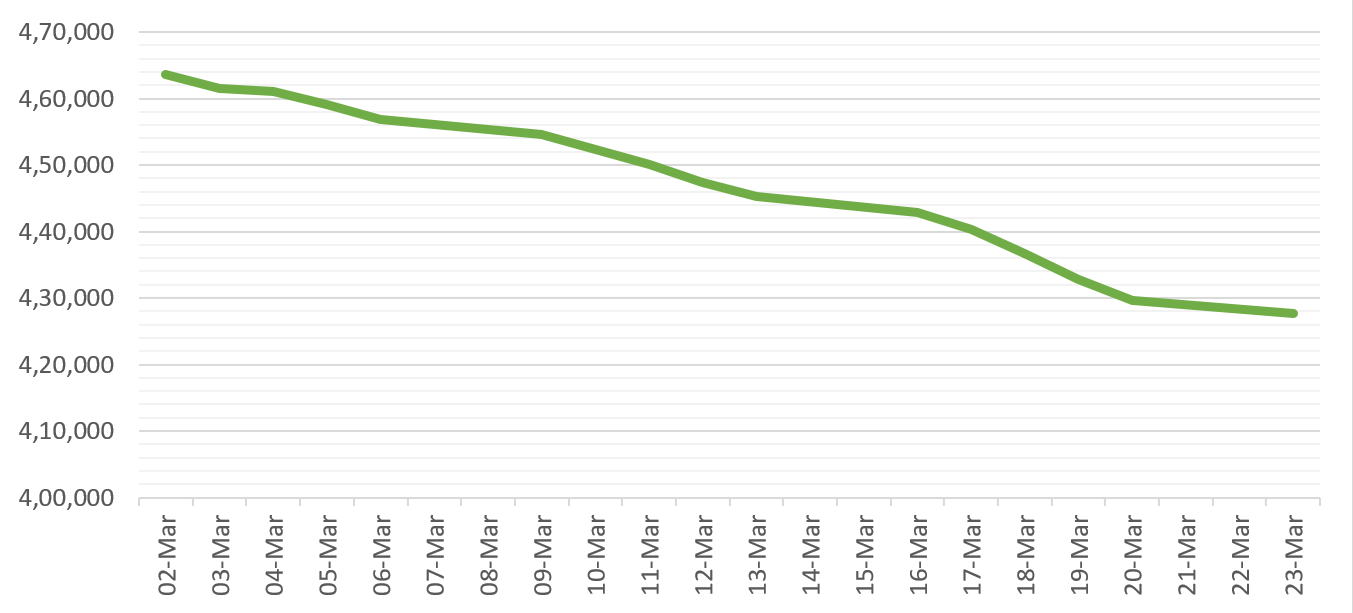
Source: LME
Understanding this shifting landscape allows businesses to act proactively, whether it is securing alternative suppliers, renegotiating contracts, or adjusting pricing strategies. In essence, intelligence provides a forward-looking view of competition, not just a snapshot of the present.
Equally critical is the role of market segmentation. In stable markets, segmentation is often broad and static. In a crisis, it becomes dynamic and highly strategic. Intelligence enables segmentation across multiple layers, geographical (risk vs stable regions), value chain (upstream, midstream, downstream) and strategic (resilient vs exposed players).
This multi-dimensional segmentation allows companies to pinpoint where risks are concentrated, where opportunities are emerging, and where immediate action is required. It turns complexity into clarity.
Ultimately, the intelligence layer works by integrating, interpreting and anticipating. It integrates diverse data points, interprets their impact across the value chain and anticipates future market movements. This is what enables companies not just to react, but to stay ahead.
The aluminium market is no longer defined by stability, it is defined by how well businesses can navigate disruption. And in this new reality, intelligence is not a support function. It is a strategic capability.
Winning in this market will depend on how early you see what others miss. Partner with us to decode market complexity.

 Voyagerman Technology


