





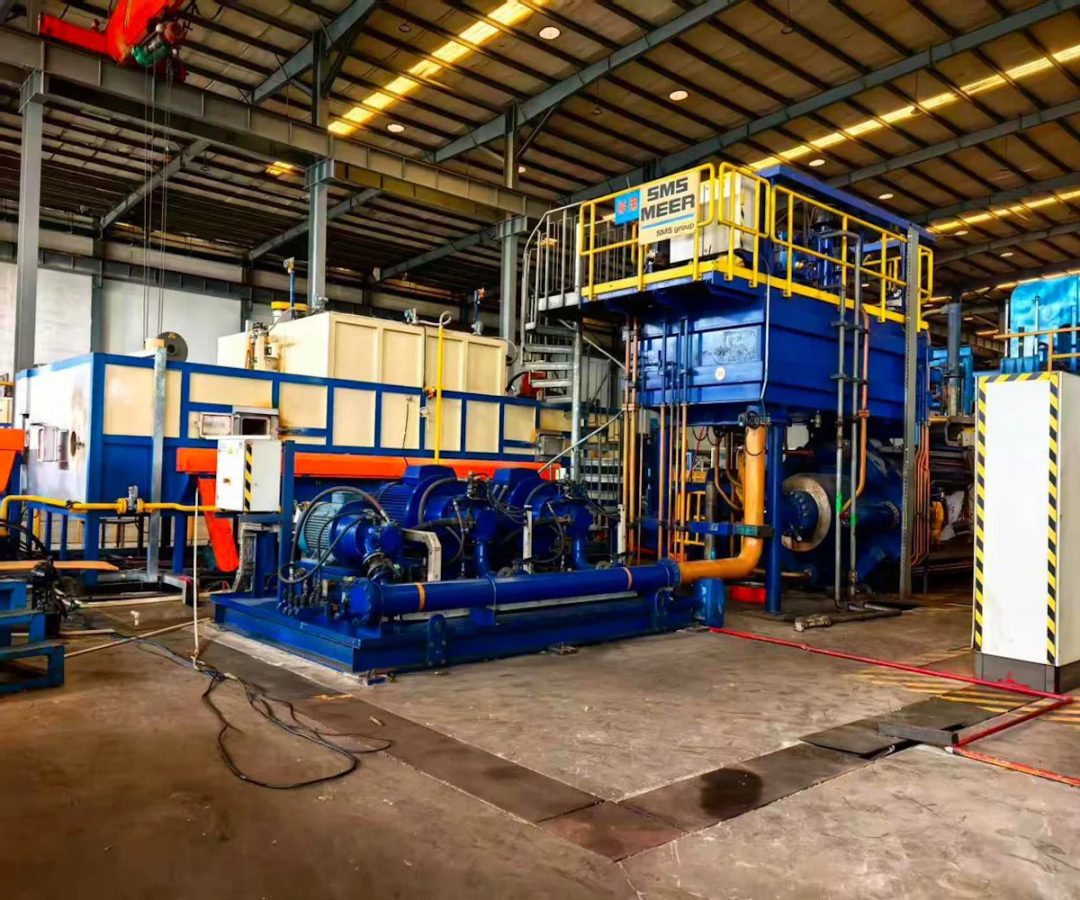
Expanding an extrusion plant does not always require a new press. A well-selected pre-owned extrusion press can add production capacity faster and with lower initial capital expenditure.
However, the lower purchase price is only an advantage if the machine can reliably produce the required profiles at the intended output rate. Buying on tonnage, age or appearance alone can turn a capacity project into an expensive maintenance problem.
Before evaluating equipment, define the target alloys, billet dimensions, maximum profile size, product weight per metre, tolerances, annual output and operating pattern. This production brief should determine the required capacity of the aluminium extrusion press.
1. Match press tonnage to the intended product mix
Extrusion press tonnage is the maximum force the press can apply, but a higher number does not automatically mean better production. The required force depends on billet diameter, alloy, extrusion ratio, die geometry, billet temperature and desired extrusion speed.
A press that is oversized for the normal product mix may consume unnecessary energy, while an undersized machine may run slowly, struggle with harder alloys or restrict future product development.
For example, this 8 inch used aluminium extrusion press (1,800 UST) listed on AL Biz may suit certain aluminium profile operations. Yet the 1,800 UST rating and 8-inch billet size are only starting points. Buyers should verify usable container dimensions, ram speed, stroke, specific pressure and compatibility with the planned alloys and dies.
2. Inspect the machine’s condition under load
Request the machine’s serial number, manufacturing year, operating hours, maintenance records, overhaul history, original drawings and current production data.
Inspect the main cylinder, platen, tie rods, container holder, crosshead, guides, seals and alignment. Look for hydraulic leakage, scoring, fatigue cracks, abnormal vibration and evidence of improvised repairs.
The press should ideally be observed during profile production. Record cycle time, pressure stability, extrusion speed and oil temperature. Check whether it reaches rated pressure without excessive leakage or overheating. Obtain recent quality results from representative profiles.
If the machine has been dismantled, insist on inspection reports, operating videos and preservation records; uncertainty should be reflected in the price and contingency budget.
3. Evaluate the complete extrusion line
A press alone does not create saleable output. A used aluminium extrusion line may also require a billet heater or log furnace, hot saw, puller, run-out table, cooling system, stretcher, finish saw, ageing oven, die oven and material-handling equipment. Each component must match the press speed, billet size, profile length and plant layout.

An apparently inexpensive press can become uneconomic if critical auxiliaries are missing or mismatched.
Buyers comparing options can also review other second-hand aluminium extrusion press and log furnace or a second-hand aluminium extrusion press line listed on our marketplace. The correct comparison is not press price versus press price; it is the cost and output of a fully commissioned line.
4. Check controls, spares and upgrade requirements
Obsolete PLCs, drives, sensors and hydraulic components can cause long stoppages even when the press structure remains sound. Confirm the availability of spares, technical documentation and service support.
Ask an automation specialist to assess whether controls require replacement and whether safety circuits, guarding and emergency systems comply with regulations at the destination plant.
Determine whether the press can exchange data with existing plant systems. Energy monitoring, recipe control, traceability and automated handling may be essential to achieving expected throughput.
5. Calculate total installed cost and realistic output
For a credible extrusion plant expansion business case, include dismantling, packing, inland transport, freight, insurance, import duties, foundations, utilities, reassembly, controls upgrades, replacement parts, commissioning, trial production and operator training. Add an allowance for unforeseen repairs and calculate the revenue lost during installation.
Finally, estimate saleable tonnes per year, not theoretical press capacity. Account for alloy-dependent speeds, die changes, planned maintenance, scrap, recovery, shift patterns and expected utilisation. Conduct a technical acceptance test with measurable criteria before completing the purchase.
The right pre-owned press is the machine that delivers the required product mix, quality and saleable output at an acceptable lifecycle cost. Explore extrusion press equipment on our B2B marketplace, compare available lines and send enquiries directly to sellers.
Start with a written production brief and inspection checklist; it will eliminate unsuitable equipment before transport, installation and repair costs make the mistake irreversible.
If you have any other requirements, you can post your buying or selling requirements on our marketplace or contact our team for trade assistance,
Contact our trade desk:
Call: +91 8100108283
Email: info@alcirclebiz.com


 Voyagerman Technology


