








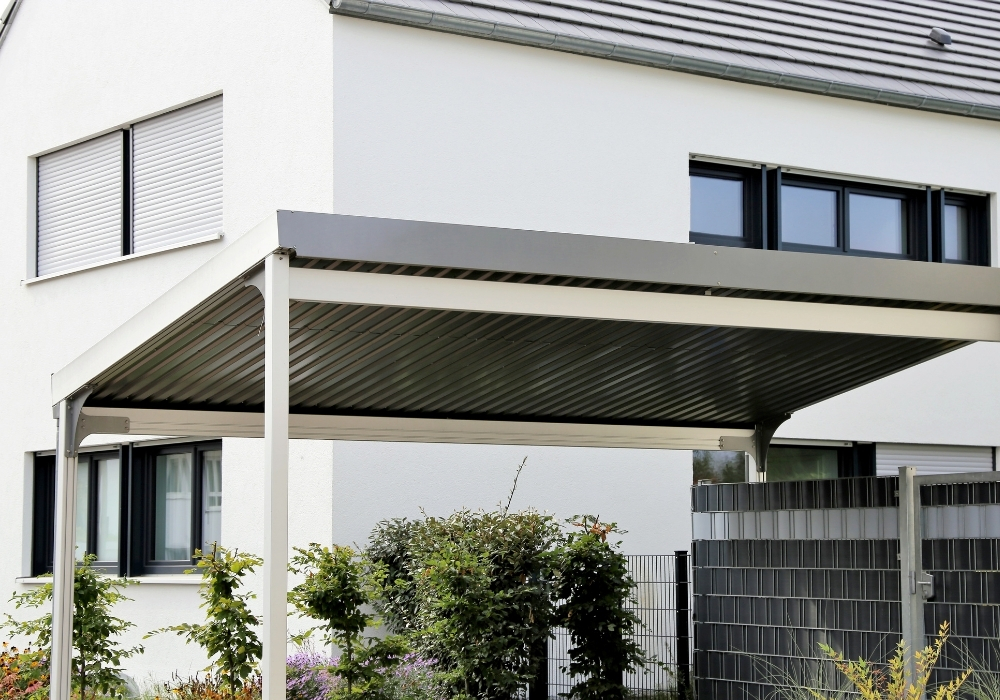
In construction, aluminium facades are no longer just about design, strength and durability. They are becoming a serious carbon decision.
This case study shows how Hydro Building Systems and TECHNAL are reducing the embodied carbon of aluminium facade systems at scale. The message is practical: decarbonising facades is not a distant ambition. It is already possible with recycled aluminium, circular design, and product-level life-cycle assessment.
Why facades matter in building decarbonisation
Buildings are responsible for a large share of global energy-related CO₂ emissions, and as operational energy becomes cleaner, embodied carbon from materials is becoming harder to ignore. Facade systems sit right at this pressure point because they are material-intensive and often replaced during a building’s lifecycle.
For aluminium facade systems, the metal itself accounts for a major share of the embodied carbon load. That makes aluminium sourcing one of the most important starting points for reduction.
Hydro and TECHNAL’s recycled aluminium approach
TECHNAL, Hydro’s architectural aluminium brand in the UK, began addressing aluminium sourcing directly in 2018. Instead of relying only on conventional primary aluminium, the company moved towards Hydro CIRCAL recycled aluminium.
According to the case study, typical primary aluminium in Europe has a footprint of around 10 kg CO₂e per kg of aluminium. Hydro CIRCAL 75R, made with at least 75 per cent post-consumer recycled aluminium, has a verified footprint of around 1.9 kg CO₂e per kg. Hydro CIRCAL 100R, available for selected applications, uses 100 per cent post-consumer recycled aluminium and has a footprint below 0.5 kg CO₂e per kg.
What makes the system effective
The impact does not come from aluminium alone. TECHNAL’s strategy looks at the full facade system, including:
- Recycled aluminium profiles
- Recycled polyamide thermal break strips
- Lower-carbon EPDM gaskets
- High recycled-content fittings and hardware
- Process optimisation in extrusion and surface treatment
- Product optimisation to reduce material use
Image used for representational purpose
This system-level thinking matters because facade carbon is not created by one component. It is built into every material and process choice.
The measurable carbon impact
The case study reports that a double-glazed TECHNAL aluminium facade system can achieve around 76 kg CO₂e per square metre, compared with about 156 kg CO₂e per square metre for a conventional market-average facade. That points to roughly 50 per cent lower embodied carbon in certain projects and specifications, without compromising thermal, acoustic or structural performance.
From facade waste to material bank
The strongest lesson from this case is circularity. TECHNAL’s closed-loop approach focuses on selective deconstruction, separating aluminium, glass, polyamide and EPDM, and feeding recovered aluminium back into new facade systems. Instead of treating old facades as waste, the built environment becomes a material bank.
For architects, developers and facade engineers, the takeaway is clear: low-carbon aluminium construction needs data, not guesswork. Product LCAs and EPDs help compare design choices early, when carbon savings are still achievable.
Hydro and TECHNAL’s work shows that aluminium can support both high-performance architecture and lower-carbon construction when recycling, traceability and LCA-led design work together.


 Voyagerman Technology


