








In metal trading, a buyer’s first message can shape the whole deal.
Sometimes the buyer knows the exact material, quantity, grade, port and payment terms. In that case, they need a clear price from suppliers. This is where an RFQ works.
But sometimes the buyer needs more than a price. They may need a supplier who can meet a long-term demand, handle documents, follow compliance rules, manage quality checks and support shipment. This is where an RFP works better.
RFQ and RFP are often used as if they mean the same thing. They do not. The difference matters because metal trade is not only about price. It is also about quality, trust, delivery, documents and risk.
What is an RFQ in metal trading?
RFQ means Request for Quotation.
A buyer sends an RFQ when the requirement is already clear. The buyer wants suppliers to quote a price and share basic terms.
In metal trading, an RFQ may include:
- Product name
- Grade or purity
- Quantity
- Origin, if required
- Destination port
- Packaging
- Payment terms
- Delivery timeline
- Inspection needs
- Required documents
For example, a buyer may ask for 500 MT of aluminium scrap to be delivered to Colombo port. The buyer may already know the grade, loading port preference, payment method and delivery timeline.
Here, the main question is simple:
Who can supply this material, at what price and under what terms?
An RFQ works best when the buyer knows what they want and needs quick supplier options.
What is an RFP in metal trading?
RFP means Request for Proposal.
An RFP is broader than an RFQ. It is used when the buyer wants more than a quote. The buyer wants to understand how the seller can meet the full requirement.
In metal trading, an RFP may ask for:
- Product details
- Commercial offer
- Supply capacity
- Country of origin
- Delivery plan
- Quality control process
- Past export experience
- Compliance documents
- Contract terms
- Shipment support
- Claim handling process
An RFP is useful when the deal is complex. This may include repeat supply, cross-border trade, strict quality needs, European import rules, CBAM checks, tariff issues or long-term sourcing.
An RFQ asks, “What is your price?”
An RFP asks, “Can you meet the full trade requirement?”
That is the real difference.
RFQ vs RFP: The key difference
The difference is simple.
An RFQ is price-led.
An RFP is solution-led.
With an RFQ, the buyer wants quotes from suppliers. The focus is usually price, availability and delivery.
With an RFP, the buyer wants a full offer. The focus is price, quality, documents, risk, delivery and supplier ability.
Here is a simple way to compare them:
| Point | RFQ | RFP |
| Main purpose | To get prices | To get full proposals |
| Best for | Clear buying needs | Complex trade needs |
| Focus | Price and terms | Price, quality, documents and execution |
| Buyer expectation | Quote from supplier | Complete trade plan |
| Used when | Requirement is fixed | Requirement needs deeper review |
| Risk check | Limited | More detailed |
Both are useful. But they serve different jobs.
Why this matters in metal trading
Metal trade is not the same as buying a standard product online.
A deal can look good at the quote stage and still fail later. Common issues include:
- Wrong grade or purity
- Poor quality material
- Unclear origin
- Weak supplier verification
- Missing KYC
- Payment term mismatch
- Delay in shipment
- Wrong documents
- Compliance issues
- Dispute after delivery
This is why buyers should not judge a deal only by the lowest price.
A low quote is useless if the supplier cannot meet the agreed specs. A fast offer is risky if the documents are weak. A good price may become expensive if shipment fails or a quality claim is not resolved.
For sellers too, weak enquiries waste time. Not every buyer is serious. Some do not have clear specs. Some cannot close on payment terms. Some keep asking for quotes without moving forward.
RFQs and RFPs help both sides bring structure to the trade. But only when they are handled properly.
When should a buyer use an RFQ?
A buyer should use an RFQ when the buying need is clear.
Use an RFQ when you know:
- The exact product
- Required grade or purity
- Quantity
- Delivery port
- Packaging needs
- Payment terms
- Shipment timeline
- Required documents
For example, if a buyer needs aluminium billet of a fixed alloy and size, an RFQ is enough. The buyer can collect quotes, compare prices and check supplier terms.
RFQs are good for speed. They help buyers test the market quickly.
But the RFQ must be clear. A vague RFQ leads to weak quotes. Suppliers cannot quote properly if the buyer does not mention specs, quantity, port or payment terms.
When should a buyer use an RFP?
A buyer should use an RFP when the trade needs more review.
Use an RFP when:
- The order is large
- The buyer needs repeat supply
- Several shipment options are needed
- The buyer wants compliance support
- Quality risk is high
- The material has strict specs
- The buyer needs supplier background checks
- The deal involves cross-border rules
- Delivery and documentation are complex
For example, a European buyer importing aluminium scrap may need details on origin, CBAM-related documents, tariff classification and sanctions checks. A simple quote may not be enough.
In such cases, the buyer needs a full proposal, not just a price.
Where buyers and sellers lose time
The main problem is not sending an RFQ or RFP. The real problem starts after that.
Buyers often spend time on:
- Finding suppliers
- Checking if suppliers are real
- Comparing quotes
- Renegotiating prices
- Checking documents
- Following up on shipment
- Handling quality issues
Sellers often spend time on:
- Answering weak enquiries
- Chasing buyers
- Explaining specs again and again
- Negotiating unclear terms
- Waiting for payment confirmation
- Managing buyer doubts
This back-and-forth slows down the deal.
In global metal trading, speed matters. But speed without checks is risky. A better process is needed.
How AL Biz Assisted Trade helps
AL Biz Assisted Trade is built for this gap.
For buyers, AL Biz works as a digital procurement partner. For sellers, it works as a marketing and sales partner. The aim is to support the trade process from the first requirement to delivery follow-up.
For buyers, the process starts with an RFQ. Our expert metal trade team studies the requirement, searches for suppliers by product and region, collects quotes, filters options and supports negotiation on price, terms and specs. Once the deal is confirmed, AL Biz also helps with order binding, dispatch planning, payment milestones, shipment tracking and quality feedback.
For sellers, our B2B marketplace helps share offers across a verified trade network. Interested buyers are filtered. Shortlisted offers are shared with qualified buyers. AL Biz supports negotiation on price, quantity, purity, origin and documents. After deal closure, it helps with contract coordination, dispatch follow-up and repeat order support.
This matters because most trade issues happen after the first quote. A deal still needs documents, checks, shipment planning and quality follow-up.
What buyers get with Assisted Trade
Buyers get support across the buying process, not just supplier names.
This may include:
- Supplier search
- Quote collection
- Supplier filtering
- Price and term negotiation
- Compliance document support
- Dispatch planning
- Shipment tracking
- Quality feedback
- Claim settlement support
This helps buyers save time and reduce weak supplier interactions.
What sellers get with Assisted Trade
Sellers need serious buyers, not just more enquiries.
Through Assisted Trade, sellers get support with:
- Offer promotion
- Access to buyer networks
- Lead filtering
- Buyer qualification
- Negotiation support
- Contract coordination
- Dispatch follow-up
- Repeat order support
This helps sellers focus on real opportunities instead of wasting time on poor-fit leads.
RFQ, RFP and Assisted Trade: How they connect
RFQs and RFPs are starting points. They help buyers and sellers open a trade discussion.
But metal trade needs more than a starting point.
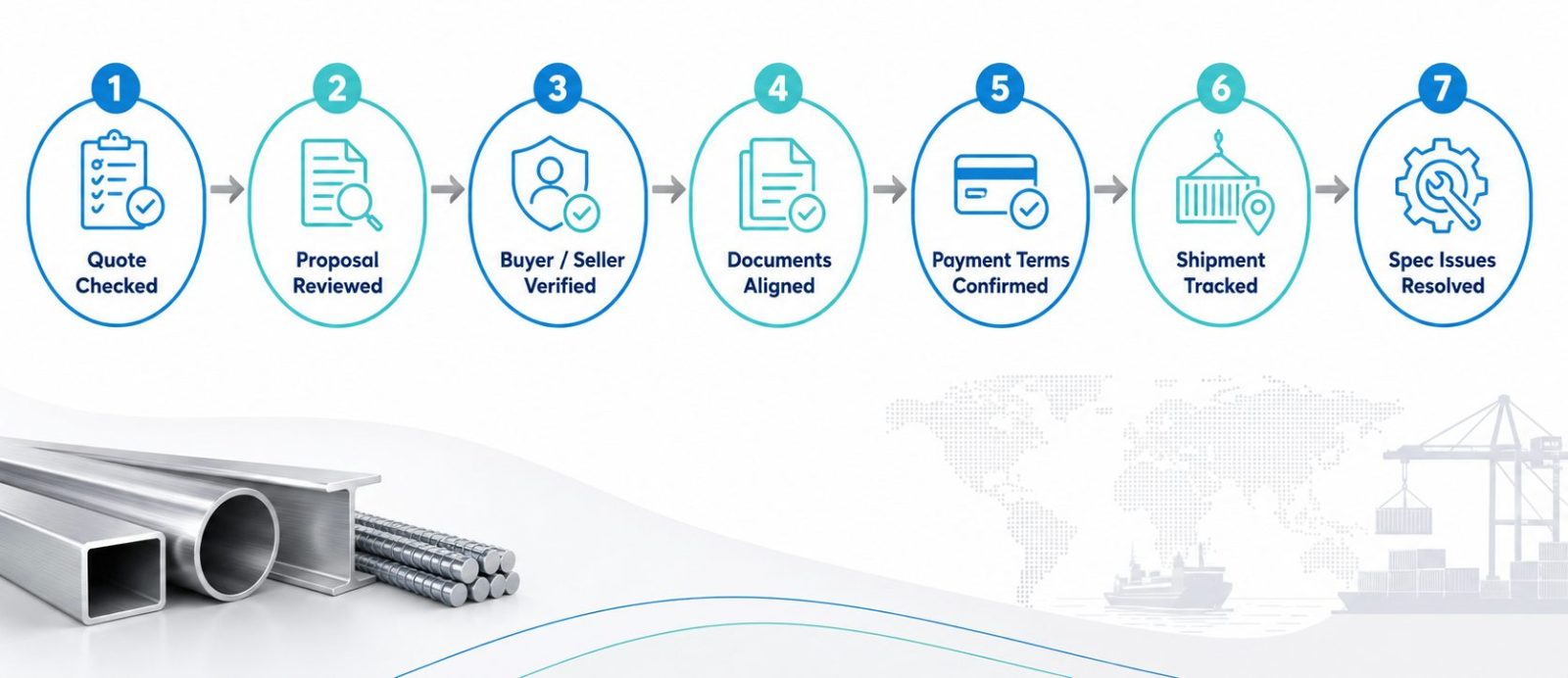
This is where Assisted Trade adds value.
It does not replace RFQs or RFPs. It makes them more useful by adding structure, filtering and follow-up.
Final takeaway
An RFQ helps buyers get prices.
An RFP helps buyers review a full trade offer.
Use an RFQ when the requirement is simple and clear. Use an RFP when the deal needs deeper checks.
But in metal trading, neither format is enough on its own. A deal also needs verified counterparties, clear documents, fair negotiation, shipment follow-up and quality support.
That is why Assisted Trade matters. It helps buyers and sellers move from scattered enquiries to better-managed metal deals.
For a market where one missed detail can delay or damage a shipment, that structure is not optional. It is basic trade discipline.


 Voyagerman Technology


