





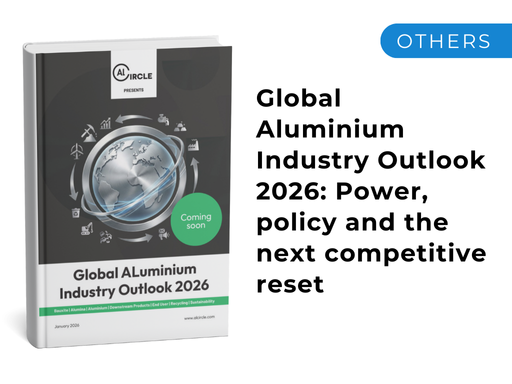
The global aluminium industry is entering a decisive phase where innovation, sustainability and structural market shifts are redefining competitiveness. As we move toward 2026 and beyond, evolving supply chains, energy transitions, rising downstream demand and tightening sustainability requirements are reshaping how aluminium is produced, consumed and traded worldwide. For producers, processors and end-users alike, this is no longer a cyclical adjustment; it is a structural reset.
China nears its capacity ceiling
One of the most significant anchors shaping the global outlook is China’s aluminium capacity cap. China’s primary aluminium output is now close to its self-imposed 45 million tonne limit, a policy introduced in 2017 to curb oversupply and reduce emissions. From just 12.6 million tonnes in 2007, China’s aluminium production has expanded nearly fourfold, underscoring the scale of its transformation.

Source: NBS
As the cap tightens, China’s net aluminium exports have fallen by around 700,000 tonnes year-to-date, helping keep markets outside China structurally tight. Currently, it can be assumed that across the industry, China’s cap will stay in place. However, this nudges an important debate: Whether smelters, which are renewable-powered, should be exempt from the cap. With a growing number of Chinese smelters transitioning to hydro, wind and solar-backed power, this policy discussion could materially alter global supply dynamics beyond 2026.
Offshore expansion becomes strategic
As the domestic growth faces limited room, Chinese aluminium companies are increasingly looking outward with overseas investments, particularly in Indonesia, which is becoming central to their long-term strategy. Indonesia’s access to bauxite, supportive industrial policy and competitive energy options make it a natural hub for capacity migration. This trend signals a gradual but important shift: Global aluminium supply growth will increasingly come from new geographies, not legacy producing regions.
Power is the new bottleneck
Outside China, aluminium smelters face a very different constraint—electricity access and pricing. Europe and the US have seen few meaningful smelters restart announcements, not because of weak demand, but due to the inability to secure long-term power contracts at viable rates.
Aluminium smelters typically require 10–20-year power contracts at around $40/MWh to remain competitive. However, they are now competing directly with AI data centres, which are willing to pay far more. According to the Aluminium Association, technology companies are committing $115/MWh or higher for long-term electricity supply. This divergence is reshaping the investment landscape, effectively prioritising digital infrastructure over industrial metals in power allocation decisions.
Downstream demand and sustainability pressures
On the demand side, aluminium’s role in energy transition, lightweighting, EVs, renewable infrastructure and packaging continues to strengthen. However, this growth increasingly comes with carbon intensity scrutiny. Buyers are segmenting suppliers based on emissions profiles, recycled content and traceability, pushing the industry toward greener production models and circular supply chains.
For B2B stakeholders , this creates a more complex market: Growth opportunities are real, but they are selective, tied closely to sustainability credentials, power strategy and downstream alignment.
Outlook: A more disciplined, differentiated market
By 2026, the global aluminium industry will look more disciplined than in past cycles. Supply growth will be constrained by policy, power and capital intensity. Competitiveness will hinge less on sheer scale and more on energy strategy, geography and market positioning.
For producers, traders, processors and industrial consumers, understanding these forecast market trends is no longer optional; it is essential for strategic planning, investment decisions and risk management.
To explore these shifts in depth across regional supply-demand balances, B2B segmentation, price drivers, sustainability pathways and long-term forecasts, get a copy of the AL Circle “Global Aluminium Industry Outlook 2026” report and stay ahead in an industry undergoing its most important transformation in decades.


 Voyagerman Technology


