





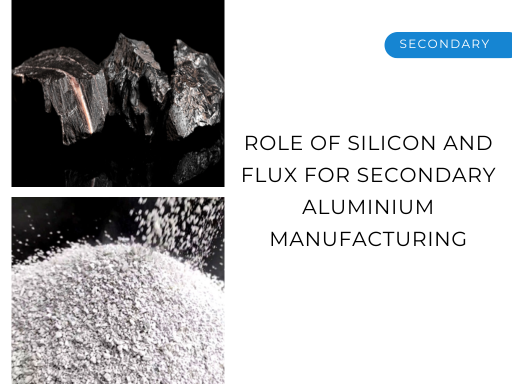
Scrap already consists of aluminium alloys. But without alloying, fluxing and melt treatment, it cannot be converted into a saleable casting secondary aluminium ingots.
Most people in this business talk about scrap prices and ingot grades. But the real work happens in the melt. That is where chemistry, cleaning and control decide if the metal will cast well or fail.
This is what silicon and flux do.
Why scrap alone is not aluminium — the role of metallurgy
A furnace charge can contain cans, old engine blocks, window frames, painted sheets and oily turnings. Each scrap type melts at a different rate depending on geometry, oxidation and alloy composition, introducing varying alloying and impurity elements into the melt. Some add silicon. Some add magnesium. Some add iron, dirt, or gas.
If mixed scrap is melted without chemistry control, degassing and inclusion removal, the resulting metal is prone to porosity, inclusions and inconsistent mechanical properties. The casting might look fine, but it will fail in use.
This is where metallurgy matters.
Secondary smelters do not just melt scrap. They change it. They test the chemistry, adjust alloying elements such as silicon, and use specialised fluxes to remove oxides and certain reactive elements like magnesium. That process turns random scrap into a controlled aluminium grade like ADC12 or LM24.
Variety of aluminium scrap and its variability
Each type of scrap brings a different mix of aluminium. The most common scrap types include:
- UBC scrap: Used beverage cans. Aluminium alloy scrap with coatings and relatively high magnesium content.
- Cast scrap: Old engine parts, pumps, housings. Typically, silicon-containing aluminium alloys are often contaminated with oxides, oils, and inclusions.
- Extrusion scrap: Generally low in silicon compared to casting alloys, but composition varies by extrusion alloy.
- Mixed scrap: A blend of many alloys. Hard to predict
- Turnings and chips: Fine metal but high oxidation
- Painted and oily scrap: Loses yield and needs more flux

This mix is why every melt is different. And this is why silicon and flux matter so much.
The role of silicon in secondary aluminium manufacturing
Silicon improves fluidity, reduces solidification shrinkage and influences strength depending on alloy composition and microstructure.
More silicon means:
- Better fluidity in the mould
- Less shrinkage during cooling
- Lower cracking risk
- Improved castability and surface finish under controlled melt and mould conditions
But too much silicon makes the metal brittle. Too little silicon makes it hard to cast.
So smelters aim for a tight range. This is where precise silicon grades come in.
Silicon metal: Grades 2202, 441 and 553
Common silicon metal grades used in secondary aluminium include 2202, 441, and 553. These silicon grades are not the same.
Lower-impurity silicon grades (e.g., grade 2202) are preferred where tighter chemistry control is required.
Higher impurity grades like silicon 441 and silicon 553 are used where tolerance permits.
Good smelters pick the grade based on how they melt and what they cast.
On AL Biz, you will find suppliers of these silicon grades. It lets secondary manufacturers source the right material, not just what is cheap.
The role of silicon in secondary aluminium manufacturing
Many plants treat flux as an expense. That is a mistake.
Flux does three jobs:
- It helps release entrapped aluminium by breaking oxide films and improving metal separation
- It removes oxides and can reduce certain reactive elements, such as magnesium
- It cleans the liquid metal
If you skip flux or use the wrong type, you lose metal and you get bad castings.
Drossing flux (STJ-B3)
Dross holds trapped aluminium. STJ-B3 breaks that bond. Granular drossing flux releases usable metal back into the melt.
That means:
- Higher recovery
- Less metal is thrown away
- Better furnace output
Magnesium removing flux (STM-A3)
Excess magnesium increases oxidation, dross formation, and gas-related defects in certain casting alloys. Magnesium-removing flux pulls magnesium out of the melt.
This keeps:
- ADC12 and LM24 within spec
- Porosity under control
- Surface finish stable
Alkaline removing flux (STC-B3)
Granular alkaline removing flux removes alkali and alkaline-earth elements such as sodium and calcium, which increase oxidation and inclusion formation. It helps keep the melt calm and clean.
This gives:
- Less dross
- Fewer inclusions
- Better ingot quality
AL Biz connects smelters with suppliers of these fluxes. That saves time. And it reduces trial and error in the melt shop.
How secondary aluminium smelters convert scrap into saleable ingots
The process appears straightforward, but maintaining consistent metallurgy requires tight control at every stage.
- Scrap goes in
- Metal melts
- Silicon is added
- Flux cleans the melt
- Chemistry is checked
- Metal is cast into ingots

But in practice, it takes control at every step.
Good smelters do not chase tonnage. They chase stable chemistry and clean metal.
That is what lets them sell ADC12, LM24 and other die-casting alloys with confidence.
Why ADC12, LM24 and similar secondary aluminium alloys start with good melt control
Aluminium alloy ingots like ADC12 and LM24 are used in:
- Automotive parts
- Industrial housings
- Marine fittings
- Defence components
They need:
- Tight silicon levels
- Low magnesium
- Low oxide inclusions and controlled hydrogen levels
If the melt is wrong, the casting will fail. Cracks, pores and weak spots all start in the furnace.
So when die casters buy secondary ingots, they are really buying the smelter’s process.
Why do serious secondary aluminium smelters invest in silicon and flux suppliers
A furnace does not care about brand names. But customers do.
Smelters that use known silicon and flux grades can hold their chemistry. They can prove consistency. And they can sell to better buyers.
That is why these plants build supply links, not spot buys.
AL Biz helps with that. It brings silicon, flux, scrap and ingot suppliers into one place. That shortens the chain and cuts risk.
Conclusion: Why this supply chain is becoming more specialised
Secondary aluminium is no longer a low-end business.
Die casters now expect secondary aluminium with consistent casting behaviour comparable to primary metal.
That only happens when:
- Scrap is selected well
- Silicon is added with care
- Flux is used the right way
- The melt is controlled
This is why the supply chain is tightening. Scrap yards, silicon suppliers, flux makers and smelters are working closer than before.
AL Biz sits in the middle of that chain. It gives each side a way to find the right partner, not just the cheapest one.
And in this business, that makes all the difference.


 Voyagerman Technology


