Around 200,000 vehicles in the Estonian traffic register have destroyed, lost, or suspended registrations. Starting in 2025, owners of these vehicles may be required to pay motor vehicle tax. However, the Ministry of Climate has proposed a bill to exempt individuals who have vehicles with unknown whereabouts registered in their name, as well as those whose cars lack necessary documentation for scrappage, from paying this tax.
Estonia is a country in Northern Europe that borders the Baltic Sea and the Gulf of Finland. The World Bank designates Estonia as an advanced, high-income market economy noted for balanced government budgets, a flat income tax, low tariffs, and low public debt.
In the future, scrap metal owners will have the opportunity to bring their undocumented, old, and unusable scrap metal to metal purchase facilities, thereby significantly enhancing the visual appeal of streetscapes or yards. As per the legislation, removing such vehicles from the registry will be complimentary until 2026, after which a fee of 800 euros will apply.
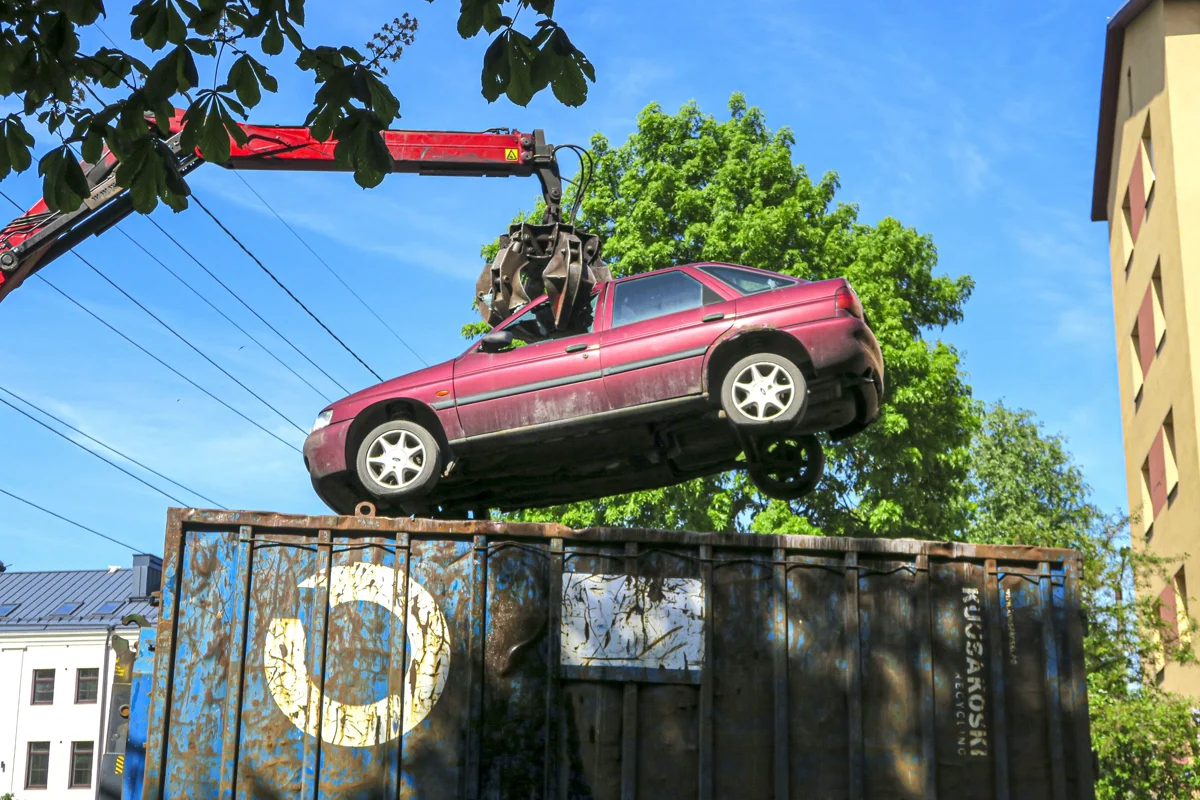
Northern Europe's leading recycling services company, Kuusakoski, calls on Estonian citizens to bring their scrap to benefit their wallets and the environment. Kuusakoski efficiently recycles up to 95 per cent of the materials from each scrap car. Once processed, Kuusakoski issues an electronic scrapping certificate to the Traffic Register of the Transport Agency, resulting in the removal of the scrap vehicle from the database.
For environmentally-conscious people, what happens to their waste is very important. In the case of Kuusakoski, the citizens can be sure that the vehicle will be handled in an environmentally friendly way thanks to the unique metal mill, and the material will be sorted. The metal mill alone can crush up to 40 scrap vehicles in one hour and, to date, has crushed several million tons of scrap metal, which, after remelting, is reused as a valuable raw material in the metal industry.
Kuusakoski stated, "Until April 14, 2024, the best price in town applies to complete scrap in Kuusakoski! The vehicle must include an engine, transmission, axles, radiator, starter, alternator, catalytic converter, complete exhaust system, and battery. The vehicle may contain liquids or parts dangerous to the environment: gasoline, diesel fuel or gas equipment, engine, gearbox and rear axle oil, clutch, brake and cooling fluid, and explosive parts (airbags, seat belt pre-tensioners)."
"Another good news - bringing your scrap metal to Kuusakoski can win a new Škoda Octavia! All private customers who have brought at least 100 kg of scrap metal to Kuusakoski during the campaign period from April 1 to June 30, 2024, will participate in the lottery for the new Škoda Octavia HB Ambition PLUS special model. The more scrap metal you bring, the greater the chance of winning, as each 100 kg you bring gives you one vote in the draw. VIP customers' votes are doubled."
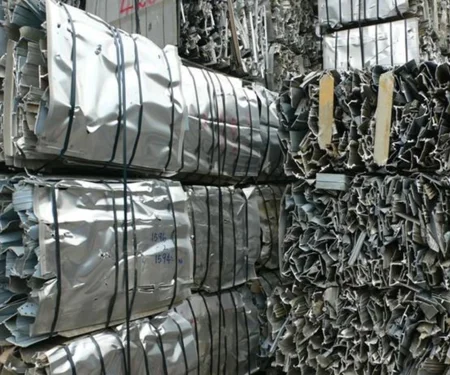
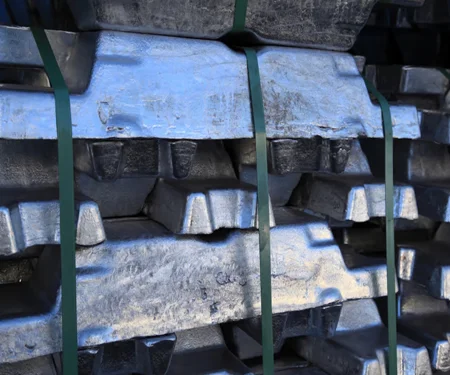
The world's demand for aluminium is rapidly recovering after the pandemic and ensuing lockdowns, driven mainly by recycled metal. Growing commitment to sustainability and environment-friendliness is the main reason behind the ramp-up in demand for recycled aluminium. Along with the demand, production is also on the rising spree with rapid project developments of recycling plants. Hence, it is high time we looked at the ongoing trend of the global aluminium recycled market and analysed the future.
With the same purpose, AL Circle has developed a new comprehensive, industry-focused report on "World Recycled Aluminium Market Analysis - Industry Forecast to 2030". The report highlights a significant growth rate of approximately 3.65% CAGR in recycled aluminium usage from 2022 to 2030, led by castings and canstock. China's recycled aluminium usage is estimated to exceed 15 million tonnes by 2030, and Europe's is anticipated to surpass 7 million tonnes.
From 2023 onwards, the projection for recycled aluminium usage looks optimistic. This is a promising sign for both the aluminium recycling industry and the broader sustainability goals, as it reflects an increasing reliance on recycled aluminium across various applications.