1. Macro perspective The US-Iran conflict entered its second week. After the escort coalition intervened, traffic through the Strait of Hormuz partially recovered, but war risk insurance rates remained elevated. Brent crude pulled back from a high of USD 101 to consolidate around USD 95, with energy cost support weakening from earlier levels but not yet fading. The US Fed delivered a 25bp rate hike at its September FOMC meeting, and the dot plot indicated one more hike may still occur this year. Chair Warsh struck a hawkish tone in his post-meeting remarks, and the US dollar index held at a 13-month high. Next week, attention turns to China's official PMI on September 30, as well as US PCE and non-farm payrolls data during the National Day holiday—with China's market closed for seven days...
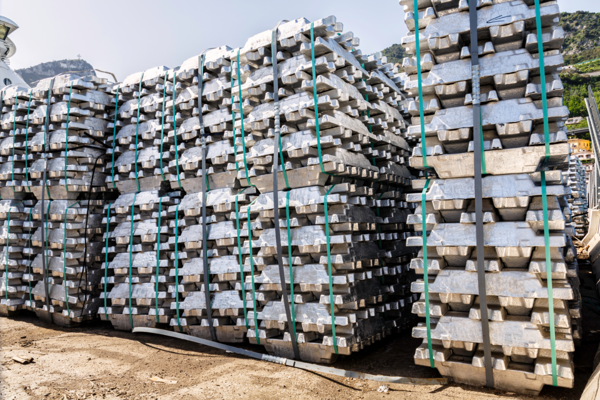
According to data released by the General Administration of Customs of the People's Republic of China (GACC), China's total primary aluminium imports reached 185,500 tonnes in August 2026, down 14.65 per cent year-on-year but up 0.16 per cent month-on-month. Total imports for January-August amounted to 1.66 million tonnes, a decrease of 3.41 per cent year-on-year. The 14.65 per cent year-on-year decline in August imports, coupled with a nearly flat month-on-month performance, indicates that imports have not collapsed but rather maintained a steady inflow. In August, China's total primary aluminium exports stood at 21,900 tonnes, down 14.53 per cent year-on-year and 30.48 per cent month-on-month. Cumulative exports for January-August totalled 167,500 tonnes, up 9.26 per cent year-on-year....
Grow with
AL Circle

According to Shanghai Metals Market, the A00 aluminium ingot price has recorded a rise today, on January 23, to stand at RMB 13,390 per tonne. This marks a growth by RMB 50 per tonne from the previous day. The average prices are expected to range between RMB 13,370 per tonne and RMB 13,410 per tonne, with spot discounts to settle at RMB 70 per tonne to RMB 30 per tonne. The aluminium ingot price is found growing over the past week with one or two intermediate drops. Right from RMB 13,200 per tonne, as on January 15, the non-ferrous metal’s price has grown to RMB 13,390 per tonne, as on January 23. But despite this growth, the price still remains sluggish month-on-month compared to RMB 13,560 per tonne on December 21, 2018, or RMB 13,620 per tonne on December 24, 2018. In the east market...

Aluminium Bahrain B.S.C. (Alba), now amongst the 1 Million-Club metric tonnes smelters in the world, has achieved US$102 million savings in Phase III of Project Titan. Alba has launched Phase IV of Project Titan to reduce cash-cost of US$100 million by the end of 2020. Phase IV, a 24-month Program, aims to achieve US$40 million in 2019 and US$60 million in 2020. Alba’s Chief Executive Officer Tim Murray said: “As Alba is progressing to be transformed to become the world’s largest aluminium smelter with a production of 1.5 million metric tonnes, we must challenge ourselves in every aspect to stay competitive and ahead of the curve especially amidst the weak sentiment hovering around LME price.” The company achieved benefits of US$143 million in Phase I (2-year Program), US$36 million in...

(Continued from Part I ) LME/SME price trends An analysis of the LME and SME price trends in H1, H2 and the whole year 2018 will give us an idea about how the prices were impacted by the events in the aluminium supply scenario. As the sanctions hit the market in April and LME prices were pushed higher to about US$2602.5 per tonne, the average LME price for H1 2018 skyrocketed to US$ 2208/tonne. It was further supported by the increasing alumina prices due to sanctions on Aughinish alumina and 50% capacity cut in Alunorte refinery. Prices started correcting when the sanction deadlines were extended and came to settle in June. LME prices started its downtrend during the second half of 2018. This was mostly driven by the following factors: Extension of sanction deadlines on Rusal Drop in...

The year 2018 has seen the highest and lowest in terms of aluminium price growth and production of primary aluminium is estimated to be slightly higher (about 1.3%) in comparison to 2017. The year was marked by supply uncertainty in alumina and aluminium which pushed the prices higher in the first quarter. Tariffs and punitive sanctions created panic in the market disrupting the international trade. However, they also encouraged restarting of closed aluminium operations by Alcoa and Century Aluminum in the U.S. While prices saw some unprecedented gains, towards the end of the year they touched rock bottom as the supply uncertainties eased out but economy continued to move slower in China and the trade war waged by the U.S. reached no solution. We are analysing the various developments in...

The greenback continued its bullish momentum to start the week, as the US dollar index overnight climbed to the highest since January 4 at 96.43.Base metals closed mixed last night. LME aluminium lost over 1% and SHFE aluminium fell 0.59%. Benchmark aluminium price on London Metal Exchange dropped to close at US$ 1842.5per tonne on Monday, January 21. LME aluminium came off from a high of US$1,886 per tonne during the European session, as it fell below the 20- and five-day moving averages. SMM expects the contract to trade at US$1,840-1,865 per tonne today. As on January 21, LME aluminium cash (bid) price stood at US$ 1842 per tonne, LME official settlement price stands at US$ 1842.50 per tonne; 3-months bid price stands at US$ 1855 per tonne, 3-months offer price is US$ 1856 per tonne;...

Following China and the United States’ sanctions, India’s aluminium imports have reportedly recorded a year-on-year rise by 24 per cent during April-October 2018. According to executives, the volume of inbound shipments may grow further and cause more distress to the domestic industry. Scrap imports have also increased during this period by 22 per cent, after the US imposed 10 per cent duty on aluminium and China slapped 25 per cent import duty on aluminium scrap from the US. The industry expects further increase in scrap imports as well, as China has classified aluminium scrap as restricted import from July 2019 and plans to ban all scrap dumping by 2020. India, however, has no standards to restrict scrap imports, pointed out Vedanta CEO (aluminium and power) Ajay Kumar Dixit. Mr. Dixit...

According to Shanghai Metals Market, social inventories of primary aluminium across eight major consumption areas in China, including SHFE warrants, stood at 1.262 million tonnes as of Monday January 21, down 2,000 tonnes from Thursday January 17. Compared to last Thursday, inventories in Wuxi, Jiangsu and Shanghai dropped by about 8,000 tonnes and 2,000 tonnes to stand at 484,000 tonnes and 299,000 tonnes while stocks in Nanhai, Guangdong increased by some 8,000 tonnes to stand at 167,000 tonnes. Inventory in Gongyi, Henan decreased to 102,000 tonnes. The below chart indicates the current status of primary aluminium inventories across China: Limited cargoes arrived at social warehouses during the weekend, and this accounted for the decline in primary aluminium inventories.

Aluminium Bahrain B.S.C. (Alba) has successfully closed by the end of 2018 the final instalment of the 2nd tranche in respect of the financing of its Line 6 Expansion Project. The loan facilities consisting of US$136 million and EUR90 million are used to finance the provision of equipment for Alba’s Line 6 Expansion Project. The facilities are made-up of US$136 million Export Development Canada (“EDC”) supported-facility with 10-year tenure; and EUR90 million Japan Bank for International Cooperation (JBIC)/Nippon Export and Investment Insurance (NEXI) supported-facilities comprising two contract loans, with 10-year and six-year tenure. Alba’s Chairman of Board of Directors, Shaikh Daij Bin Salman Bin Daij Al Khalifa said: “This is another concrete highlight for us and a step closer...

A Press Release from Gulf Aluminium Council has confirmed that the primary aluminium producers in the GCC region produced a total of 5,408,257 tons of primary Aluminium in 2018. The high quality primary aluminium was shipped to the local as well as the international market. This registers an increase of around 230,000 tons over 2017 and the growth was primarily driven by improved efficiency and completion of modernisation of projects. This was further contributed by Alba, which had surpassed one million tonnes of production for the first time. The top five primary smelters in GCC are: Emirates Global Aluminium(EGA) which is a merger of Dubal - Dubai Aluminium and Emal - Emirates Aluminium, United Arab Emirates Alba - Aluminium Bahrain, Bahrain Qatalum - Qatar Aluminium, Qatar Sohar...

As the year 2018 wrapped up and 2019 has started, AlCircle is coming up with a comprehensive Aluminium Industry Recap 2018 . The recap will give you an opportunity to look back at the significant developments that shaped or disturbed the industry value chain. This edition of Aluminium Industry Recap 2018 aims to touch upon the major developments vertical wise, which influenced each other driving growth or counter growth. We also touched upon the major projects, collaborations, investments and divestments, expansions and also the policy changes. The developments are not only analysed chronologically but also analytically so that you can draw a conclusion on how the entire value chain moved together to bring about a turnaround in the market. Trump’s 10% tariffs on the import of aluminium...
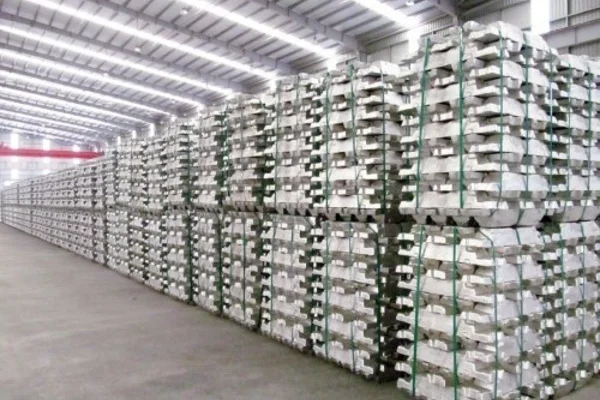
China produced 3.05 million tonnes of primary aluminium in December 2018, up 8.2 percent from 2.82 million tonnes in November and up 11.3 percent from December 2017, according to data published by the country’s National Bureau of Statistics (NBS). <iframe width="540" height="260" src="https://www.youtube.com/embed/fmEaCNAAIxs" frameborder="0" allow="accelerometer; autoplay; encrypted-media; gyroscope; picture-in-picture" allowfullscreen></iframe> The total aluminium production in 2018 stood at 35.8 million tonnes up 7.4 percent from the previous annual record in 2017, the NBS data showed. On a daily basis, the world’s top aluminium maker produced almost 98,400 tonnes of aluminium in December, up from 94,000 tonnes in November and also a record high, according to Reuters calculations....

The US dollar registered its first weekly gain since mid-December as US-China trade optimism lifted investor sentiment. Base metals increased across the board in the LME and SHFE. LME aluminium grew nearly 1% and SHFE aluminium jumped 1.34%. LME alminium closed last week at US$ 1851 per tonne, the highest in the week. Stronger than expected US industrial output data boosted LME aluminium, which settled at US$1,870 per tonne after increasing to a high of US$1,879.5 per tonne on Friday night. Open interests grew 1,898 lots to 666,000 lots. The contract is expected to trade at US$1,855-1,885 per tonne today. As on January 18, LME aluminium cash (bid) price stood at US$ 1850 per tonne, LME official settlement price stands at US$ 1851 per tonne; 3-months bid price stands at US$ 1857 per tonne,...

A00 aluminium ingot price stood at RMB13410 per tonne on January 21, up RMB50 per tonne from RMB13360 per tonne as of January 18. The average prices today are expected to range between RMB 13390 per tonne and RMB 13430 per tonne, with spot discounts to settle at RMB 90-50 per tonne. Aluminium ingot prices in the East Wuxi and Hangzhou increased by RMB 65 per tonne and RMB 50 per tonne to stand at RMB 13415 per tonne and RMB 13410 per tonne, respectively. In the South and North, the price rose by RMB 70 per tonne and RMB 50 per tonne to stand at RMB 13450 per tonne and RMB 13420 per tonne respectively. Prebaked anode prices in northwest and southwest China dropped RMB 100 per tonne to RMB 3900 and RMB 3800 per tonne, price of prebaked anode in central China declined by RMG130 per tonne to...

The US dollar started the week flat and registered some gains mid-week. The US dollar index jumped to 96.26, the highest since January 4 on January 16, after data showed that economic growth in Germany slowed in 2018. LME aluminium started the week at the lowest in month at US$ 1775.5 per tonne and regained some losses over the week. The contract saw another low trading day on January 17 and closed at US$ 1804 per tonne. After closing Thursday’s trading lower, LME aluminium traded rangebound and continued upward overnight. The contract rose to hit the 20-day moving average, or US$1,856 per tonne, buoyed by higher prices of crude oil. The contract wrapped up trading at US$ 1851 on Friday. The contract is likely to trade at US$1,810-1,865 per tonne in the coming week. As on January 18, LME...

Rio Tinto’s aluminium production for the fourth quarter of 2018 stood at 874,000 tonnes, one per cent lower compared with the corresponding period of 2017. Aluminium production in 2018 was three per cent lower than 2017. Rio Tinto produced 3.5 million tonnes of aluminium. The decline in production was due to an ongoing lock-out at the non-managed Becancour smelter, which began on 11 January 2018, and a power interruption at Dunkerque Aluminium in the first quarter. The company completed the sale of its aluminium smelter at Dunkerque, France, to Liberty House for $0.4 billion on 14 December 2018. Production of 0.2 million tonnes is reflected up until this date. In 2018, average realised aluminium prices were $2,470 per tonne (2017: $2,231 per tonne). This includes premiums for value-added...

The US dollar increased against the euro, which was dragged lower by weak economic data, while the pound gained on hopes of a second Brexit referendum. Base metals ended mixed and LME aluminium gained 0.57%. SHFE aluminium edged down. After closing Thursday’s trading lower at US$ 1804 per tonne, LME aluminium traded rangebound and continued upward overnight. The contract rose to hit the 20-day moving average, or US$1,856 per tonne, buoyed by higher prices of crude oil. It settled around the 10-day moving average at US$1,852 per tonne. It is likely to trade at US$1,840-1,865 per tonne today. As on January 17, LME aluminium cash (bid) price stood at US$ 1803 per tonne, LME official settlement price stands at US$ 1804 per tonne; 3-months bid price stands at US$ 1827 per tonne, 3-months offer...

Alcoa Corporation projects a global aluminium deficit ranging between 1.7 million and 2.1 million metric tonnes with global demand growth in a range of 3 to 4%. Total aluminium shipments are expected to be between 2.8 and 2.9 million tonnes, which reflects the expiration of a can sheet tolling agreement in the flat-rolled business. The tolling agreement’s expiration should have a negligible impact on Adjusted EBITDA for the year. The company anticipates favourable impacts from spot prices for raw materials to be fully offset by higher energy costs in the first quarter, and to be partially offset for the remainder of the year.” Based on current alumina and aluminium market conditions, Alcoa expects an annual operational tax rate ranging from 45 to 55 percent. President and Chief Executive...

Alcoa Corporation, a global leader in bauxite, alumina, and aluminium products, announced fourth quarter and full-year 2018 results. The company reported net income of $227 million in 2018, from $217 million in 2017.Excluding special items, adjusted net income stood at $675 million. Adjusted EBITDA excluding special items was $3.1 billion, up 27% from the $2.4 billion in 2017 on higher alumina and aluminium prices, partially offset by higher costs for raw materials and energy and increased maintenance expense. President and Chief Executive Officer Roy Harvey said: “Our 2018 results reflect how we’ve made Alcoa stronger. We’ve built upon the progress we made since our launch, and by executing our strategic priorities to reduce complexity, drive returns, and strengthen the balance sheet,...