Supply-side dominated destocking logic: November aluminium ingot inventory outlook amid shipping constraints and import inflows
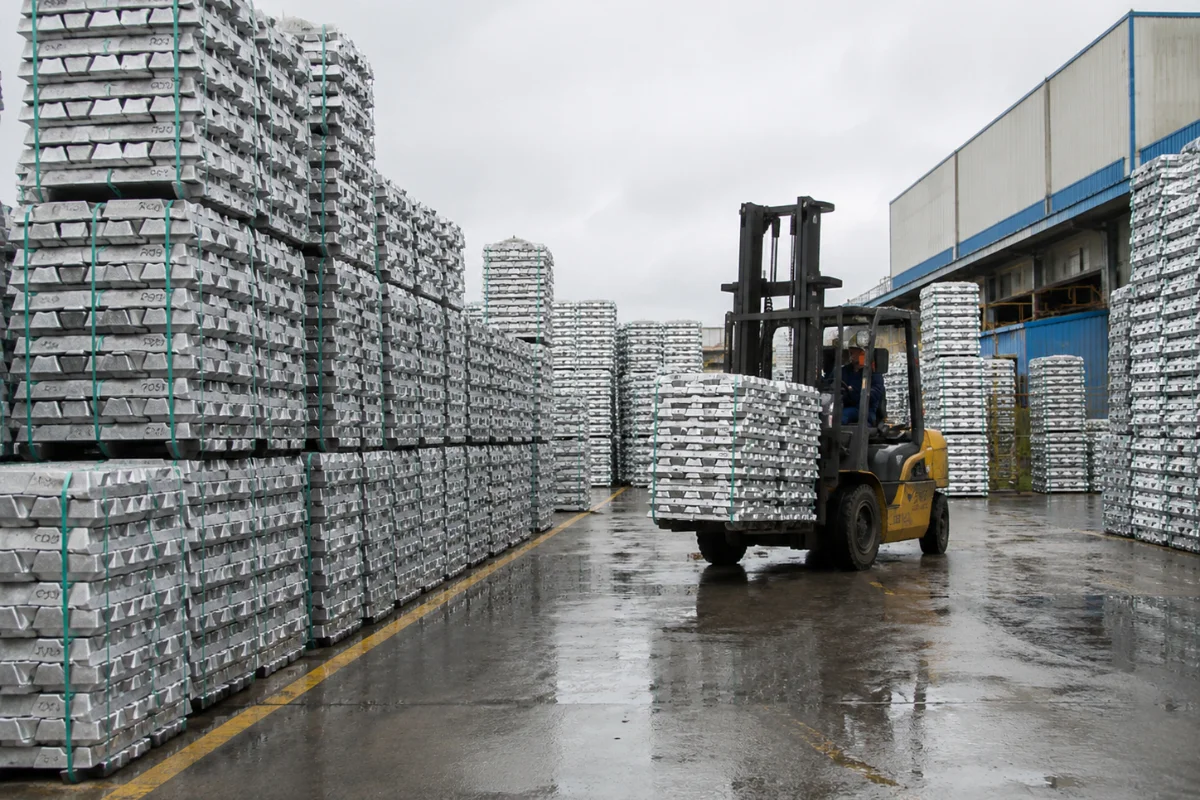
The image used in this article is generated with an AI tool and does not depict any real-time moment
According to SMM statistics, as of October 29, primary aluminium ingot inventory in major domestic consumption areas stood at 549,000 tonnes, down 89,000 tonnes from 638,000 tonnes at end-September, and down 137,000 tonnes from the post-National Day holiday peak (686,000 tonnes on October 8). Current domestic aluminium ingot inventory has fallen to a low for the same period over the past four years.
Looking back at the full month of October, domestic aluminium ingot inventory followed a clear "three-stage" pattern: a phased inventory buildup of 48,000 tonnes during the National Day holiday, below pre-holiday expectations; after the holiday, warehouse withdrawals rebounded quickly and destocking accelerated significantly, with cumulative destocking of 84,000 tonnes over the three weeks from October 12 to 26; entering the latter part of the month, the destocking pace slowed markedly, with only 4,000 tonnes destocked from October 26 to 29. Overall, the destocking trend for domestic aluminium ingots remained intact through October, but marginal weakening signs emerged at month-end.
Supply side: Proportion of liquid aluminium fell for two consecutive months, casting ingot volume up 7.0 per cent M-o-M
According to SMM statistics, domestic aluminium production in October 2026 (31 days) was 3.879 million tonnes, up 2.1 per cent Y-o-Y and up 3.5 per cent M-o-M. As the closing month of the "October peak season," downstream demand weakened M-o-M in October. Although aluminium billet processing fees improved mid-month and some billet plants in south China resumed operations, this was still insufficient to reverse the trend of rising casting ingot volume during the month.
The proportion of liquid aluminium fell 0.7 percentage points M-o-M to 77.5 per cent, below expectations at the start of the month. Based on SMM liquid aluminium proportion data, domestic aluminium casting ingot volume in October was approximately 873,000 tonnes, up 3.1 per cent Y-o-Y and up 7.0 per cent M-o-M.
On the capacity front, as of end-October, SMM statistics showed domestic aluminium existing capacity at approximately 46.4887 million tonnes, up slightly M-o-M, mainly due to the completion of some replacement projects. Once replacement is completed and old capacity exits, national existing capacity is expected to pull back slightly.
Shipment side: in-factory inventory up 13.8 per cent M-o-M, arrivals delayed rather than disappearing
Notably, while casting ingot volume rose sharply M-o-M in October, social inventory in consumption areas accelerated its decline. The "gap" between the two was mainly concentrated at the in-factory inventory level. According to SMM statistics, total domestic aluminium ingot in-factory inventory at end-October was 78,900 tonnes, up 13.8 per cent M-o-M from 69,300 tonnes at end-September. The increase in casting ingot volume did not translate into arrivals at consumption areas simultaneously.
The shortage of train boxcars in Xinjiang has not fundamentally improved, and combined with poor transportation in south-west China, actual shipment constraints effectively offset the concentrated release of increased casting ingot volume. This was the core technical reason behind the better-than-expected destocking in October.
However, shipment constraints mainly caused delays rather than volume reduction. By region, in-factory inventory in Xinjiang fell from 18,500 tonnes at end-September to 13,400 tonnes at end-October, indicating some short-term improvement in Xinjiang shipment conditions.
As transportation efficiency improves marginally, aluminium ingots previously backlogged at in-factory inventory face pressure from irregular concentrated arrivals going forward. This also means the key variable supporting destocking in October will contribute less at the margin in November. That said, entering winter, insufficient transport capacity in north-west China will remain a recurring issue.
Demand side: warehouse withdrawals retreat from highs but remain above September levels in absolute terms; slowdown stems more from procurement pace than weakening consumption
The slowdown in destocking at month-end requires distinguishing between "appearance" and "substance." According to SMM statistics, weekly aluminium ingot warehouse withdrawals in major consumption areas fell from a peak of 168,400 tonnes in the week of October 12, to 144,600 tonnes in the week of October 19 and 141,400 tonnes in the week of October 26, a cumulative decline of approximately 16 per cent.
However, on a horizontal comparison, 141,400 tonnes remained clearly above the September weekly average of 128,200 tonnes. The absolute strength of consumption has not fallen below the pre-peak-season range. The current pullback essentially reflects the fading of post-holiday pulse restocking and a return to normal procurement pace, rather than a substantive weakening of demand.
From a formation mechanism perspective, this slowdown stemmed more from short-term adjustments in circulation structure and procurement timing. On one hand, the rebound in aluminium prices pushed spot prices above the monthly average, reducing the cost-effectiveness of downstream procurement.
Combined with month-end long-term contract settlement cycles, downstream and trader purchasing activity declined in phases. On the other hand, earlier changes in the futures price spread between contracts raised the cost of carrying positions for some inventory holders, prompting some to sell spot cargo and buy futures to close positions, which increased spot market availability in phases. With aluminium prices pulling back in recent days, next-month transactions have warmed somewhat, reflecting that procurement timing is being pushed back rather than demand disappearing.
Conditions in the processing segment also corroborate demand-side resilience. Mid-month, domestic aluminium billet processing fees improved, some billet plants in south China resumed operations, and primary processed products maintained healthy production and sales. Aluminium ingot social inventory reflects supply-demand changes in the primary aluminium circulation segment, while processing segment operating rates and processing fees correspond more directly to downstream orders and actual consumption. Taken together, downstream demand still has support at present.
Under low inventory conditions, the buffer from available cargo continues to narrow
After absolute inventory levels fell to lows for the same period over the past four years, the market impact extends beyond the numbers themselves. As inventory continues to destock, available cargo in the market is shrinking in tandem, and cargo availability is becoming an important factor affecting near-term supply and demand.
The further inventory destocks, the less room there is to buffer short-term arrival fluctuations. This also means that in November, any marginal change on either end—whether concentrated arrivals or weakening warehouse withdrawals—could be amplified into phased inventory reversals, making it difficult for the destocking process to maintain the linear pace seen in October.
November outlook: destocking trend continues but pace slows, with possible reversals along the way
Entering November, the overall destocking direction for domestic aluminium ingots will continue, but the three key logics supporting destocking are all weakening. The destocking pace is likely to slow, and there is potential for phased inventory buildup during the month, making it difficult to replicate October's linear decline.
First, casting ingot pressure continues to rise. The end of the peak season is expected to drive downstream operating rates lower M-o-M, and liquid aluminium demand faces downward pressure. SMM expects the proportion of liquid aluminium to fall another 0.7 percentage points to 76.8 per cent in November. Although fewer calendar days in November will partially offset production growth, the rising share of casting ingot means absolute casting ingot volume will remain at a high level of around 870,000 tonnes.
Second, short-term easing of shipment constraints brings arrival replenishment. Short-term improvement in Xinjiang shipments and temporary recovery in south-west China transportation will allow aluminium ingots previously held at in-factory inventory to be released in batches, with arrivals at consumption areas expected to increase irregularly.
Third, seasonal demand-side weakening combined with import variables. Downstream operating rates trending down M-o-M will weigh on warehouse withdrawals. Meanwhile, with the rapid recovery in import profit margins, bonded zone inventory remains at high levels, reaching 117,400 tonnes as of October 29, further accumulating from 113,400 tonnes in early August.
However, the Shanghai Futures Exchange issued a notice on October 29, deciding to suspend bonded delivery business for aluminium futures effective from the date of the notice. The path for bonded zone cargo to supplement the domestic market has shifted from bonded delivery to customs clearance first, followed by warrant registration or entry into the spot market. Both the speed and cost of replenishment have risen, which to some extent weakens the immediacy of import cargo impact. The pace of high bonded zone inventory flowing into the domestic market is expected to be relatively moderate.
Overall, SMM expects domestic aluminium ingot inventory to continue fluctuating downward in November, with the destocking process experiencing reversals during the month, and the possibility of slight inventory buildup in individual weeks cannot be ruled out. The inventory centre is expected to shift down to around 500,000 tonnes, and at the low point, inventory may briefly dip below 500,000 tonnes.
Going forward, four indicators warrant close tracking: whether weekly warehouse withdrawals in major consumption areas can stay above 140,000 tonnes, the destocking pace of in-factory inventory, whether bonded zone inventory shows substantive movement into the Chinese market, and changes in available cargo tightness under low inventory conditions.
Note: This article has been issued by SMM and has been published by AL Circle with its original information without any modifications or edits to the core subject/data.
Macro sentiment in a tug-of-war between longs and shorts, destocking slowdown, aluminium prices consolidate
Next articleAlamtri Minerals’ aluminium sales expand to Switzerland, lift 9M26 profit to $317.5m
Grow with
AL Circle