“START’s purpose is to provide our customers with transparent and traceable information regarding the sustainable nature of our aluminium products”, Tolga Egrilmezer, Vice President Sales & Marketing, Rio Tinto Aluminium
- Category
- Interview
- Date
- Source
- AlCircle.com
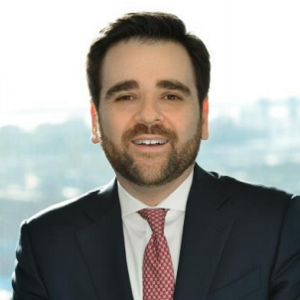
Tolga Egrilmezer, Vice President Sales & Marketing at Rio Tinto and a member of the Rio Tinto Aluminium Executive Committee, where he is leading the global mine to market organisation in bauxite, alumina and aluminium & value-added products sales, marketing, trading and technical & product development teams.
AlCircle: Could you please share the glances of Rio Tinto’s journey towards the production of low carbon aluminium?
Mr Tolga Egrilmezer: At Rio Tinto Aluminium, we are proud to be a global leader in the responsible production and stewardship of aluminium; we produce some of the highest quality, lowest carbon footprint aluminium in the world. In the past 5 years, we have:
- Launched the industry's first certified low carbon aluminium, RenewAL (2016)
- became the first company to receive certification from the Aluminium Stewardship Initiative (ASI) as producing “responsible” aluminium (2018)
- Launched our zero-carbon aluminium joint venture with Alcoa, ELYSIS, with support from Apple and the governments of Canada and Quebec to further develop a revolutionary smelting technology free of direct carbon emissions. (2018)
- Sold the first ELYSIS aluminium to Apple, for use in their 16 inch MacBook Pro. (2019)
- Last year we announced our groundbreaking partnership with the world’s largest brewer Anheuser-Busch InBev (AB InBev) to deliver a more sustainable can(2020)
- And in 2021, we launched START, the revolutionary platform bringing radical transparency to our ESG credentials including low carbon aluminium and much more.
AlCircle: What role Rio Tinto is playing in the production of Michelob ULTRA cans?
Mr Tolga Egrilmezer: Rio Tinto has supplied low-carbon aluminium made with renewable hydropower, ELYSIS metal and recycled content, to produce AB InBev’s most sustainable beer can. The carbon emissions for each can produced is more than 30% per lower compared to the brewer’s 2019 aluminium can baseline.
AlCircle: Can share your insights about ELYSIS?
Mr Tolga Egrilmezer: ELYSISTM technology is the most significant innovation in the aluminium industry in more than a century. It is now being further developed and scaled up towards commercialisation, with the potential to drastically reduce the environmental footprint of the global aluminium industry.
The ELYSISTM technology- puts an end to the use of carbon anode in the aluminium smelting process. - Thus, it eliminates all direct greenhouse gas (GHG) emissions from the aluminium smelting process and is the first technology ever that emits oxygen as its by-product.
We are very excited about what ELYSIS can do for the aluminium industry and our end users. We imagine a world where products and brands don’t have to fight the battle of “low carbon” existence but are proud to use a zero-carbon material- which during its manufacturing process emitted oxygen. That’s the future of sustainability.
AlCircle: What is Rio Tinto’s view on the London Metal Exchange’s plan to trade low carbon aluminium on a separate platform?
Mr Tolga Egrilmezer: By launching START Rio Tinto is helping to support increased transparency and traceability across the aluminium supply chain that can help meet the needs of end customers responding to consumer expectations on sustainable sourcing.
We will be well-positioned to lead the industry in supporting LME Passport with greater transparency across a wide range of sustainability measures delivered using blockchain technology.
AlCircle: Can describe more elaborately the utility of START a ‘nutrition label’ for responsible aluminium?
Tolga Egrilmezer: START’s purpose is to provide our customers with transparent and traceable information regarding the sustainable nature of our aluminium products, so our customers to make better-informed decisions about the materials they use for the parts and products they sell.
Think about a nutrition label on the back of almost all food products today. The label allows us to make more informed decisions about the products we buy, and the certifications and standards followed in their production. START will do the same for the aluminium industry, giving you the choice for a more sustainable supply chain.
It’s a new ambition for responsible aluminium. It empowers our customers and end-users.
AlCircle: Low carbon aluminium has propelled the demand in the downstream and end-user segment. Kindly share your thought?
Mr Tolga Egrilmezer: People- consumers, end-users and our customers are all looking for a climate-sensitive material of choice. Our low carbon aluminium fits that bill perfectly. As an example, a competing material like plastic is a by-product of the oil and gas industry. Low carbon aluminium comes from water. That’s how low carbon aluminium is propelling downstream demand. Our aluminium is able to address the true needs of the consumers. But we have to tell our story as an industry. A better-informed aluminium industry can make better decisions. Our vision is that our customers can showcase the sustainability of the aluminium they purchase from Rio Tinto to their consumers, delivering full value from our responsible production; providing a fully transparent, traceable and sustainable supply chain.
AlCircle: Rio Tinto is an industry leader in responsible aluminium production. Where do you place Rio Tinto by 2030?
Mr Tolga Egrilmezer: Our ambition is to reach net-zero emissions by 2050 across our company. Our 2030 targets are to reduce our emissions intensity by 30% and our absolute emissions by 15%. Most of our assets already sit in the low end of their respective commodity carbon intensity curves and our 2030 targets are aligned with a 45% reduction in absolute emissions from 2010 levels, which is consistent with 1.5°C pathways as described by the Intergovernmental Panel on Climate Change.

