"Rolled aluminium remains a highly dynamic material with potential for expansion across various markets," Peter De Bruyne, Global Business Director, Non-Ferrous at Quaker Houghton.

- Category
- Interview
- Date
- Source
- AlCircle.com
Peter De Bruyne, Global Business Director, Non-Ferrous at Quaker Houghton, has a wealth of knowledge and expertise from his career spanning three decades in the aluminium industry. Having started as a laboratory manager in a rolling mill, he applied this hands-on experience as a technical support manager before transitioning to commercial roles. Today, Peter helps shape the future of aluminium hot rolling, determining the strategic direction of Quaker Houghton, a global leader in industrial process fluids.
AL Circle: As a Global Business Director for one of the world's largest industrial process fluid companies, how do you perceive the current global landscape for aluminium rolling?
Peter De Bruyne: Rolled aluminium remains a highly dynamic material with potential for expansion across various markets, with two notable areas currently experiencing significant growth.
Firstly, the automotive sector is witnessing a surge in demand for aluminium, primarily driven by its pivotal role in weight reduction of the body-in-white, which is important for a vehicle's overall performance, efficiency, and cost-effectiveness. The emerging focus from the automotive industry is on batteries for electric vehicles (EV), with an estimated growth of 30% annually, where rolling plays a key role in producing the aluminium foil used.
The second noteworthy area of growth is in the beverage cans industry. Although this market has been around for a while, recent shifts away from plastic have increased demand for aluminium. The industry is well-equipped to meet this demand by producing both body stock and end stock for beverage cans. Despite a temporary dip in aluminium rolling last year, the industry is projected to experience growth in the coming years. This positive outlook is personified in constructing of three new US-based rolling mills dedicated to producing metals for beverage cans — the first in over 40 years.
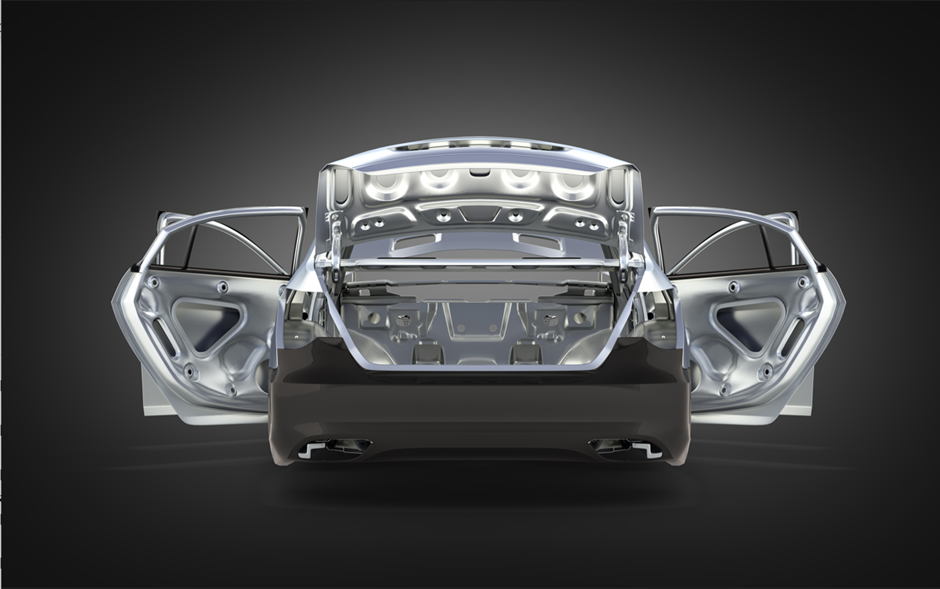
The automotive sector is witnessing a surge in demand for aluminium, primarily driven by its pivotal role in weight reduction of the body-in-white.
AL Circle: The mechanics of aluminium rolling have remained largely unchanged over the years, but while the practice retains traditional methods, there have been many improvements. Could you share some cutting-edge technologies or innovations being adopted to maintain a competitive edge in the industry?
Peter De Bruyne: Over the last 50 years, hot-rolling aluminium has used a chemistry that relies on organic soaps and fatty acids. However, 17 years ago, Houghton launched a new product technology that was based upon esters instead of fatty acids. This was a significant development because it prevented the formation of metallic soaps while providing adequate surface protection for consistent rolling. Now, Quaker Houghton is developing new formulations to take the aluminium hot rolling industry to the next level.
If we look at cold rolling fluids, kerosene-based rolling is an industry standard but it presents significant safety and environmental concerns. In response to these challenges, Quaker Houghton is collaborating with Danieli, a prominent rolling mill builder, to pioneer a revolutionary water-based lubrication system. The new system is set to become the foundation for a new generation of cold rolling mills, not only reducing the fire risk, but also enhancing cooling. This, in turn, will result in better surface quality and enable faster rolling for improved productivity.
AL Circle: Can you explain how Industry 4.0 technology is integrated into the industry to enhance efficiency and performance during the aluminium rolling process?
Peter De Bruyne: Maintaining hot rolling fluids can be labour-intensive, as some of the additives in the formulation that support the rolling process are selectively depleted over time. Rolling mills usually have well-equipped labs and technicians who analyse emulsions and advise corrective actions, but these activities take at least 50% of a lab technician’s time on a daily basis.
Quaker Houghton already offers solutions for fluid management, but we’re working on advancing these systems by bringing them more online and using automation for continuous monitoring with QH FLUID INTELLIGENCE™. By employing new technologies, it will become possible to accurately assess the condition of the fluid, determine the necessary adjustments, and automate the dosing of additives. In the future we’ll be able to dramatically reduce hands-on maintenance at the rolling mills.
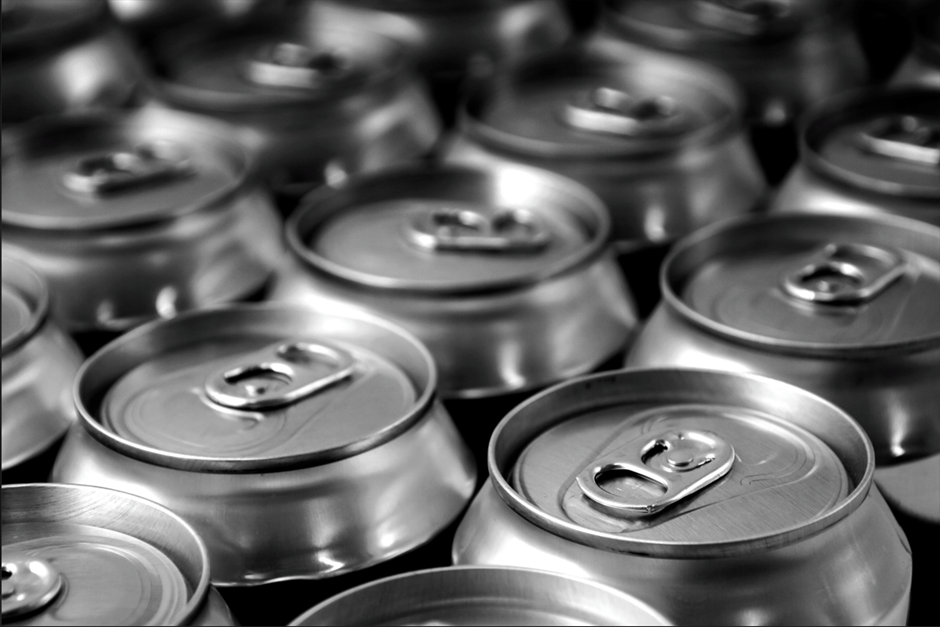
The positive outlook for rolled aluminium is personified in the construction of three new US-based rolling mills dedicated to producing metals for beverage cans — the first in over 40 years.
AL Circle: Sustainability is increasingly crucial in today's business landscape. How is the industry addressing environmental concerns related to aluminium rolling, and what steps are being taken to enhance sustainability?
Peter De Bruyne: The primary sustainability challenge faced by the aluminium rolling industry is waste generation. The industry produces significant waste that must be disposed of responsibly or recycled. However, the recycling process is extremely complex, time-consuming and energy-intensive, hindering its progress. Nevertheless, the industry is taking positive steps to reduce waste and improve the recyclability of the process fluids.
Through See Beyond™ — the Quaker Houghton sustainability strategy — we’ve taken steps to tackle this issue. All rolling fluids are designed to have an extended sump-life to reduce the frequency of fluid replacements, thereby reducing waste.
In the long term, Quaker Houghton is actively researching and developing new methods for fluid recycling. The goal is to minimise or eliminate waste generation, aligning with a more sustainable approach within the industry.
AL Circle: Given the uncertainties and disruptions in today's world, how does your company build resilience in the aluminium rolling supply chain to ensure consistent customer delivery?
Peter De Bruyne: In light of the current global circumstances, assessing the sources of raw materials has become increasingly crucial. When formulating new products, we look to secure multiple sources for any raw materials, as well as ensuring that our products can be produced in multiple production facilities. This way, if any of our sites experience issues, we can continue to deliver for our customers.
At Quaker Houghton, our unique approach to research and development inherently reduces risk for our customers. We simulate real-world rolling conditions as closely as possible, from screening using computer modelling and custom-designed equipment in our labs, all the way through to testing on our pilot mill. This rigorous process enables us to deliver new technologies to our customers that are both innovative and proven.
AL Circle: Looking ahead, what are the most exciting or game-changing developments in the aluminium rolling industry, and how is Quaker Houghton positioning itself to leverage these opportunities?
Peter De Bruyne: One thing we’re seeing in the production of hot rolled material is a notable trend towards increasingly higher coiling temperatures for enhanced metallurgical properties. However, this poses a unique challenge as temperature plays a crucial role in lubrication processes, reaching a point where the lubricant ceases to function effectively.
For example, the automotive industry’s focus on lightweighting means aluminium is now being used in place of steel for many components. To achieve the correct metallurgy for these demanding applications, customers require fluids that can handle higher temperatures, so we’re working with them to design products that meet these evolving demands.
What excites me most is the opportunity to introduce unprecedented technologies to the aluminium rolling industry. Currently, we are in the developmental phase of several projects, one of which is a product designed explicitly for the EV market, aiming to streamline the production of battery foil and tackle the unique challenges prevalent in the industry. This innovative approach reflects our commitment to staying at the forefront of technological advancements and providing solutions that resonate with the evolving landscape of our customers' requirements.

