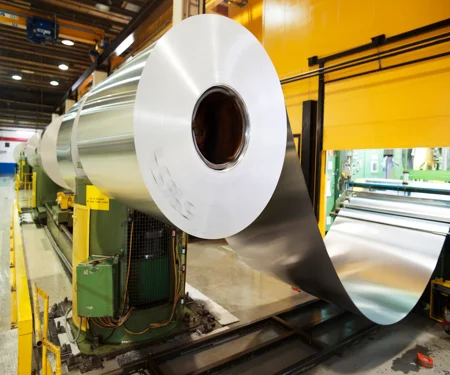
As consumer preferences shift towards sustainability, transparency, and efficiency, aluminium is emerging as a material of choice for its recyclability, lightweight properties, and ability to preserve product quality.
The aluminium packaging industry experienced steady growth in 2023, driven by an increasing demand for beverage cans and packaging foils. With over 11.5 million tonnes of aluminium flat-rolled products used in the packaging sector throughout the year, the industry’s expansion has been fuelled by a shift away from traditional materials like plastic and glass.
The demand for aluminium in the packaging sector is primarily fuelled by beverage cans. While developed economies continue to drive this demand, developing countries are experiencing a faster-growing preference for aluminium cans.
The rise in younger consumers, new product variations, and environmental awareness among stakeholders has increased the demand for beverage cans. Global usage of aluminium beverage cans rose from 343 billion units in 2015 to 416 billion in 2020. Discover market forecasts, consumer behaviour shifts, and emerging opportunities shaping the aluminium packaging landscape. Get exclusive insights with AL Circle's industry-focused report, "Aluminium in Packaging: Consumer Trends and Market Dynamics."
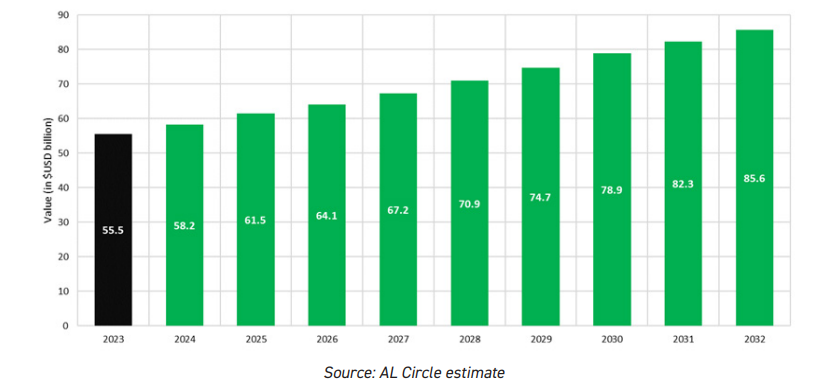
Global aluminium cans market size, 2023 - 2032 (in $USD billion)
The global aluminium cans market reached USD 55.5 billion in 2023, and it is expected to reach around USD 85.60 billion by 2032, expanding at a CAGR of 4.93 per cent from 2023 to 2032. The rising consumption of various beverages is anticipated to be a key driver for the growth of the aluminium cans market in the coming years. Aluminium cans are available in a range of capacities, which is expected to boost their demand further. In addition to beverages, aluminium cans are increasingly being used for food packaging and are projected to gain significant popularity.
Growth factors of aluminium cans in the consumer market
In recent years, both developing and developed regions have seen a growing demand for convenient and sustainable beverage packaging. As a result, aluminium cans have become increasingly popular due to their convenience and sustainability. The key factor for growth:
- Rapid urbanisation trends: Increasing urban populations are fuelling demand for aluminium beverage cans solutions, particularly in urban centres where specific needs are addressed effectively.
- Sustainability requirements: Rising environmental concerns and regulatory pressures are driving a shift towards eco-friendly aluminium beverage cans products and services.
- Digital transformation: The ongoing digital revolution is boosting demand for aluminium beverage can solutions that integrate seamlessly with digital platforms, enhancing operational efficiency and productivity.
- Remote work trends: The shift towards remote work, accelerated by global events, has increased demand for aluminium beverage cans solutions facilitating collaboration, communication, and remote access capabilities.
The introduction of BPA-free aluminium cans, which offer a chemical-free packaging solution, is likely to fuel demand in the near future. This shift towards safer, chemical-free options is expected to create substantial growth opportunities for the aluminium can market, particularly in developed nations where the demand for canned foods is rising.
However, the trend of downgauging poses a potential risk to the growth of aluminium demand in this sector. Downgauging in the packaging sector refers to the process of reducing the thickness or weight of the material used in packaging while maintaining its functional properties, such as strength, durability, and barrier protection. In the context of aluminium, this involves producing thinner sheets or foil for packaging applications like beverage cans, food containers, and wraps.
While downgauging is often driven by sustainability goals (e.g., reducing material use, lowering transportation emissions, and cutting costs), it poses a challenge for the aluminium industry by slowing down demand growth as less aluminium is needed per unit.
Thomas Kahl, Project Manager Eco Solutions, Mondi Consumer Packaging, said, “Looking at it from a sustainability aspect, downgauging is just one of the various possibilities to decrease the CO2 footprint."
“It’s important to take a step back and look at packaging that is fit for purpose in a holistic manner.”
Image credit: https://sparklingcbd.com/












_md.webp)