Aluminium is everywhere in Europe’s economy, from power transmission and renewable energy systems to transport, defence, construction and packaging. Its importance has led the European Union to classify aluminium as a critical and strategic raw material. The challenge now is whether Europe’s aluminium supply chain is keeping pace with the scale of that dependence. Europe also likes to point out that it produces aluminium more cleanly than almost anyone else. Recycling rates are high. Carbon intensity is low compared with the global average. On sustainability metrics, the region performs well.
But inside the industry, the picture looks far less comfortable. Energy costs remain structurally high. Global trade remains distorted. Scrap is increasingly leaving the region. Carbon leakage risks under CBAM are unresolved. Decarbonisation targets keep moving faster than investment decisions. None of these pressures is new. What is new is that they are all hitting at the same time. Aluminium may be critical to Europe’s green transition. The system that supplies it is far less secure.
How big is aluminium’s role in the economy?
In economic terms, aluminium still plays a limited role. In 2024, EU’s nominal GDP stood at about USD 19.42 trillion as per word Bank. The aluminium market inside that economy was valued at USD 23.9 billion as per Index Box. That works out to roughly 0.12 per cent of GDP.
The European Commission’s Spring Forecast puts GDP growth in 2025 at 1.1 per cent, lifting the economy to around USD 19.63 trillion. Aluminium’s contribution is estimated at USD 31 billion. Its GDP share rises to about 0.15 per cent.
This matters because policy ambitions are moving in the opposite direction. A document reported by Euronews suggests the European Commission expects steel and aluminium together to account for 20 per cent of EU economic output by 2030 under reindustrialisation plans tied to the Industrial Accelerator Act.
Steel, by comparison, operates on a far larger scale. The EU steel industry was valued at USD 143 billion in 2024, accounting for around 0.74 per cent of GDP. In 2025, the sector is expected to grow to about USD 147 billion, lifting its GDP contribution slightly to 0.75 per cent. On current trends, steel will continue to outweigh aluminium economically.
To know more about the global primary aluminium industry 2026 outlook, book the report “Global ALuminium Industry Outlook 2026” at a special price.
Production versus demand in aluminium sector
Europe’s aluminium demand is holding at around 13.2 million tonnes, yet domestic production has failed to rise alongside it. The reason lies in how that demand is met. Roughly half of Europe’s aluminium requirement is covered through imports, while recycling supplies about 35 per cent. Primary aluminium produced within the region accounts for only a small share, making it the weakest link in the supply chain.
Production trends confirm this imbalance. Between January and November 2025, primary aluminium output across Europe, including Russia, reached 6.4 million tonnes. That figure was only marginally higher than in the same period of 2024 and barely above 2023 levels. After a stronger rebound the previous year, growth slowed to around 0.9 per cent in 2025.
Falling gas prices helped prevent further deterioration, but they were not enough to restart smelters that closed during the energy crisis. Most of those facilities have remained offline, leaving Europe to bridge the gap through imports and greater reliance on scrap.
By contrast, downstream activity has proved far more resilient. More than 600 plants across the EU process aluminium into rolled products, extrusions, foil, and castings. Combined capacity across the EU, EFTA countries, and the UK exceeds 10 -12 million tonnes annually. Around 89 per cent of the industry’s one million jobs are concentrated in remelting and downstream processing rather than in primary smelting. Germany alone produced 2.74 million tonnes of secondary aluminium in 2024, even though that volume was still 16.6 per cent lower than in 2019.
Export data reinforces this divergence between production stages. In 2024, the EU exported downstream aluminium products worth USD 9.1 billion. By October 2025, export values had already reached USD 8.3 billion, pointing to continued strength in value-added segments even as primary output remains constrained.
There are some signs of recovery upstream, but they remain limited. Trimet’s smelters in Essen, Hamburg, and Voerde are gradually moving back toward full production after suspending around 70 per cent of capacity in 2022. In Finland, Arctial’s Greentop project aims to deliver Europe’s first new primary aluminium smelter in more than 30 years, with a final investment decision targeted for 2026–27. These developments are significant, but they do not yet alter the broader picture.
Trade flows underline how exposed the system has become. EU exports of unwrought aluminium rose from USD 6.95 billion in 2020 to USD 11.76 billion in 2021, before peaking at USD 14.21 billion in 2022, driven by an annual average LME price of USD 2,707 per tonne. As prices eased, exports fell sharply to USD 10.84 billion in 2023, then recovered to USD 11.34 billion in 2024. Momentum strengthened again in January - September 2025, with exports reaching USD 12.79 billion - already above the full-year 2024 total.
Together, these trends point to a clear disconnect: Europe’s aluminium demand continues to rise, value creation downstream remains strong, but primary production has yet to follow, leaving the region increasingly dependent on imports and trade flows to balance its market.
Does scrap tell a different story?
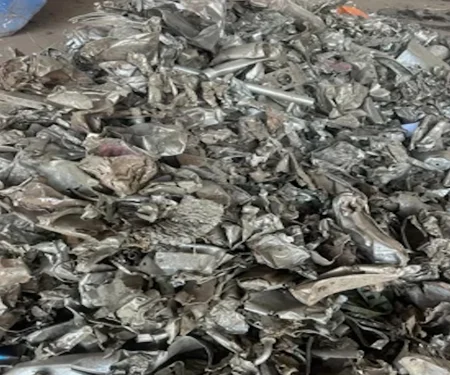
Aluminium scrap exports have expanded rapidly over the past five years. Export values rose from USD 4.24 billion in 2020 to USD 8.18 billion in 2022, eased in 2023, and rebounded to USD 8.28 billion in 2024. In the first nine months of 2025 alone, scrap exports reached USD 6.81 billion, underlining how strongly global demand is pulling material out of Europe.
This outflow has pushed scrap to the centre of EU industrial policy. Brussels plans to restrict aluminium scrap exports by 2026 in an effort to secure critical raw materials for domestic industries and support decarbonisation goals. European aluminium producers argue that rising exports are leaving recycling facilities short of feedstock, despite heavy investment in new infrastructure. Around 15 per cent of EU recycling furnace capacity is currently offline, and the industry estimates it lacks roughly two million tonnes of scrap per year to run plants at full utilisation.
Executives warn the issue has become existential. Emilio Braghi, executive vice-president at Novelis, has said Europe’s recycling sector could face a “terminal decline” if access to scrap continues to worsen. Europe has already lost much of its primary aluminium production, he argues, and without secure scrap supplies, meeting climate targets would become far more difficult.
Electricity prices underpin the shift. Power costs in the EU can be up to four times higher than those faced by global competitors, making primary smelting increasingly uneconomic. Recycling, which uses far less energy, has become the backbone of Europe’s aluminium strategy. Consumers have largely embraced that model, paying a premium for products with high recycled content.
Collection rates reflect this, with around 70 per cent of aluminium beverage cans recovered in Europe, compared with roughly 40 per cent in the United States. Still, higher prices abroad continue to draw scrap out of the region, undermining domestic supply security.
Why scrap suppliers are pushing back
Scrap suppliers and traders strongly oppose export restrictions, arguing that high export volumes are a symptom of weak domestic demand rather than excessive overseas sales. They say the EU lacks sufficient capacity to process certain types of mixed-grade scrap, particularly material from end-of-life vehicles. In their view, export curbs risk undermining the scrap industry itself, threatening jobs and disrupting Europe’s circular-economy objectives.
Dealers also point to pricing. Overseas buyers typically pay more than domestic customers, making exports economically attractive. Any restrictions, they argue, would hit margins and reduce liquidity in the scrap market.
Industry groups share those concerns. The European Recycling Industries’ Confederation has argued that the answer lies not in tariffs, but in stronger and more consistent demand for recycled aluminium within Europe. Market participants estimate that a 25-30 per cent export duty would add between EUR50 and EUR 150 per tonne to the cost of scrap leaving the EU, assuming buyers pass the cost through to bids. For domestic scrap, prices could rise by EUR 20 -40 per tonne for high-grade material, while lower-quality grades may face discounts or be stockpiled.
Even then, the impact would depend on several variables, including freight rates, EU smelters’ willingness to pay higher prices, and the stability of energy costs. Policymakers are still weighing options. The European Commission introduced a metal scrap surveillance system in mid-2025 to track export flows more closely. That data will feed into a formal assessment next year, after which authorities are expected to decide between measures such as export duties, export licensing, or mandatory recycled-content requirements.
So far, the aluminium industry’s position remains unclear, and how the EU will meet this 20 per cent growth target is still unclear. Achieving it would require reviving domestic manufacturing, reducing import dependence - particularly on China - and transitioning to a green, low-carbon industrial base. The question now is how the EU plans to do this and what measures are in place.
Don’t miss out- Buyers are looking for your products on our B2B platform














_md.webp)