Croatia’s import of Aluminium alloy ingot during 2017-20 stage strong market

The Croatian economy is one of the strongest economies in Southeast Europe. Croatia joined the World Trade Organization in 2000, NATO in 2009 and became a member of the European Union on 1 July 2013. The industrial sector represents 27% of Croatia's total economic output while agriculture represents 6%. However, FocusEconomics panellists forecast the economy to shrink 8.7% in 2020, which is down 0.4% points from July's estimate and to expand 4.7% in 2021.
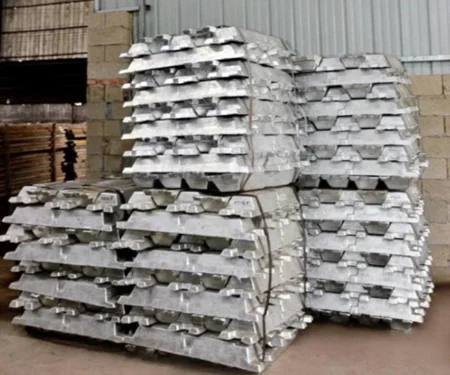
The South-eastern European nation’s importation of Aluminium alloy ingot during 2017-19 staged a strong and enterprising market, as the import volume recorded was 209,091 tonnes with expenditure occurred remained at $340.73 million. The projected import for 2020 has been evaluated at 107,833 tonnes and expenditure to stand at $162 million. When the import volume and expenditure of 2020 gets assorted with the existing three years it exhibits 316,924 tonnes and $502.73 million respectively.
Croatia’s import of aluminium alloy ingot in 2017 stood at 33,934 tonnes and expenditures remained at $55.94 million, whereas in 2018 the import revealed growth by 119.40%, as the import volume inclined to 74,583 tonnes and revenue expended grew to $126.01 million.

In 2019, the import reflected a positive trend, as the import volume stood at 100,514 tonnes, surged by 34.76% and expenditures climbed to $158.78 million.
The estimated import for 2020 has been marked at 107,833 tonnes, an expected growth by 7.28% and the expenditures to outreach at $162 million.

Croatia’s major trading nation for the importation of aluminium alloy ingot are Bosnia Herzegovina, Czech Rep., France, Germany, Italy, Netherlands, Hungary, Poland, Russia, Serbia, Slovakia, etc.
Note to readers: AlCircle brings two-day event for aluminium industry players. We look forward to meeting you virtually at “Global Aluminium Expo 2020”on October 6-7, 2020. For registration, visit www.alcircleevents.com
LME aluminium price increased by $9.5/t after three consecutive days of decline, SHFE hiked to $2135/t
Next articleVALCO looks-out for partners to upgrade aluminium smelter in Ghana
Grow with
AL Circle