




Summary
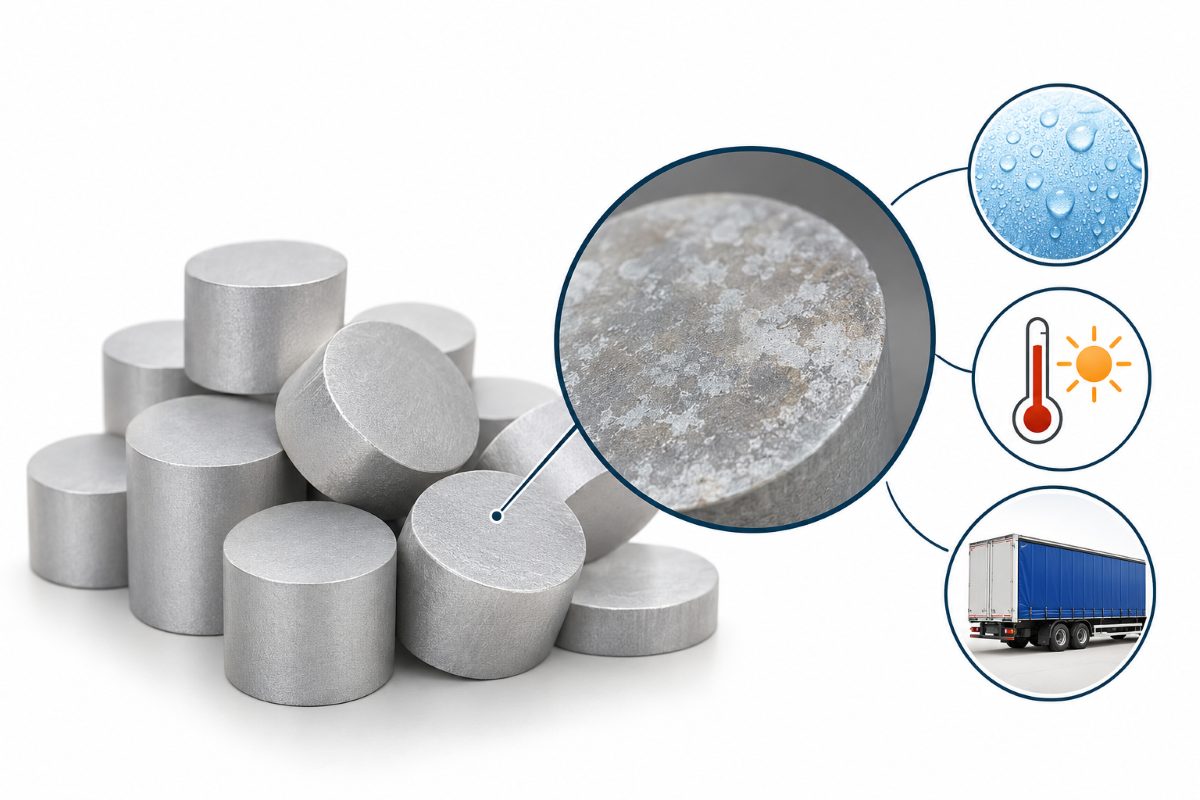
Aluminium is a highly reactive material and has a great affinity for oxygen. When exposed to the environment, it naturally forms a thin layer of aluminium oxide (Al₂O₃), adherent and impermeable, which acts as a protective barrier against corrosion. However, when this layer is damaged or broken, corrosive processes can begin, manifesting themselves in a localised or uniform manner.
Among the most common corrosion mechanisms in aluminium alloys is crevice corrosion. This type of attack occurs when water becomes trapped in confined areas, such as between overlapping surfaces, whether between two pieces of aluminium or between aluminium and other materials. Under these conditions, an environment conducive to the development of corrosion is created.
Consequently, aluminium slugs are susceptible to crevice corrosion, commonly referred to as “water stain” when exposed to conditions that allow for the ingress of water or the condensation of water vapour. Such situations can arise during both the transport and storage of the product.
A change in the supply process led to surface oxidation on some shipments, resulting in the material being returned by the customer. As a preventive measure, the mode of transport was revised: flatbed trucks were replaced by curtain-sided (“sider”) trucks, which provide better protection for the material during transit and reduce the risk of exposure to conditions that promote oxidation.
Introduction
Aluminium packaging, such as collapsible tubes, is widely used for containing pharmaceutical and cosmetic products, including ointments and creams. This packaging is manufactured through an impact extrusion process, using aluminium slugs as the raw material.
The alloys most commonly used in this application are Al 99.5 and Al 99.7, which offer excellent performance both during the manufacturing process and in the final use of the product.
The production of slugs is relatively simple, involving cutting, annealing and surface finishing stages, the latter of which can be carried out via barrel finishing (tumbling) or shot-blasted finish. Characteristics such as dimensions, microstructure, cut quality and surface finish are key factors in obtaining high-quality products.
The figure below shows the slugs used as raw material for the manufacture of collapsible tubes for pharmaceutical and cosmetic products.
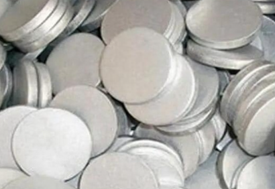
Figure 1: Slugs produced from Al 99.7 alloy with a shot-blasted finish
After manufacturing, the slugs are packed into cardboard boxes, which are stacked on wooden pallets in loads of approximately 1,000 kg. The boxes are wrapped in stretch film for protection during storage and transport.
Pallets must be stored in clean, dry areas with adequate ventilation, kept away from doors and protected against water ingress or leaks in the ceiling, so as to minimise the risks of contamination and corrosion.
Transportation must be carried out using appropriate vehicles capable of ensuring the integrity of the product and preventing damage that could compromise the subsequent extrusion process and the final quality of the tubes.
Problem description
A major aluminium manufacturer supplied coils with thicknesses ranging from 2.3 mm to 2.5 mm for the production of collapsible tubes used for medicine packaging. Under this supply model, the customer would purchase the coils and contract a third-party company to manufacture the aluminium slugs.
Subsequently, for strategic and commercial reasons, the manufacturer decided to change its business model and begin selling the slugs directly. With this change, the coils were sent to a third-party company for processing; once the slugs were manufactured, the material would return to the manufacturer’s inventory, with the manufacturer assuming responsibility for storage and subsequent shipment to the customer.
Although the term “water stain” is widely used in the aluminium industry, this phenomenon technically corresponds to a process of crevice corrosion. This mechanism occurs when water is trapped in confined áreas either between two metal surfaces or between a metal surface and a non-metal surface, creating conditions favourable for the onset of corrosion. The chemical reaction involved consists of the interaction between aluminium and water, resulting in the formation of hydrated aluminium oxide and the release of hydrogen:
2Al + 3H₂O → Al₂O₃·(H₂O) + 3H₂
With the goal of identifying the root cause of the problem and defining corrective and preventive actions, a multidisciplinary working group was established, involving professionals from process engineering, technical support and logistics, as well as representatives from the client. The collaborative effort of these teams enabled a comprehensive analysis of every stage of the supply chain, including production, storage, transportation and material handling.
Case study
After receiving the first formal complaint regarding the occurrence of the defect, the technical assistant visited the client’s facilities to evaluate the material in the field and collect samples for analysis.
During the inspection, it was determined that the problem was restricted to a few boxes located on the top of the pallets. The slugs exhibited surface oxidation with characteristics typical of water staining, indicating the occurrence of crevice corrosion.
To confirm this hypothesis, analyses were performed using Scanning Electron Microscopy coupled with Energy-Dispersive X-ray Spectroscopy (SEM/EDS). The results revealed alterations on the surface of the slugs, with a predominance of compounds consisting of aluminium and oxygen (Al-O), confirming the presence of corrosion products consistent with the mechanism known as “water stain.”
In investigating the problem, quality tools, specifically the Is/Is-Not Matrix and the Ishikawa (fishbone) diagram, were employed. The use of the Is/Is-Not Matrix helped define the scope of the defect, revealing that the issue did not affect all shipments uniformly. It was even observed that, within a single shipment, some pallets showed signs of corrosion, while others were completely free of it.
Based on these results, an Ishikawa diagram was used to structure and evaluate the potential causes of the problem, covering factors related to materials, methods, labour, the environment, machinery and measurement. Following this analysis, an action plan was developed, aimed at identifying the root cause and implementing the necessary corrective and preventive actions.
Defect characterisation
• The defect was identified exclusively in the boxes positioned on the top of the pallets
• The affected boxes had a high level of humidity when compared to the others
• The occurrence was not widespread, as not all pallets showed evidence of the problem
Root cause investigation
This type of occurrence had never been recorded before. However, following the change to the supply model, the first instances were observed as early as the initial weeks of operation, suggesting a possible link between the logistical change and the emergence of the defect.
It is known that so-called “water staining” can occur when pallets are stored in unsuitable locations, for instance, near doors where water may enter during heavy rain, or in areas affected by leaks from the warehouse roof. The same issue can also arise during transport in a flatbed truck, particularly if the tarpaulin seal is compromised or the vehicle’s floor has deteriorated, allowing moisture to enter or accumulate.
As part of the investigation, a detailed inspection was conducted at the location where the pallets were stored prior to shipment. No irregularities were identified that could be associated with the defect.
The main change introduced by the new business model concerned the product’s logistics flow. Previously, once the slugs were manufactured, the material was invoiced and shipped directly to the customer. With the change in the process, the slugs are now returned to the aluminium supplier, where they remain in storage until the time of invoicing and subsequent dispatch.
A detailed analysis of the logistics flow revealed several significant points:
- Transportation between the third-party manufacturer of the slugs and the aluminium supplier was carried out using a flatbed truck
- In some instances, the vehicles were unloaded immediately upon arrival at the supplier’s facility
- On other occasions, due to operational priorities, certain shipments remained parked for up to 12 hours while exposed to intense sunlight, awaiting unloading;
- Under these conditions, the combination of the humidity and temperature fluctuations led to moisture condensation reaching the dew point in the space between the truck’s tarp and the boxes positioned on the top of the pallets
- The condensed water generated in this environment became trapped on the packaging at the top, creating conditions for the development of water staining.
Dew point: Atmospheric air contains water in the form of vapour, which is invisible to the naked eye. Relative humidity represents the ratio between the amount of water vapour present in the air and the maximum amount it can hold at a given temperature. The higher the air temperature, the greater its capacity to keep water vapour in suspension.
The dew point corresponds to the temperature at which the water vapour present in the air condenses, transitioning from a gaseous state to a liquid state. This phenomenon depends directly on the air temperature and its relative humidity, and it can be determined based on these two parameters.
Following the investigation results, which identified condensation as the determining factor for the occurrence of corrosion, a corrective action was implemented within the logistics process. Transportation between the company that manufactures the slugs and the aluminium supplier was changed to “sider” (curtain-sided) trucks, replacing standard flatbed trucks. This change provided better ventilation conditions and significantly reduced the risk of moisture condensation on the pallets during transit, thereby eliminating the identified cause of the water stains.
Conclusion
The change in the business model adopted by the aluminium supplier introduced a new logistical condition into the process. In certain situations, some shipments remained exposed to intense sunlight for extended periods prior to unloading, which promoted moisture condensation and, consequently, the formation of water stains on the slugs. This condition also explains the non-systematic nature of the problem. Since only a portion of the shipments was subjected to this waiting period in the sun, not all pallets showed signs of corrosion, which accounts for why the defect appeared only in specific batches and on some pallets.