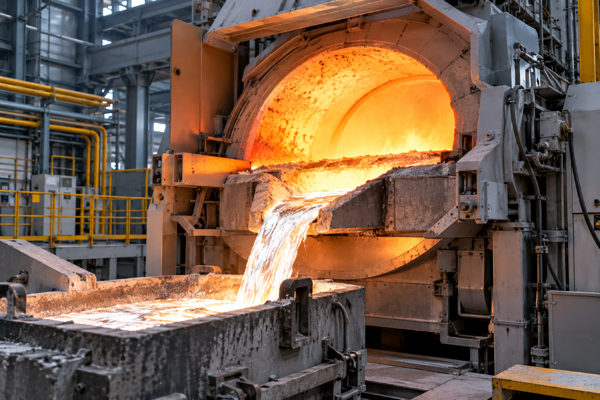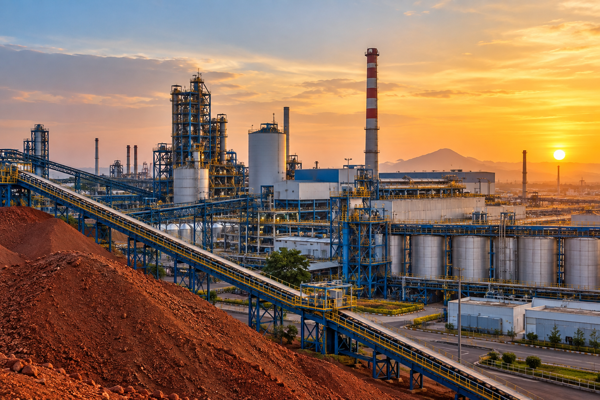
National Aluminium Company Limited (NALCO) expects revenue to reach INR 190-200 billion (USD 2.29–2.41 billion) in the current year, supported by higher alumina production and stronger aluminium prices, while an INR 250-billion (USD 3.01 billion) expansion programme is set to reshape its upstream, smelting and power capacities by FY31. The state-owned aluminium producer expects revenue to increase from approximately INR 178 billion (USD 2.14 billion) last year as its new refinery capacity lifts alumina production and higher aluminium prices support realisations. NALCO Chairman and Managing Director Brijendra Prasad Singh attributed the revenue outlook to these two factors. INR 250 billion capex to expand aluminium value chain NALCO is simultaneously advancing a INR 250-crore (USD 3.01...
According to SMM statistics, changes in aluminium ingot and aluminium billet (collectively referred to as aluminium inventory) inventories in major consumption areas in China around the National Day holiday, 2020-2026: overall destocking before the holiday, with the most concentrated inventory buildup during the holiday. During the one-week National Day holiday from 2020 to 2025, aluminium ingots, aluminium billets, and total aluminium inventory all saw inventory buildup (aluminium ingots up 4.0 per cent -17.3 per cent, aluminium billets up 12.7 per cent -66.0 per cent, total aluminium inventory up 6.9 per cent -21.2 per cent ). In the second week after the holiday, aluminium ingots did not see further inventory buildup except in 2021, while aluminium billets destocked in all six years....
Grow with
AL Circle

LME aluminium looks neutral in a range of $1,577-$1,599 per tonne, and an escape will point a direction. The range is formed by the 23.6 percent and the 38.2 percent Fibonacci projection levels of an upward wave C, the third wave of a three-wave cycle from the August 24 low of $1,506. A break above $1,599 could lead to a gain to $1,616, the 50 percent level, while a break below $1,577 could cause a loss to the range of $1,552-$1,563, formed by the 7 percent and the 14.6 percent levels.
Aluminium prices were up by 0.15% to INR 101.60 per kg in futures trade on October 15 as speculators enlarged positions even as metal weakened overseas. At the Multi Commodity Exchange, aluminium for delivery in October rose 15 paise, or 0.15%, to INR 101.60 per kg, in a business turnover of 406 lots. The metal for delivery in November traded higher by 10 paise, or 0.10%, to INR 103.15 per kg in eight lots. Analysts said the rise in aluminium prices at futures trade was mostly attributed to a firming trend at the spot markets on the back of rising industrial demand but metals weakness overseas, limited the gains.
LME aluminum hovered around USD 1,595/mt after opening at USD 1,593.5/mt on Thursday, October 15. But LME aluminum fell to USD 1,564/mt later as the US dollar index rose while gold and crude oil prices dropped. Finally, the light metal ended down USD 16/mt or 1% at USD 1,579/mt. Trading volumes were up 4,324 lots to 13,158 lots, and positions were up 7,584 to 834,000. On Thursday night, SHFE 1512 aluminum opened lower at RMB 11,250/mt due to falling LME aluminum and other base metals. The most active contract should remain weak between RMB 11,200-11,300/mt on Friday on risk aversion before the weekend. In China’s spot market, sellers will rush to sell, and spot discounts will widen to RMB 80-40/mt over SHFE 1511 aluminum contract.
Mecfor Inc. announced the acquisition of the intellectual property of the Brochot SA, France. Until recently, Brochot specialized in the design and manufacturing of equipment for various metal industries, in particular primary aluminium smelters worldwide. Following the acquisition process that began in February, the order for the transfer of intangible assets to Mecfor Inc. was handed down on June 2nd by the Bobigny commercial court in France. Mecfor Inc. is taking control effective immediately and will be in a position to supply equipment, technical support, replacement parts, and service for Brochot products worldwide in accordance with Mecfor’s high quality standards. Highlights: • The intellectual property acquired includes all models, technologies, designs, technical specifications,...
The partial write-back of the provision made for the District Mineral Fund and increase in volumes are expected to save the day for Indian non-ferrous metal companies in the second quarter of this fiscal. However, both ferrous and non-ferrous companies are expected to report a sharp fall in revenue due to lower metal prices. Most of the metal companies have assumed that they have to contribute 50 per cent of the royalty for DMF and made provisions accordingly. However, the Indian government recently notified that the companies have to set aside only 30 per cent of the royalty for DMF. This had come as a major relief for metal companies, which have won mines after paying huge amounts in the recent auction. It is conjectured, non-ferrous companies (producing aluminium, zinc, lead and...
National Aluminium Company (Nalco)'s plan to foray into nuclear energy generation has hit a legal roadblock. Though the aluminium major proposed to set up a Rs 12,000 crore nuclear energy plant in joint venture with Nuclear Power Corporation of India Ltd (NPCIL), it is unable to go ahead with the project with the present act restricting the sector to only a couple of its own fully owned subsidiaries under the Atomic Energy Department. "We are waiting for suitable changes in the act before going ahead with the investment. We hope it will done soon", said TK Chand, chairman and managing director of Nalco. Currently, NPCIL and Bharatiya Nabhikiya Vidyut Nigam Ltd (BHAVINI) are the two government of India owned companies authorised to set up nuclear power plants in the country. They are...
Aluminum on London Metal Exchange (LME) hovered around the 5-day moving average after opening at USD 1,593/mt on October 14, Wednesday, hitting a session low of USD 1,581.5/mt. But LME aluminum rallied later as gold prices jumped and the US dollar index fell back. Finally, the light metal ended up USD 3/mt at USD 1,595/mt. Trading volumes were down 4,209 lots to 8,834 lots, and positions were up 6,222 to 826,000. On Wednesday night, SHFE 1512 aluminum stabilized above RMB 11,300/mt, supported by weaker US dollar and rally of LME aluminum. SHFE 1510 aluminum has fallen to RMB 11,250/mt on production resumptions at some smelters and expectations for lower power costs. SHFE 1512 aluminum should move between RMB 11,310-11,390/mt on Thursday. In China’s spot market, abundant supply will leave...
LME aluminium still targets $1,562 per tonne, as indicated by a Fibonacci retracement analysis and a wedge. The analysis is on the downtrend from the July 2 high of $1,744.50 to the August 24 low of $1,506. It reveals aluminium has broken a support at $1,597, the 38.2 percent level, and is heading towards the next support at $1,562, the 23.6 percent level. The lower trendline of a wedge crosses $1,562 as well. A break below $1,562 could cause a loss to $1,541, the 14.6 percent level, while a break above $1,597 could lead to a gain to $1,625, the 50 percent level.
Aluminium prices were down 0.43 per cent to INR 103.15 per kg in futures trade today as speculators indulged in reducing exposure, triggered by sluggish demand from consuming industries at the spot market. A weak trend overseas also weighed on aluminium futures. At the Multi Commodity Exchange, aluminium for delivery in November traded lower by 45 paise, or 0.43 per cent to INR 103.15 per kg in a business turnover of 561 lots. On similar lines, metal for delivery this month shed 40 paise, or 0.39 per cent to INR 101.60 per kg in 4,406 lots. Analysts said offloading of positions by speculators amid subdued demand in the spot market and a weak trend in base metals at the London Metal Exchange, mainly led to decline in aluminium prices at futures trade.
LME aluminium may fall to $1,562 per tonne, as it has broken a support at $1,597. The support was provided by the 38.2 percent Fibonacci retracement on the fall from the July 2 high of $1,744.50 to the Aug. 24 low of $1,506. The next support will be at $1,562, the 23.6 percent level, a break below which could cause a loss to the 14.6 percent level at $1,541. A bounce from the current level could most likely be limited to $1,597, now a resistance.
Qatalum has taken part in ALUEXPO 2015, connecting with leaders in the aluminium sector from all over the world over the course of the three-day fair. Billed as 'Eurasia's Leading Event for the Aluminium Industry', ALUEXPO 2015 was held from 8-10 October in Istanbul, Turkey. The event's exhibitors included more than 350 major aluminium industry players from Europe, Asia, the Middle East, and the Americas. Based at a stand at the Istanbul Expo Center, a senior management delegation from Qatalum networked with fellow participants and guests, shared knowledge, and disseminated information about the latest developments at the company. At the conclusion of the Fair, Mr Khalid Laram, CEO of Qatalum, said: "This year's ALUEXPO was a first-rate platform to connect with leaders and influencers...
Noble Group Ltd, in its effort to free up capital by reducing stockpiles of base metals, has been reported to be selling off some of its large holdings of aluminum, historically one of its biggest businesses. As part of a strategy to shrink its metals franchise, the second-biggest division by revenue after energy, Noble has been quietly selling base metals since July, said an industry source. Still, company officials have privately portrayed them as a shift away from non-core, capital-intensive areas as the company focuses on its legacy strengths, which include alumina and aluminum trading. Yet the inventory reduction has also occurred in aluminum, said the source, suggesting that the metals division shake-up may be deeper than widely known. In August, Noble blamed the second-quarter loss...
Amid concerns over China's export push, aluminum prices hit a 6-year low of $1,506 per ton on the London Metal Exchange in late August. The commodity will likely have no choice but to remain top-heavy, unless global output declines in aluminum producing nations other than China. Mixed signals Speculations regarding consolidation moves among major aluminum smelters are now doing the rounds in China, due to the country's excessive production of aluminum. Industry sources now say a merger between state-owned enterprises -- Aluminum Corp. of China and State Power Investment -- is most likely to happen. The Chinese government has begun moving to reform state-owned enterprises, promoting mergers and acquisitions among them. The industry's realignment will help control the country's production...
Shares in United Company Rusal, the world’s biggest aluminium producer last year, rose in Hong Kong on Tuesday, October 13, after approving its first-ever dividend payment, even as commodity producers grapple with a rout in prices. The company, controlled by Russian billionaire and president Oleg Deripaska, planned to pay an interim dividend of $0.016 a share in November, it said in a statement. Rusal has not made a payout to shareholders since going public in Hong Kong in 2010. Rusal rose as much as 2.1% to HK$3.42 in Hong Kong, trimming its decline this year to 35%. Aluminium for delivery in three months was little changed at $1,593 a metric ton on the London Metal Exchange and is trading at less than half its July 2008 peak. A decision to issue a payout to shareholders comes as...
Aluminium prices went up 0.73 per cent to INR 103.50 per kg in futures trade today as participants strengthened their positions, supported by an upward trend overseas. In addition, strong demand in the spot market also influenced metal prices. At the Multi Commodity Exchange, aluminium for delivery in the current month inched up 75 paise, or 0.73 per cent, to INR 103.20 per kg in a business turnover of 324 lots. Likewise, the metal for delivery in November traded marginally higher by 70 paise, or 0.67 per cent, to INR 105 per kg in a turnover of 12 lots. Marketmen said apart from increased domestic demand, a firming global trend in the base metals, mainly influenced metal prices in futures trade.
Challenging times present businesses with opportunities to introspect and revisit their strategies that help them overcome corporate myopia and think about future in a more sustainable manner. National Aluminium Company Limited (Nalco), in a bid to stay profitable in the long run, is accordingly planning to boost the ancillary industries in Odisha. The company said it is planning to send a team of experts to the Middle East to conduct a study on world-class practices in the upstream and downstream aluminium industry domains. "While Nalco is taking a lead in many issues pertaining to the industrial development of Odisha, the company is ready to take a call for the enhancement of quality up-gradation of the ancillary industries,” said Nalco Chief Managing Director T K Chand while addressing...
Aluminum Corporation of China (Chalco) decided on October 8 to shut down all the remaining electrolytic cells at its Liancheng branch. The move is aimed at reducing losses and is also in response to severe overcapacity in the industry, said Jiang Yinggang, Deputy President at Chalco. Chalco (Liancheng) suffered an accumulative loss of 1.99 billion yuan ($314 million) over the past five years, due mainly to persistent declines in aluminum prices . The company will not resume production until market conditions turn favorable, added Jiang Yinggang.
Shares of mining major Vedanta zoomed over 11 per cent after it reported strong zinc, silver and aluminium production in the September quarter. The company also reported lower production costs in zinc and aluminium. The company's alumina output increased at its Lanjigarh plant, up 20 per cent year-on-year. Aluminium metal production increased 5 per cent in total, helped by the Jharsuguda-II plant. The cost of producing the metal was $1,599 and $1,674 per tonne at Jharsuguda-I and Korba–I respectively; this is lower than the $1,740 and $2,089 per tonne respectively for the same period in 2015. Costs were lower mainly on account of depreciation of the Indian rupee, lower alumina and other costs. Vedanta reported rise in production in other business verticals as well, except that in copper....