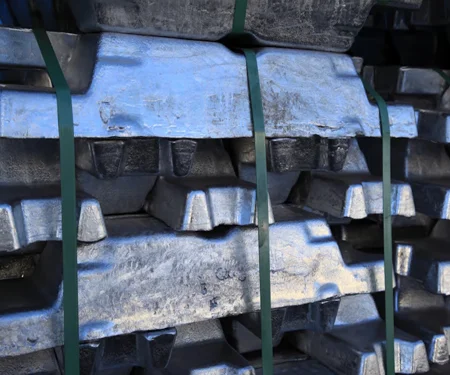
Aluminium prices consolidate amid uncertainty over Fed rate hike expectations and limited support from inventory draws
The image used in this article is generated with an AI tool and does not depict any real-time moment
The most-traded aluminium contract on the SHFE opened at CNY 23,440 per tonne in the overnight session on October 26, reached a high of CNY 23,590 per tonne and a low of CNY 23,440 per tonne, and closed at CNY 23,525 per tonne, up CNY 75 per tonne, or 0.32 per cent, from the previous close. Prices retreated after a small rally, holding above the 5/10/20/40-period moving averages, with the 60-day moving average forming resistance above.
Trading volume for the session was 84,869 lots, with open interest of 254,000 lots, down 1,520 lots, mainly due to a reduction in short positions. Technically, the 4-hour MACD maintained a golden cross with the red histogram holding, and the short-term rebound momentum remained unchanged, although the upward momentum slowed somewhat.
The three-month LME aluminium contract opened at USD 3,039.00 per tonne on October 26, reached a high of USD 3,057.50 per tonne and a low of USD 3,022.50 per tonne, and closed at USD 3,038.00 per tonne, down USD 2.50 per tonne, or 0.08 per cent, from the previous close. Prices retreated slightly after the rapid rise, holding above the 5/10-day moving averages, while the 20/40/60-day medium- and long-term moving averages continued to exert downward pressure.
Trading volume for the session was 18,415 lots, with open interest at 566,000 lots, down 1,081 lots as buyers reduced their positions and exited the market. Technically, the daily MACD remained within a golden cross, but the red histogram was relatively short, indicating weak rebound momentum.
Macroeconomic background: Following the September rate hike, the market is once again expecting policymakers to keep rates unchanged this week. As a result, market expectations have shifted to December, with the prevailing view being that the US Federal Reserve is highly likely to carry out its second rate hike this year in December.
According to CME FedWatch, the probability of the US Federal Reserve keeping the Fed rate unchanged this week is 89.5 per cent, while the probability of a cumulative 25 basis point hike is 10.5 per cent. The probability of the US Federal Reserve keeping the Fed rate unchanged through December is 17.7 per cent, while the probability of a cumulative 25 basis point hike is 73.9 per cent, and the probability of a cumulative 50 basis point hike is 8.4 per cent.
Fundamentals: As the fourth quarter begins, the primary driver of domestic aluminium ingot inventory reduction remains supply-side. Recycling fees for primary products such as aluminium billets recovered after the holiday, the share of liquid aluminium returned to normal pre-holiday levels, and pressure on ingot casting has significantly eased.
Meanwhile, the shortage of railway containers in Xinjiang remains unresolved, and transportation disruptions in southwest China have exacerbated the problem. De facto shipping restrictions effectively offset the gradual release of the excess cast ingots accumulated in factory warehouses during the National Day holiday.
On the demand side, the recent decline in aluminium prices triggered a resumption of warehouse drawdowns after the holiday, and the sustained improvement in demand directly contributed to the accelerated post-holiday inventory reduction. Overall, low inventory levels, coupled with ongoing inventory drawdowns, provided downward support for the spot market.
However, with wide price differentials between futures contracts, regional premiums diverged significantly: high premiums in southern China narrowed sharply, premiums in eastern China retreated after a rapid rise and may continue to decline next week, while discounts persisted in central China.
Going forward, attention should focus on the pace of imported cargo arrivals and the impact of month-end long-term contract settlements on spot trading. Inventories are expected to decline to approximately 550,000 tonnes by the end of October, after which they will consolidate at low levels.
Primary aluminium market: East China Market: Aluminium futures on the SHFE continued to rise during the day, spot trading sentiment weakened, and spot premiums on SHFE futures continued to decline during the day. However, in East China, inventory destocking continued, and the premium decline was relatively modest. Leading up to the end of the month, intraday trading remained dominated by cargoes with invoices dated this month.
Premiums for SMM A00 aluminium ingots were RMB 220-240 per tonne. Central China Market: Aluminium futures recovered, and amid the completion of settlements on current-month invoices and long-term contracts, suppliers in Central China began panic selling, with prices steadily declining. However, downstream processors showed little willingness to accept current prices and premium ranges, and buying sentiment weakened significantly.
As a result, actual transaction prices in Central China concentrated at premiums of RMB 40-70 per tonne to the November aluminium contract on the SHFE. South China Market: Aluminium prices rose sharply on the previous trading day, and the South China spot market showed a clear divergence. Arrivals were limited, inventories were sharply reduced, while the backwardation structure narrowed somewhat and the basis weakened.
Meanwhile, some suppliers held prices and sold slowly, counting on premiums for shipments with invoicing dates in the current month, while others preferred to actively reduce quotes to sell and raise cash amid a significant increase in absolute prices and a structure that was still unfavourable for hedging.
Quotes diverged within a discount range. Downstream buyers showed some caution at high prices, and purchasing demand weakened. Strong demand accepted premiums for current month's incoming invoices, but beyond that, buyers generally insisted on lower prices and discounts, causing transactions to go less smoothly than expected.
Aluminium scrap: On the previous trading day, SMM A00 aluminium closed at RMB 23,970 per tonne, up RMB 300 per tonne from the previous trading day. Aluminium scrap prices diverged, with bare bright aluminium wire and UBC extruded cans rising by RMB 150-200 per tonne on the day, while tense aluminium scrap was generally flat, with daily adjustments of RMB 0-100 per tonne.
In terms of the price spread between A00 aluminium and the front-end aluminium scrap contract, the spread between A00 aluminium and Foshan mixed aluminium extrusion scrap without paint on October 26 was about RMB 2,275 per tonne, and the spread between A00 aluminium and shredded tense aluminium scrap was about RMB 776 per tonne.
On the supply side, tax audits in central China continued to escalate, making qualified aluminium scrap with invoices increasingly scarce, and enterprises with invoices demonstrated a strong desire to maintain prices. Competition between enterprises was intense, and the actual effective supply remained limited.
According to customs data, aluminium scrap imports in September totalled 158,800 tonnes, an increase of 12 per cent compared to the previous month, continuing the recovery trend. On the one hand, shipping and delivery schedules gradually returned to normal, and supply replenishment from Southeast Asia continued to increase. On the other hand, the deepening of the peak season somewhat stimulated the gradual demand for replenishment of imported scrap. In the short term, the aluminium scrap market is expected to remain resilient, with limited downside potential.
On the supply side, the scale and intensity of tax audits remain a key variable, and the supply shortage of qualified, invoiced consignments is unlikely to ease. Tax rates on invoices at some industry leaders continued to rise, and competition for related raw materials among companies intensified.
On the demand side, downstream scrap recycling companies continue to demonstrate robust demand, but pressure from finished product inventories has also constrained raw material purchasing activity. Furthermore, the price differential between A00 aluminium and aluminium scrap has recently narrowed to historic lows, weakening the price advantage of aluminium scrap, and the issue of substitution with primary aluminium has once again returned to the discussion agenda. Going forward, attention should be paid to the scale of tax audits, changes in invoice quotas in different regions, and the pace of downstream companies' operations.
Secondary aluminium alloys: ADC12 market prices strengthened slightly on the previous trading day, with SMM ADC12 quotations rising by RMB 100 per tonne compared to the previous trading day. On the cost side, aluminium and futures prices rebounded in tandem, providing support, and some companies followed the price hike. On the demand side, improvement was limited, and price increases failed to effectively boost downstream buyers' purchasing appetite.
Transactions remained driven by tight demand, and the upward trend lacked sustainable drivers. Meanwhile, a shortage of related raw materials and high production costs limited companies' ability to lower prices, and lower support remained. Overall, the market is temporarily locked in a tug-of-war between cost support and weak demand.
Prices are expected to remain oscillating in the short term: capped by demand on the upside and supported by costs on the downside. Going forward, attention should be paid to the dynamics of aluminium prices and futures, as well as the rate of recovery in downstream demand.
Comprehensive forecast: The macroeconomic backdrop is mixed, and geopolitical unrest persists. Valuation pressure from the US dollar and interest rates on base metals has eased slightly, and overall macroeconomic sentiment remains cautious. Fundamentally, the resumption of production abroad and the launch of new capacity weighed on futures sentiment, but ongoing inventory drawdowns in China continue to support aluminium price movements. Aluminium prices are expected to remain volatile in the short term.
Note: This article has been issued by SMM and has been published by AL Circle with its original information without any modifications or edits to the core subject/data.
Rise and fall in LME aluminium prices: Cash jumps to $3,047.5/t as alumina dips 1.6%
Next articleLME aluminium price rallies $3,078/t as Asian Ref Price gains 1.5% on October 27
Grow with
AL Circle