“We, as Intals, are finalising the renovation of a new facility: GML.The mission of GML is simple yet ambitious: to recover aluminium from materials that are difficult to process using traditional methods,” Alessandro Colla, Purchase and Sales Manager, Intals S.p.A

Intals S.p.A. is a leading European company specialising in aluminium recycling. With origins dating back to 1902 in a small artistic aluminium foundry in central Milan, Intals has established itself as a key player in the European aluminium recovery and recycling industry. In this exclusive interview, Mr. Alessandro Colla, Purchase and Sales Manager at Intals, has shared his insights into the company’s mission and vision, upcoming projects, investment strategies, and the evolving landscape of the European aluminium recycling market.
Read on to discover how Intals is reinforcing its position as a leader in the industry.
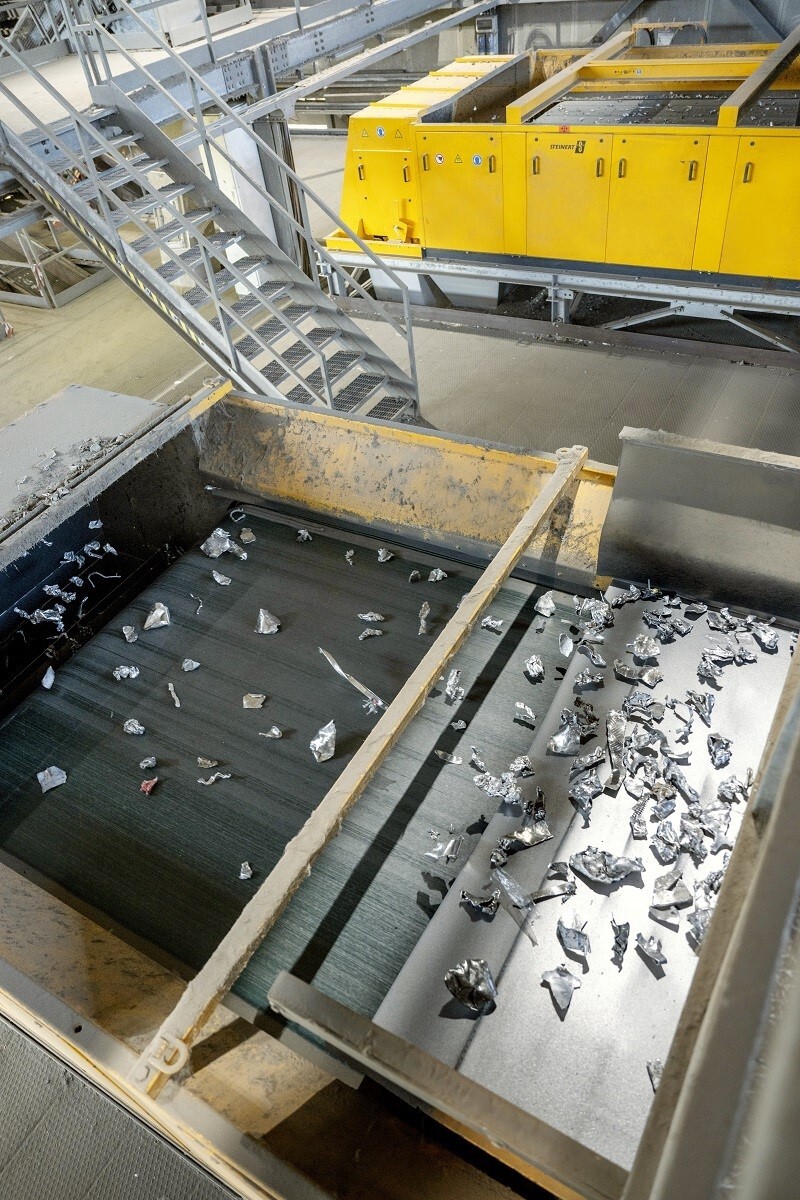
Image source: LinkedIn, Intals
AL Circle: How would you describe the transformation in the secondary aluminium industry over less than a decade?
Alessandro Colla: In the last ten years, the secondary aluminium market has changed radically. The main sources of supply for ingot production were turnings and aluminium recovered from zorba, obtained from the shredding of end-of-life vehicles. With the decline in industrial production and the decreasing flow of vehicles for dismantling, an important source of supply has diminished. The secondary industry has, therefore, had to find alternative sources to continue using recycled material without further impacting the environment and depleting our planet's resources. In this process, technology has played a fundamental role: the evolution of eddy current systems, which have allowed for the separation of increasingly smaller fractions, has made it possible to recover materials that were previously destined for landfills, while increasingly efficient X-ray machines have enabled secondary aluminium producers to maintain the ambitious goal of using only recycled materials—not only to produce standard alloys such as DIN 226 or ADC12 but also purer alloys like DIN 230 and DIN 239.
AL Circle: How do you anticipate the consumption of secondary aluminium in the automobile sector in 2025 amid the current sluggish sales and deliveries of cars in Europe?
Alessandro Colla: The decision to ban the production of internal combustion engine vehicles after 2035 is not yet definitive and appears likely to be modified to allow the production of plug-in hybrid and range extender vehicles. In this phase of uncertainty, registrations will continue to be very low, leading to a sharp reduction in secondary aluminum consumption. However, once the regulatory direction is clarified, hybrid car purchases will grow, as the European car fleet is aging, and this growth will once again drive secondary aluminum consumption.
AL Circle: How important is the role of technologies in sorting and processing aluminium scrap? Do you believe the available technologies in the European market are sufficient to produce high-purity recycled aluminium?
Alessandro Colla: The role of technology is crucial: transmittance X-rays and fluorescence X-rays have made it possible to produce increasingly high-quality alloys without the need to add 99.7 ingots. With the advent of LIBS technology, the cycle is complete: scrap returns to being the alloy it originally was, rather than being used in dilution.
Regarding X-ray machines, their adoption has been widespread, and there is now a risk of having more machines than available scrap. LIBS technology, on the other hand, is still in the early stages of implementation.
AL Circle: Please share your expansion plans in 2025 or beyond to meet the ever-growing demand for recycled aluminium products.
Alessandro Colla: We, as Intals, are finalizing the renovation of a new facility: GML.The mission of GML is simple yet ambitious: to recover aluminium from materials that are difficult to process using traditional methods. Our goal is to process all low-aluminum-content materials derived from separate waste collection or from processing residues of other plants.
Over the years, many countries have restricted the import of low-aluminum-content materials. China, with regulations such as Green Fence and Blue Sky, has initiated a series of policies that have led other nations to ban the import of materials with a high percentage of impurities.
This has increased the availability of low-value materials in Europe, making it essential to use machinery capable of recovering the contained aluminium, preventing its disposal in landfills or incineration plants. To avoid wasting resources and protect the environment, we created GML, a facility that, thanks to advanced technologies, transforms these materials into valuable reusable resources.
AL Circle: What benefits do you expect from installing STEINERT technology? Do you expect it to enhance both your production capacity and product quality?
Alessandro Colla: In the new GML facility, we have installed eddy current systems and transmittance X-rays from Steinert because we are confident in achieving the best possible performance. Like high throughput and quality of the sortiing.
We have been working with Steinert for over 15 years and are well aware of their products' quality and production capacity. And we appreciate it.
AL Circle: How do you envision the secondary aluminium market in Europe next year?
Alessandro Colla: As mentioned, much depends on European automotive regulations. People will start purchasing vehicles again if hybrid cars can still be produced after 2035. Therefore, after the first half of the year, with limited consumption and reduced margins, we should return to pre-crisis consumption levels.

