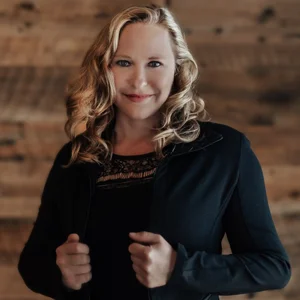
“The unfortunate situation with Russia and Ukraine will also affect our industry and we are waiting to see how the various sanctions will further impact our occidental clients”, Eloise Harvey, CEO of EPIQ Machinery.
- Category
- Interview
- Date
- Source
- AlCircle.com
Born in Montreal, Éloïse Harvey obtained her Bachelor of Engineering & Management from McMaster University (Hamilton, ON). In 1999, Éloïse joined Mecfor (equipment manufacturer), the youngest of the four companies in the family group (Ceger) as a Technical Sales Representative.
Over the years, her dynamism and her vision for business development led her to work her way up within the growing organization. Indeed, from 12 employees and 2 million in turnover when started, Mecfor saw its number of employees and its volume multiply by 10 during the first twenty years of Éloïse's career. In 2018, Éloïse and a group of a few operator partners bought Mecfor from Ceger.
The arrival of a patient financial partner who invests in the long term represents the first step towards an aggressive program of organic and inorganic growth. This was followed, a few years later, by the merger of Mecfor and Advanced Dynamics to create the largest equipment supplier in Canada for the aluminium industry: EPIQ Machinery. Éloïse becomes CEO of EPIQ Machinery in August 2021.
AlCircle: How do you envision 2022 for the global aluminium industry following the Covid pandemic economic impact?
Ms Eloise Harvey: The industry is bouncing back, and the price of aluminium is rising. This is always good news for equipment manufacturers since many projects are active and our clients move forward with more capital and operational expenditures. The unfortunate situation with Russia and Ukraine will also affect our industry and we are waiting to see how the various sanctions will further impact our occidental clients.
AlCircle: What was the intent behind the merger of Mecfor and Advanced Dynamics to form EPIQ Machinery?
Ms Eloise Harvey: A few years back, there was a study performed by Roland Berger consulting firm on behalf of AluQuébec on the competitiveness of the aluminium industry equipment manufacturers from Quebec (Canada). The recommendations of that study, in a nutshell, were the following: consolidate (get bigger), find means to reduce costs through lower-cost country manufacturing (more competitive), invest in RD and innovate (better), and diversify activities to other industries to alleviate the impact of the drop in one market (diversify). That is exactly what we achieved through the merger of AD and Mecfor. EPIQ Machinery is a larger organisation with more means to meet its objectives, we have a well organised and performant manufacturing facility in Pune (India), we can count on a dedicated RD and innovation group plus we now have a more diversified client base (primary metals, pulp and paper and rail).
AlCircle: How would you evaluate EPIQ Machinery’s 2021 performance focused on the aluminium business and your projection for 2022?
Ms Eloise Harvey: Both organisations before the merger were doing well and growing in their respective aluminium sectors. 2022 is an exciting year with many ongoing projects and the price of aluminium allowing our clients worldwide to trust their ability to innovate and integrate new technologies into their operations. The aluminium sector will be approximately 50% of all capital projects for EPIQ Machinery. Since the beginning of this year, it has been thrilling in the aluminium industry (both primary and secondary). Our teams are taking on many new challenges for eager clients.
AlCircle: The merged house EPIQ Machinery has more than 75 years of experience in delivering service to the aluminium industry. What new technology are you planning to implant in 2022 for providing further better service to the sector?
Ms Eloise Harvey: We expect to implement AGVs in various sectors of aluminium mills in 2022-2023 and to integrate more robotisation and automation overall in all equipment. We want smart equipment to talk to each other and to the plant to help our clients move towards 4.0.
AlCircle: Following the merger, what significant deliverables have the company made as of yet and set a goal for 2022?
Ms Eloise Harvey: We have had many requests from clients wanting EPIQ to integrate fixed and mobile equipment in overall solutions/systems to help them achieve better operational efficiencies and more automation. Really exciting global projects that were one of the objectives of the creation of EPIQ are now capable to offer mobile and ground-based equipment pretty much for all sectors of an aluminium plant. We are glad to see that our clients appreciate our extended offer. They recognize the benefits of working with a company like ours that can take on such global challenges (fixed and mobile).
AlCircle: The Covid pandemic and the global energy price hike have forced a few aluminium smelters to shut down permanently or temporarily and some reduced their production. What is EPIQ Machinery’s insight on this challenging issue? Was there any impact on your side in regards to losing out clientele?
Ms Eloise Harvey: Absolutely none, we see on the opposite an increase in activity due to the increase in aluminium price and probably better ROI on projects.
AlCircle: Could you please brief us more about EPIQ Mecfor’s line of focus on specialized mobile equipment for aluminium smelters?
Ms Eloise Harvey: The mobile equipment line of products has evolved over the past few years and our casthouse solution has become much more attractive to clients. Indeed, the EPIQ Mecfor casthouse solution encompasses a series of smart tools that ‘talk’ to the vehicle and that enables the equipment to adjust its speed, movement, limits height and acceleration depending on the type of tool (ex. Stirring blade versus charging box) and depending on if the vehicle is in front of the furnace or driving around the plant. The vehicle ‘thinks’ for the operator and that allows for a safer and better operation. Of course, we have also continued the development of the electrical and autonomous vehicle for anode and metal crucible transport and are very proud of this new generation of AGVs dedicated to the harsh working conditions of aluminium smelters.

