“The certification from ASI Performance Standard is confirming our efforts and goes hand in hand with Hydro’s ambitions of lifting profitability and driving sustainability” - Hilde Merete Aasheim, President and Chief Executive Officer, Hydro
Norsk Hydro ASA is a Norwegian aluminium and renewable energy company, headquartered in Oslo. It is one of the largest aluminium companies worldwide, with operations across 50 countries. Starting from bauxite and alumina, Hydro produces low-carbon aluminium, extruded profiles, building systems, precision tubes, rolled products, and casthouse products. Besides, the company has reckoned a name in the industry by offering a variety of services with unmatched capability and knowledge. It currently has 16 ASI certified extrusion and fabrication facilities.
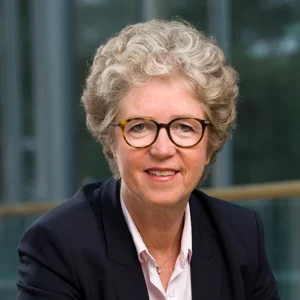
We are grateful to have Hydro with us in our flagship e-magazine LeaderSpeak 2020, where the company’s President and CEO Hilde Merete Aasheim has shared about the new plans and strategies for 2020 and also the futuristic view for the time to come. Hilde says Hydro will continue to focus and develop new products, while constantly reviewing and assessing the global macroeconomic situation and demand.
To know more, continue reading the interview!
AlCircle: How do you expect your two new greener brands CIRCAL and REDUXA to perform in 2020 in terms of influencing other aluminium companies to work towards producing more sustainable metal?
Ms Aasheim: We experience increasing market pull for low-carbon products. Recycled and low carbon primary aluminium attracts attention from both customers and regulators who are looking for solutions to lower the carbon footprint of products.
We have to make it easier for end consumers to buy green. We have to label our greener products smartly. If you go to IKEA to buy a sofa or a bed, IKEA can promise that at least 50% of the aluminium content of the DELAKTIG products is made from recycled aluminium. More companies should follow IKEA’s example - use recycled aluminium in products and tell end consumers about it. A sofa can make a difference.
In this sense, Hydro and other aluminium companies’ launch of green brands are important steps to support the development, and we believe that we are well-positioned with our REDUXA and CIRCAL brands. REDUXA is aimed at low carbon primary production, while CIRCAL is targeting the high recycling content of post-consumed aluminium.
AlCircle: How do you plan to offer more innovative extruded solutions to your customers in 2020 after having 16 aluminium extrusion and fabrication facilities being certified according to ASI Performance Standard?
Ms Aasheim: The certification from ASI Performance Standard is confirming our efforts and goes hand in hand with Hydro’s ambitions of lifting profitability and driving sustainability. Hydro has the longest unbroken chain of ASI certifications in the industry. We are continuously working to offer more innovative solutions to our customers through close cooperation with partners and customers. Based on our technological competence along the full value chain, we are able to offer our customers advanced solutions to fulfil their needs.
AlCircle: As you have already started restructuring your aluminium rolled products business area to mitigate your declining profitability, how much improvement do you expect in 2020?
Ms Aasheim: The Robust 100 program was announced at the investor day in September 2019 and identified clear targets to improve our profitability; organizational efficiency, operational excellence and commercial excellence. We have had a good start on this program in 2019, and this will continue going forward.
AlCircle: Do you see your aluminium supply contract with Audi as a game-changer for your flat-rolled products business in 2020?
Ms Aasheim: The joint engagement of Audi and Hydro is a proof-point that sustainability along the value chain is a critical success factor for future businesses. It demonstrates that Hydro can meet the toughest customer requirements, and we also see this from other customers who are looking for advanced aluminium solutions.
AlCircle: How do you expect your Paragominas bauxite mine and Alunorte alumina refinery to perform and drive the global aluminium value-chain market in 2020?
Ms Aasheim: Paragominas and Alunorte play an important part of Hydro’s strategy as a global provider of innovative aluminium solutions. They are at the start of our value chain, providing high quality alumina to our primary metal production. We achieved a milestone when the final embargo for Alunorte was lifted in September 2019. Ramping up Alunorte production will contribute to our agenda towards a more profitable and sustainable Hydro.
AlCircle: With ASI certified plants, how do you expect your primary aluminium business to perform in 2020 and beyond?
Ms Aasheim: The ASI certification is a stretch for our plants, demonstrating their capabilities. We have certified several plants, and more will come. Hydro is one of the leading suppliers of extrusion ingots, sheet ingots, foundry alloys, wire rods, and high-purity aluminum. We have a global production network and a broad customer base. Currently, the macroeconomic situation is challenging, markets weak, and we are working on what we can influence ourselves, aiming to lift profitability and drive sustainability.
AlCircle: At present Hydro supplies 3 million tonnes of casthouse products in a year to the global market, do you aim to increase your supplies in 2020?
Ms Aasheim: We will continue to focus and develop our casthouse products moving forward, while we constantly review and assess the global macroeconomic situation and demand for our products.
AlCircle: Do you also think the implementation of Industry 4.0 is imperative to grow your business in today’s global scenario?
Ms Aasheim: There are many opportunities where Industry 4.0 will support our agenda to lift profitability and drive sustainability. The production at our plants will change through elements like predictive maintenance, big data, digital twin, automatization, robotics, IT networks, and infrastructure. This will contribute to safer operations, stable production, and higher quality products. It will also lower costs, contributing to the profitability agenda.

