“Modern smelters fitted with EnPot modulation technology can maximise operating performance and reduce their CO2 emissions profile by flexing their energy use to match electricity generation fluctuations”, Karyna Young, CEO of EnPot
- Category
- Interview
- Date
- Source
- AlCircle.com
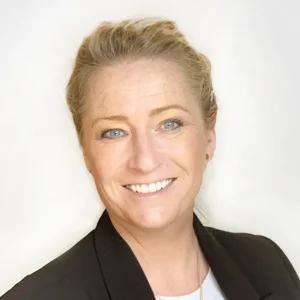
We are glad to have Karyna Young join us at LeaderSpeak 2022, a Chief Executive Officer of EnPot since early 2021, after being involved with the company since its inception in 2016. EnPot is an innovative new technology that fundamentally changes the way smelters use energy to produce aluminium. It is helping the world achieve net zero emission sooner by reducing aluminium’s carbon footprint.
Karyna started her career as a commercial lawyer and finance company director in both New Zealand and Australia. In addition to leading EnPot, she is a CEO of Yunca Group, a manufacturing and engineering business and supplier to the global aluminium industry.
AlCircle.com: How is EnPot technology supporting the world to attain net-zero emissions?
Karyna Young: EnPot supports the rapid uptake of renewable energy. Many countries in the world are accelerating their efforts to ‘green their grids’ by building more solar, wind and hydro generation. The issue is that renewable energy is variable by its very nature and therefore, unreliable. The unpredictable nature of new sources of variable renewable energy, particularly solar and wind, pose a major technical challenge for our power systems. As renewable energy increases, generation becomes less dispatchable and more variable so we need grid-scale solutions to balance electricity demand with generation. Of course, this is not an insurmountable issue. Large batteries and pumped hydro are two well-known firming solutions. A less well known option is transforming energy intensive aluminium smelters into flexible energy users that can modulate energy use on demand, at a much lower cost. A smelter that can offer critical demand-side response services to the grid enables greater uptake of renewables and in doing so, supports global decarbonisation goals.
AlCircle.com: Modern aluminium smelters fitted with EnPot modulation technology are better positioned to secure cheaper power, maximise operating performance and reduce their CO2 emissions profile by operating as a virtual power plant. Could you emphasize a detailed study on it?
Karyna Young: We recently published a paper at the TMS Light Metals conference, where we looked in detail at the economics of demand-side response, enabled by EnPot, for two different energy markets, one coal-generation dominated, and one hydro. While the payback for an EnPot-enabled smelter could be achieved in many ways, such as direct payments from grid operators for providing virtual battery services, we specifically examined how it could be self-funded by smelters performing arbitrage on the varying prices of electricity and aluminium metal .
AlCircle.com: What sort of appetite are you seeing for new technology from the aluminium production industry, power operators and governments?
Karyna Young: As the global decarbonisation movement gathers steam, so too does interest in innovative new technologies designed to reduce those hard-to-abate emissions, particularly in the industrial sector. Aluminium smelting is recognised as one of the big three ‘hard-to-abate’ sectors for carbon dioxide (CO2) emissions, along with cement and steel production. According to a recent report by the International Aluminium Institute, most CO2 emissions from the aluminium sector, more than 60%, can be attributed to the production of electricity which is then used to power the smelting process.
This is also the key driver behind the EnPot technology, and the reason I spend as much time speaking with smelters as I do with representatives from the energy sector and government is because finding ways to reduce emissions is a collective challenge.
AlCircle.com: What are the key factors that will attract EnPot technology to aluminium smelters in the coming days?
Karyna Young: Modern smelters fitted with EnPot modulation technology can maximise operating performance and reduce their CO2 emissions profile by flexing their energy use to match electricity generation fluctuations. Smelters are also in a stronger position to secure cheaper power, in return for modulating their energy use on demand.
Another key benefit of the technology is that it enables smelters to safely shutdown in times of emergency grid shortages and extreme power prices. In times of unplanned outages, EnPot can double the time available for potline recovery.
Smelter operators tell me that another reason EnPot appeals is that it does not fundamentally change the smelting process. The only moving parts are the suction fans, which have built in redundancy. The installation process is also low impact because potlines remain fully operational during installation. The system is non-invasive and as such, low risk.
It’s also what we call ‘turnkey’ i.e. it’s ready to go, straight out of the box. Following a demonstration on a group of pots, we can have the technology operational on a full potline in around 12 months. For any smelter owner – these are key attributes of the technology: quick to install, and low risk.
AlCircle.com: Who to you are your biggest entrants in today’s competitive market? How do you plan to counter it?
Karyna Young: Our largest “competitor” is the existing ability of smelters to shut off temporarily for approximately one hour per week, as already utilised in some electricity markets. Smelters can do this with relatively little disruption to processes and provide emergency DSR services at times of severe electricity shortages. With EnPot, these abilities can be doubled in frequency and duration to give much more useful DSR in times of power emergencies, such as when weather conditions and equipment failures may cause shortages to cluster together, leaving smelters unable to respond.
Beyond this full emergency shutdown, EnPot also enables extended durations of smaller, 20%, DSR at any time and up to 30% for long-term modulation. This is more useful for firming grid supply and securing lower prices, without the need for expensive peaking generation. The best part of my job is demonstrating the opportunities that open up to smelter operators when their DSR ability extends beyond existing emergency shutdowns. Many are also surprised that the long-term value smelters can offer the wider power grid once they renegotiate their existing power purchase agreements (PPAs) to ensure smelters are rewarded for modulation.
AlCircle.com: How do you visualize the year 2022 in regards to the aluminium industry and what does this mean for EnPot technology?
Karyna Young: There are a number of factors at play impacting the industry this year. Last year demand for aluminium saw rapid growth, in excess of 7%. In 2022, it seems likely the metal will remain on an upward trajectory, albeit at a slightly slower rate than in 2021. It is also likely that supply will remain tight. As such, we are already seeing the metal commanding record breaking prices on the London Metal Exchange (LME). This is all positive news for EnPot technology. Smelters are looking to the future, safe in the knowledge that global demand for aluminium is on the rise, and prices with it. At the same time, demand is also increasing for low carbon aluminium. The energy transition is presenting a dual challenge for aluminium producers: meet rising global demand for the crucial commodity and cut emissions at the same time. To meet this challenge, those smelters that are not predominantly run off renewable energy will need to flip their mix of power on its head. Another factor driving interest in EnPot technology is the looming energy crisis in Europe. With less readily available gas, generators are looking to alternatives and reliable demand-side response is increasingly becoming a viable option to support energy from renewable sources.
AlCircle.com: What are your expansion and investment plans in 2022? Kindly also share if there are new technologies built up to be installed?
Karyna Young: EnPot has completed the development of our technical product offering. This year, our focus is firmly on our next commercial installation. As we transition away from years of critical research and development to focus on further rolling out the product, we are streamlining our system and package design, and working with smelters to tailor solutions to their bespoke hardware and software needs. We have also developed control and data visualisation software that benefit plant operations well beyond the EnPot system. We are excited to put these into operation soon.

