“Industry 4.0 and the solutions developed by Fives could help smelters save millions of dollars per year,” Serge Despinasse, Aluminium Technology and IT Director at Fives’ Aluminium Division & Benjamin Ulmann, Sales Manager at Fives Solios
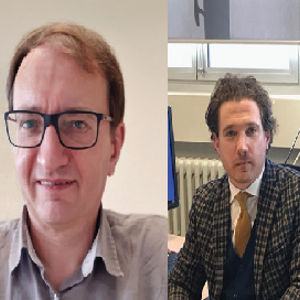
Fives has been developing Industry 4.0 solutions for the metal industry since a decade now. It believes the implementation of digital solutions is mandatory as it helps people improve the performance of existing facilities. Besides, the company also believes that Industry 4.0 and its solutions help smelters save millions of dollars per year. To know how read the interview of Serge Despinasse and Benjamin Ulmann.
Mr Despinasse had joined Fives in the year 2009 and by mid-2017 took the position of Technology and IT Director of the Fives’ Aluminium Division. Engineer from the Ecole Nationale Supérieure des Mines de Saint-Etienne, Mr Despinasse started his career in the aluminium industry in 1989 in an R&D laboratory of Aluminium Pechiney. He then occupied various engineering positions in relation with aluminium smelter development or modernisation, including investment evaluation.
Mr Benjamin, Sales Manager at Fives Solios, worked for more than 13 years as Business Development Manager, promoting and selling advanced technical solutions in an international environment. He joined Fives in 2016 after working with LUFKIN (Power Transmission) and WELDING ALLOYS (Welding Consumables, Machines and Services).
AlCircle: Being the designer and supplier of process equipment in the aluminium industry, how do you see the future of Industry 4.0 in the metal industry?
Mr Despinasse: Industry 4.0 is certainly one of the pillars of the future aluminium industry development, jointly with the research for products and processes demanding less energy, meanwhile reducing their impact on the global warming.
Fives has been developing Industry 4.0 solutions for the metal industry for more than a decade. Few years ago, the concept of Industry was still considered as a "nice to have", but lately the situation evolved and the digitalisation is now considered by our customers as a reel solution to improve the performance of existing facilities. Demands and expectations are now very high. As of today, Fives is able to offer a wide range of digital tools such as:
- Amelios Suite, the Carbon Digital Chain - an End-to-End solution to track anodes from raw materials to butt recycling and to get detailed information on their composition and behaviour in the pot with specific advanced sensors and algorithms, simulating tools.
- SMART GTC
- SMARTCrane
Given the present stress supported by the producers due to low aluminium prices, such tools will inforce the position of the leading companies. Nevertheless and surprisingly, Industry 4.0 will probably spread slower in the aluminium industry compared with the other ones. One should underline that the first developments to be reported by the aluminium industry in the digitization field were at the same time low capitalistic projects and successful.
AlCircle: What positive impact do you think the implementation of Industry 4.0 is bringing in the business models of process equipment manufacturers?
Mr Ulmann: As a process equipment manufacturer, we believe that the implementation of digital solutions is now mandatory. As mentioned before, customers operating existing facilities are moving towards more digitalization, and everyone agrees that the next smelter will be 100% digital. The implementation of Industry 4.0 is bringing closer customers and process equipment manufacturers. Indeed, with big and real-time data, process equipment manufacturers can support and take care of their customers immediately: applying 4.0 tools will make more understandable and valuable data accessible for each party.
In addition, Industry 4.0 is also pushing process equipment manufacturers to develop services in line with evolving requirements by using digital tools like a portal including IoT features.
Fives’ Aluminium Division is pursuing this strategy with the development of Industry 4.0 solutions, on one hand, consisting of more performing tools for managing the production and the processes, while on the other hand, the expansion of its worldwide local presence through subsidiaries and decentralized skills.
AlCircle: You have been adapting to changes towards digitization and also providing digitization solutions to your clients. So, do you think this is going to drive the aluminium industry in the near future?
Mr Despinasse: Clearly, the digitalisation of the industry will help people in charge of the process to improve the performance of their existing facilities. For example, energy consumption as well as gross materials will be tracked more closely, allowing more frugal operations; the reduction process will become more flexible, allowing a better adjustment with the electricity grid capability; process deviations will be easier to anticipate and corrective actions put in place sooner, for example to cope with raw materials variations
AlCircle: As a driver of sustainable industrial progress, do you think the implementation of Industry 4.0 is a must to grow in the industry?
Mr Ulmann: Absolutely, our customers are more than ever facing though times; they are subject to the raw material and energy price fluctuations, while being hit hard by the LME trading price. Therefore, they need to increase the control on their smelters to streamline process and reduce the operating cost. The Industry 4.0 is a solution and therefore one of the drivers for the near future.
AlCircle: Tell us in brief how automation and digitization makes operations easier and safer in an anode rodding shop.
Mr Despinasse: Modern anode rodding shops as supplied by Fives are already well mechanised, the main area were we can expect still progress is probably the finishing stage after the bath removal on the spent anodes. A combination of Vision and Robotics would allow removing people in charge of such harsh task from exposition to dust, noise and repetitive movements. Digitization will also help to check and make a diagnostic about the shape of the clean stem automatically, the decision to repair being taken based on factual data. For the rest of the activities, unfortunately, operations will remain dangerous by their very nature, given the fact that heavy loads are moving from one station to the following one, where very large efforts are applied by machines, and where hot liquid metal is handled! Nevertheless, digitization could improve the safety of operators and maintenance people by involving detection technologies and remote supervision for example.
AlCircle: How functionalities of green anode plants technologies have progressed with the introduction of automation and digitization?
Mr Despinasse: Fives offers Advanced Process Control and Anode Tracking solutions for almost all the Carbon activities of a smelter – from the port to the reduction pot and then to the recycling shop. Some specific devices or solutions have been designed for that, for example the digital identification of the anode blocks based on Vision, the systematic measuring of the electrical resistance of the anode blocks, the location of the process crane tools in the space.
AlCircle: How are the aluminium smelters leveraging on the use of digital techniques?
Mr Ulmann: One of the first benefits reported is related to energy consumption; others are resulting from decision-making: when this last is based on comprehensive data and performing models, expenses can be triggered when necessary, and not systematically on periodic basis. That is one of the vendors’ objectives concerning digital techniques: to propose more prediction about the shape of equipment, that thanks to IoT solutions.
We believe that the Industry 4.0 and the solutions developed by Fives could help smelters save millions of dollars per year.
AlCircle: Do you think the entry of automation in the aluminium industry will cause job loss?
Mr Ulmann: That’s though question. Despite the fact that not all smelters are operating in the same way, we can anticipate a reduction of the workers on the shop floor. The purpose of Industry 4.0 is to automatize a number of tasks and to avoid the work in hazardous area. However, Industry 4.0 will also lead to the creation of jobs requiring new skills – highly qualified ones (in IT, data science, advanced automation, robotics, business intelligence) that are probably not existing in most of the smelters to monitor, analyse, operate and maintain these new technologies.

