“Inductotherm's induction melting systems for aluminium casting boast IIoT readiness, facilitating real-time data access for process control,” Ed Chmielecki, Sales Manager Light Metal Applications – Inductotherm Corp.

- Category
- Interview
- Date
- Source
- AlCircle.com
Ed has 21 years in the metalcasting industry, primarily in non-ferrous metal. He has been with Inductotherm Corp. since September 2019 as Sales Manager for Light Metal Applications and District Manager covering the South-Central US. Before joining Inductotherm, Ed was a Regional Sales Manager for a Crucible Company, and prior to that was a Furnace Services Engineer covering North America, installing and servicing Electric Resistance and Gas Fired Crucible furnaces. At Inductotherm, he now uses his years of experience to show customers the benefits of using induction melting to reduce their carbon footprint while producing cleaner molten aluminium more efficiently.
Inductotherm is the leading manufacturer of induction metal melting systems for metal producers today. We design and manufacture the most advanced induction melting, heating, holding, and pouring systems for virtually all metal and material processing.
AL Circle: How do you envision the global aluminium and casting industries in 2024? What trends do you foresee shaping the future of aluminium casting, and how is Inductotherm preparing to address these trends?
Ed Chmielecki: While specific predictions for 2024 are unavailable, trends indicate a shift toward greener, more efficient practices in aluminium casting, such as the use of induction melting solutions and automated systems, which reduce carbon footprints and enhance process efficiency. Induction furnaces, such as those produced by Inductotherm, provide greater alloy flexibility, extended equipment lifespan, and decreased carbon footprint.
The Inductotherm Group is expected to continue to provide equipment and services specifically tailored for greener aluminium production and thermal manufacturing processes. Solutions like our Acutrak® Direct Electric Heat (DEH) System could continue to be instrumental in melting aluminium and are highly beneficial for die casters and aluminium foundries around the globe.
AL Circle: What are the key features and benefits of Inductotherm's induction melting systems for aluminium casting?
Ed Chmielecki: Inductotherm's induction melting systems for aluminium casting boast IIoT readiness, facilitating real-time data access for process control. Our furnaces are often powered by VIP® Power-Trak® units, ensuring high productivity. Features like efficient designs, energy efficiency, and process control set them apart from conventional methods such as fossil fuel and resistance furnaces. Induction is practical across all aluminium melting, holding, alloying, casting, and heat-treating applications.
AL Circle: How does your technology ensure efficient and reliable melting of aluminium and aluminium alloys? Can you elaborate on recent developments or upgrades in your melting systems tailored explicitly to aluminium casting?
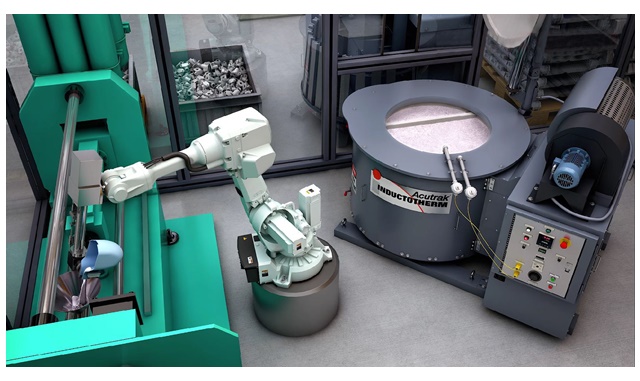
Ed Chmielecki: Inductotherm's technology ensures efficiency through innovative designs like our Acutrak® DEH Systems, boasting over 90% efficiency. In addition to offering faster melting, reduced costs, cleaner operations compared to gas-fired furnaces, and faster melting than electric resistance crucible furnaces, the Acutrak® system utilizes a silicon carbide crucible and a self-contained, air-cooled power supply which provides a compact footprint. Overall, the DEH technology results in clean, higher-quality aluminium that can be produced more profitably and is particularly well-suited for operations like die-casting, permanent mould casting, automated casting cells, and foundries.
AL Circle: How do Inductotherm's heating and holding systems enhance the overall aluminium casting process? What unique features distinguish your heating and holding systems from traditional methods in aluminium casting?
Ed Chmielecki: Inductotherm's heating and holding systems can revolutionise aluminium casting by offering efficiency, quality improvement, low operating costs, versatility, maintainability, and uniform heating. These features outperform traditional methods, ensuring enhanced productivity and quality across various casting applications. Often, traditional heating methods like fossil fuel and resistance furnaces can't maintain the same efficiency level for these materials. Our systems are designed to significantly reduce operating costs, enabling faster return on investment. Traditional heating methods may have higher operating costs due to factors like energy inefficiency, the need for fuel, or other consumables that can become costly or difficult to source.
There are many features that make Inductotherm's induction furnace technologies a competitive alternative to traditional aluminium casting methods. However, specifics about how these technologies directly impact the aluminium casting process, such as practical differences when melting, holding, alloying, or heat-treating aluminium, are easier to review on a case-by-case basis for each application.
AL Circle: How does your company support continuous processes in aluminium casting, such as coating, galvanizing, and galvannealing?
Ed Chmielecki: Inductotherm’s advanced induction equipment allows us to be engaged in various continuous processes—including heating, heat treating, strip heating, and coating—which are critical for processes like galvanising and galvannealing. Inductotherm’s Hybrid™ melting furnace provides an ideal partnership using a coreless inductor (lowercase) and a channel uppercase. They are ideal for melting, holding, and casting large amounts of aluminium and other nonferrous metals.
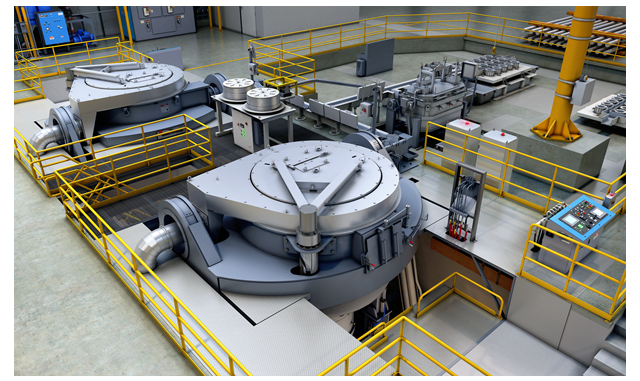
We also offer both channel and coreless coating pots that use our highly efficient power supply units that are designed to support our commitment to sustainability. Our unique products make Inductotherm an ideal partner for aluminium casting operations. The efficient design of our power supply allows Inductotherm to melt more metal with significantly less energy, adding to the efficiency and sustainability of the aluminium casting process.
Challenges do exist, such as the industry's unfamiliarity with the induction process, which requires education, training, and adjustments to existing charging and casting processes and practices. However, Inductotherm is committed to supporting its customers throughout this transition.
AL Circle: Do you want to highlight any recent advancements or innovations in special applications or continuous processes? Are there any upcoming projects or initiatives at Inductotherm that will further revolutionise the aluminium casting process?
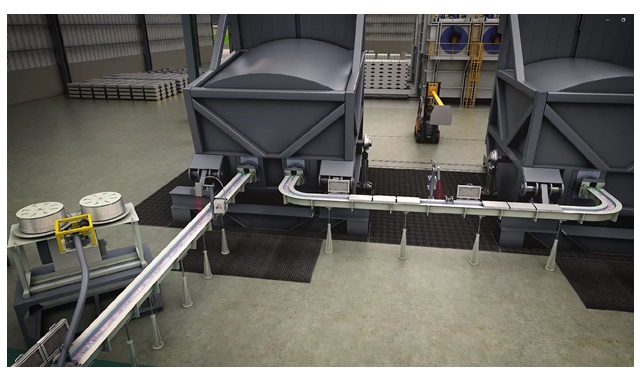
Ed Chmielecki: Inductotherm's Alumiline™ melting and holding furnaces represent a recent development in their quest for innovation. Alumiline™ furnaces combine the proven advantages of coreless induction with the geometry of a reverb furnace. These furnaces are equipped with precise pouring controls, which are required for the most advanced operations. The Alumiline™ furnaces are designed to provide flexibility in operational requirements, such as allowing quick alloy changes and providing an added benefit to various aluminium casting applications and commercial slab and billet casting.
AL Circle: In what ways do you envision Inductotherm continuing to contribute to the advancement of aluminium casting technology in the coming years?
Ed Chmielecki: At Inductotherm, we are driven by a culture of innovation. Over the past years, I have seen how we continually work to improve, invent, and fine-tune our products and processes through extensive R & D efforts, which will likely lead to new and improved aluminium casting technologies in the future. Our MiPlant™ IIoT platform powered by iSense™ sensor technology has been a game changer. It offers data collection and real-time monitoring to allow for predictive maintenance and operational cost reduction, which can contribute significantly to enhancing aluminium casting.
Through continued investment in technology, product, and process improvements, Inductotherm hopes to play a pivotal role in advancing aluminium casting technology in the coming years. We often talk a great deal about efficiency, but we are just as committed to improving worker safety. One way in which we do this involves integrating our existing furnace technologies with our ARMS™ system which is a robotic system to not only offer efficient solutions but also safer and more productive solutions as well.

