“Inductotherm's advanced solid-state power supply technology is one of the main reasons we hold the majority share in the American market,” Michael P. Looby, Director of Sales – Canada & Senior District Manager, Inductotherm Corp.
- Category
- Interview
- Date
- Source
- AlCircle.com
Over 17 years at Inductotherm Corp, Mike held several key roles. Starting in 2006 as a Field Service Engineer, he commissioned new induction melting and heating systems, gaining deep product knowledge. In 2008, he became District Manager for the Southeast U.S., using his technical background to work with manufacturing companies. In 2018, Mike became Senior District Manager, mentoring new team members and sharing successful sales strategies. His promotion to Director of Inter-Company Sales, collaborating with global Inductotherm entities, occurred in 2021. His role as Director of Sales for Inductotherm Group Canada began in 2023.
AL Circle: Can you give a brief overview of Inductotherm's history and its significant milestones in the induction metal melting systems industry?
Michael P. Looby: We are excited to be celebrating our 70th anniversary this year. After Inductotherm Corp. was founded in 1953 by Henry Rowan, our first significant milestone came in 1967 when Inductotherm sold the first solid-state VIP® batch melting power supply, which revolutionized the industry. Today, we still utilize the core of this design, constantly improving upon it to ensure that this melting unit remains the most advanced and efficient design on the market. Later, in 2003, Inductotherm developed the first air-cooled, direct electric heat (DEH) system—the Acutrak® system. The Acutrak® System is still one of the most efficient ways to melt aluminium and is ideal for die casters, not only in the Americas but throughout the globe. Today, we would say one of our most important contributions to safety in the industry came in 2007 when we introduced the ARMS® (Automated Robotic Melt Shop) System, which allows a melt deck worker to be relocated away from the furnace and their proximity to molten metal.
AL Circle: What are the key products and solutions Inductotherm offers to metal and metal casting producers in the Americas? How does Inductotherm's induction melting technology stand out in terms of efficiency and reliability compared to traditional methods?
Michael P. Looby: Induction melting solutions offer the aluminium industry many advantages compared to more traditional methods, such as combustion furnaces. Our systems can provide operational flexibility and melting efficiency, cleaner metal in the absence of combustion, and a better working environment due to the reduced residual heat and noise compared to combustion. Fuel-fired furnaces tend to give off a lot of heat and can be very noisy. Inductotherm offers multiple furnace options for virtually all metals, and our power supply design is the most efficient in the industry. This enables our customers to melt more metal with significantly less energy. In terms of reliability and longevity, our induction melting systems commonly serve our customers for over 30 years with minimal downtime. In fact, we do our best to support several customers in their daily operations using equipment which was manufactured more than 30 years ago.
AL Circle: Can you share some examples of how Inductotherm's technology has helped clients in the Americas gain a competitive edge in the metal production industry?
Michael P. Looby: Inductotherm's advanced solid-state power supply technology is one of the main reasons we hold the majority share in the American market. Our power supply design is the most efficient in the industry, enabling our customers to melt more metal with less energy, giving them a competitive edge.
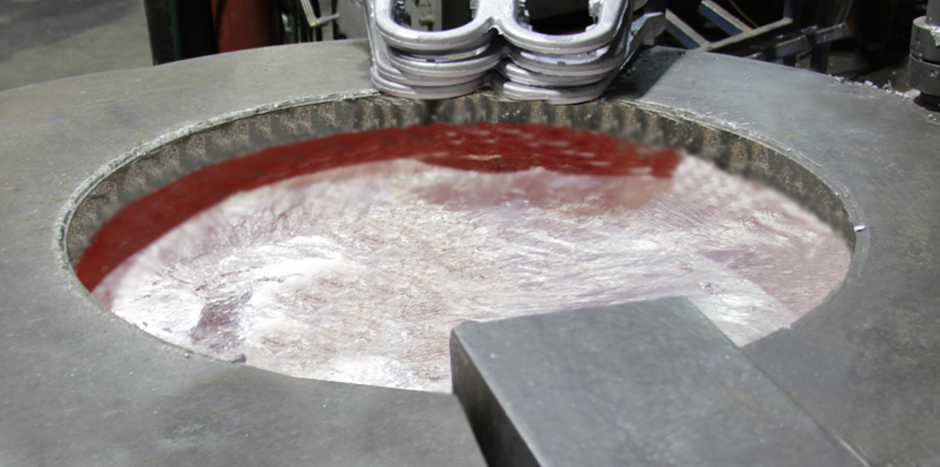
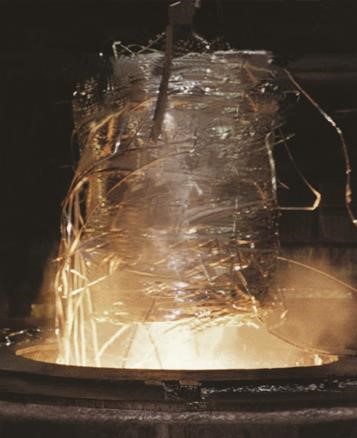
In the early 1970’s, we did what was thought impossible at the time: we created the first large coreless aluminium melting system capable of handling 12 tons of aluminium, which volumetrically would be equivalent to 30 tons of steel! Traditional coreless furnaces offer superior performance and outstanding durability for aluminium foundries and other scrap recyclers. The recycling of aluminium is a major business in the Americas. Re-melting of cleaned and heated aluminium scalper chips and cleaned, heated, and shredded recycled beverage cans represent a significant portion of this process. Due to the inherent stirring in induction furnaces, these systems are ideal for chip melting. Metal chips and any additives are quickly submerged and dissolved in the metal bath, allowing the recovery rate of metal from clean, light gauge aluminium scrap to be as high as 96 to 99.6%, depending on the size of the chips.
AL Circle: Inductotherm provides equipment for a wide range of materials, from aluminium to precious metals. How does your company adapt its technology to suit different material processing requirements?
Michael P. Looby: One of our primary objectives has always been to have an induction solution for each type of metal or material that needs to be heated or melted. We achieve this by adapting our proven core technology and leveraging advanced engineering tools to satisfy various material processing needs. For many years, Inductotherm has proudly stated that we offer solutions from “Al to Zn” and everything in between.
There is a worldwide pursuit of reducing the carbon footprint in the metals industry, including aluminium plants, iron foundries, and steel mills. Traditional fuel-fired furnaces create considerable emissions as a byproduct of the combustion process. In contrast, induction furnaces heat materials without fuel, resulting in a clean and emissions-free process. As companies search for ways to decrease their carbon footprint, induction melting presents an eco-friendly solution. Our technology is designed to accommodate nearly every type of aluminium operation, offering customers the opportunity to completely replace their equipment to reduce their carbon footprint. This doesn't imply that aluminium operations with existing combustion furnaces must replace them entirely. We can integrate induction boosters into existing equipment to help reduce their environmental impact. In fact, when induction heaters are used alongside traditional fuel-fired furnaces, aluminium plants can achieve emission reductions of 50% or more. Additionally, this approach can enhance production efficiency, improve product quality, and reduce operational costs.
AL Circle: What recent innovations or technological advancements has Inductotherm introduced to improve the performance and sustainability of its systems?
Michael P. Looby: Since the first Inductotherm melt system was sold in 1954, Inductotherm Corp. has continued to push the industry further by understanding what our customers need and developing custom solutions for them. The most recent innovation that shook the industry was our MiPlant™ IIoT platform in 2020, which we developed by working closely with one of our customers in the United States. Our Technology Development Department went above and beyond to deliver an intuitive system designed to collect, process, and display large amounts of data in real-time on a central dashboard, designed to help them improve their overall productivity and efficiency.
Another innovation developed to improve safety within the industry is the IRIS® (Inductotherm Refractory Image Scanning) System. This advanced LiDAR-based furnace imaging and profiling system can be used to detect general refractory wear or build-up on a furnace.
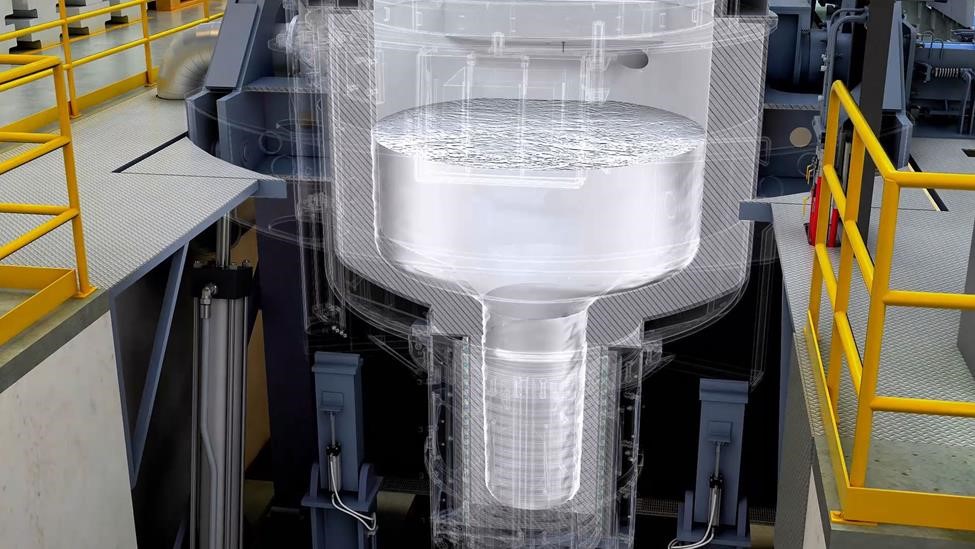
As the Americas and other regions continue to see an increase in aluminium demand, we have developed another product line to meet the needs of a customer: our unique, large-capacity Hybrid™ Furnaces, combining channel uppercases and coreless inductors. These furnaces are ideal for billet/slab casting operations and offer the casting industry our proven coreless induction furnace technology, along with the additional benefits of a channel furnace uppercase to allow for even greater alloy flexibility and equipment lifespan.
AL Circle: What are the trends, growth opportunities, and challenges does Inductotherm foresee in the induction metal melting systems industry in the Americas in the near future?
Michael P. Looby: As we move toward a more environmentally conscious society, the metal casting industry will continue to look for more efficient equipment and solutions, many of which we already have in our arsenal. We expect to see growth opportunities, as induction is the most environmentally friendly and energy-efficient means of melting materials. We also foresee a trend of replacing outdated fuel-fired furnace systems with more eco-friendly induction systems, which is a major factor in our drive to continue innovating and further developing these technologies for the industry in general.
Additionally, as production space is becoming scarcer, and every square foot counts, it is important to note that our induction furnace systems have a much smaller footprint than larger, less efficient fuel-fired furnaces. Also, as safety regulations become more stringent with employee safety, many operations will be looking for ways to provide the required safety interventions and automated equipment that can maintain their bottom line and safety record.
In addition, many companies are looking for ways to offset the impact that they may be experiencing from a lack of skilled workers. Therefore, data collection and real-time monitoring technologies, such as Inductotherm’s MiPlant™ IIoT platform, will inevitably be in higher demand as operational costs can be significantly reduced by integrating our predictive maintenance feature, as well as other benefits of the IIoT technologies we are developing.
AL Circle: Do you have any success stories or customer testimonials that highlight the impact of Inductotherm's solutions in the Americas?
Michael P. Looby: Yes. We have a wide range of customer testimonials that are available to share with those who are interested. Typically, we work directly with our customers to gain an understanding of where they are coming from, their requirements, and what their specific needs are. We then connect them with other operations that are either melting similar materials or using the same equipment. For example, one of our customers in Canada is currently operating 8 air-cooled Acutrak® Systems for their diecasting operation and benefiting from the faster, cleaner, and more efficient melting that they are achieving with our equipment. When another company that could benefit from a similar diecasting setup contact us, we would be able to partner them with the Canadian customer, who can then relate their experience with the ease of installation, the simplicity of the self-contained power supply, compact nature of our furnaces, and provide any valuable tips they have learned along the way. This encourages a sense of community among our customers, which we feel is important, being a family-owned organization ourselves.