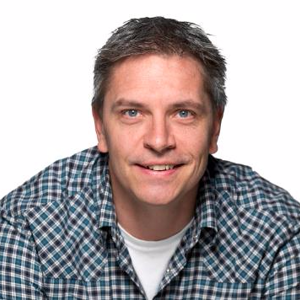
“Environment and sustainability are an important part of our philosophy at Lofoten Arctic Water and we are constantly working to get better and help in the fight against pollution”, Mats Nevelius, Senior VP Sales and Marketing at Lofoten Arctic Water AS - Oslo, Norway
- Category
- Interview
- Date
- Source
- AlCircle.com
Mats Nevelius has a 20 (plus) years’ of working experience as Sales and Marketing professional in multiple companies across the Nordics and European region.
Lofoten Arctic Water is the result of a love for the Lofoten Islands arctic outdoors, clean pure air, water and majestic mountains. Lofoten Arctic Water is a unique product of this landscape; it collects in a natural valley and is constantly renewed by nature, with no need for filtering or distillation.
AlCircle: Could you please brief us about your journey towards offering your customers water in aluminium bottles?
Mr Mats Nevelius: We started the search for the best solution for a smaller sized bottle that must be resealable, light weighted and possible to recycle over and over again. Situated at the ocean we know how important the ocean is for us and that is why we can’t use plastic bottles because want to help to prevent micro-plastic to reach the ocean. We wanted to keep the possibility to reseal the bottle so that you don’t have to drink the whole thing at once and also give the customer the possibility to reuse the bottle not only recycle it. This led us to investigate the possibilities with aluminium and found the best possible solution with Balls Alumi-Tek® bottle. Great size - 473ml, resealable, and 100% recyclable forever and are compatible with the reverse vending machines that every retailer in Norway, our home market, have in store.
AlCircle: Why did Lofoten Arctic Water choose aluminium bottles?
Mr Mats Nevelius: Lofoten Arctic water has a goal of reducing micro-plastics in the sea and the way we want to contribute is to stop using plastic, and instead use materials that can be recycled several times. The bottle gives the consumer the same usability as the plastic bottles but without the plastic. That is why we have chosen to produce our new bottles in aluminium.
AlCirle: Please detail us in a broader way about your state-of-the-art bottling plant?
Mr Mats Nevelius: We have during the last two years invested in our bottling plant so that we have the flexibility to produce not only the glass bottles but also as the first in Europe the Alumi-Tek® bottle. Our partner here is the Italian company Framax and together with them, we have built a fully automated bottling line that has the capacity of 1500 bottles an hour with as little as two people working at the line. We have already planned for possible upgrades.
AlCircle: Can you share the insights about Alumi-Tek® bottles?
Mr Mats Nevelius: When designing our new bottle, we wanted to give the customer an alternative to plastic. The benefits of aluminium cans are so much higher than plastic bottles, but we didn’t want to compromise by either choosing plastic or lose the screw-cap. Therefore, we chose to make an aluminium bottle with a screw cap instead of an aluminium can. Alumi- tek bottles are Ball Corporation's latest innovative product in the packaging arena and met all of our criteria for our new bottles.
The Alumi-Tek bottle is made from infinitely recyclable aluminium. The bottles can be recycled over and over with minimal losses and are compatible with reverse vending machines. They have a wide mouth and a resealable lid and carry 473ml of Lofoten Arctic Still or Sparkling water.
AlCircle: What is the role Lofoten Arctic Water playing towards environment and sustainability?
Mr Mats Nevelius: Environment and sustainability are an important part of our philosophy at Lofoten Arctic Water and we are constantly working to get better and help in the fight against pollution. By not producing our bottles in plastic but instead using aluminium, we have started our mission to prevent more micro-plastic to reach the ocean and give the retailer a great new option to be able to offer the customers the same experience that they have with plastic bottles but now without plastic. We have a close collaboration with Ball Corporation to only produce sustainable products.
AlCircle: Kindly deliver your thoughts about low carbon aluminium?
Mr Mats Nevelius: 75% of the aluminium ever produced is still in use today. Using recycled aluminium saves 95% of the energy used in primary production. That’s why it’s vital that we increase the recycling rate of this valuable resource. In Europe, aluminium cans and bottles are made from an average of 50% recycled metal. According to research by Metal Packaging Europe, Recycling rates are actually rising, with an average of 76% of aluminium cans now recycled across Europe, rising to 95% in Norway and 99% in Germany. Our packaging partner, Ball, is working with organisations like Every Can Counts to raise the awareness and action and recycling rates at public events and with local authorities.
AlCircle: Do you think low carbon aluminium can help the world recover from the current economic disruptions caused by the COVID-19 pandemic?
Mr Mats Nevelius: Aluminium has a useful role to play in achieving a genuinely circular economy where raw materials are reprocessed to make goods of the same value, saving emissions and waste. As more beverages are consumed in the home context or on-the-go, it is not always feasible to use refillables. Aluminium single-serve beverage packaging is easily and commonly collected, sorted and recycled using existing infrastructure. As economies recover and more consumers understand the full environmental implications of their purchasing choices, we expect the growing trend of more and more drinks categories to choose cans for packaging will continue to rise, enabling sustainable economic growth.

