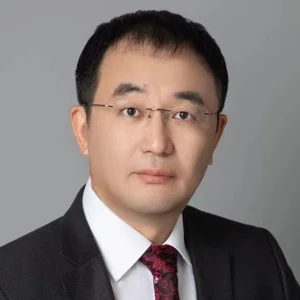
“Asia is the largest and most important region in terms of aluminium supply in the world,” Dr Yanchen Wang, Managing Director, SMM (Shanghai Metals Market) GLOBAL UK Ltd.
- Category
- Interview
- Date
- Source
- AlCircle.com
Dr Yanchen Wang is the Managing Director of the SMM UK office, which was established in May 2021. Currently, he focuses on base metals, battery metals market research, and overseas business development for SMM.
Dr Yanchen Wang has a PhD in Engineering from the Chinese Academy of Sciences and is a well-known analyst in the global commodity industry. His expertise includes the base metals market, the coal and power industry, and the carbon emission market. He has recently extended his research into the battery metals markets. He has visited more than 100 base metals assets around the world. Dr Yanchen Wang has more than 19 years of commodity market research experience. He also often attends technical and market conferences and gives presentations as a keynote speaker, like AABC, Cobalt Congress and LME week.
Before joining SMM, he was the principal analyst at CRU and the head of Chinese aluminium market research. Dr Yanchen Wang had worked at CRU for 15 years.
AL Circle: Can you provide an overview of the current state of aluminium production in Asia?
Dr Yanchen Wang: Asia is the largest and most important region in terms of aluminium supply in the world. SMM expects Asia ex. China, including the Middle East and Central Asia, will contribute a total of 13.3 million tonnes of primary aluminium to the global market in 2024, up by 1.4% y-o-y, accounting for 44.5% of primary aluminium production in the world, ex. China. China is expected to produce more than 43.0 million tonnes of primary aluminium in 2024, up 3.6% y-o-y. The whole of Asia will contribute 77.2% of global aluminium production in 2024.
Most importantly, as China is expected to maintain an aluminium smelting cap policy, the majority of new smelting capacity is expected to be based in Asia for the next few years. Indonesia and India would be major contributors. Although we expect some new aluminium smelting capacity could be built in Africa, this capacity is still very limited compared to Asia. We don’t take any greenfield smelting projects in other regions into our base case for the next five years.
AL Circle: What are the current trends in the aluminium market in Asia, and how are they impacting global dynamics?
Dr Yanchen Wang: The emerging economies in Asia, especially India and Southeast Asia, are becoming the new manufacturing hubs in the world, and they have shown strong primary aluminium demand growth in the last several years. The promising demand forecast in the region has driven more investment across the aluminium value chain. Local governments have also adopted some supporting policies to encourage investors to produce more value-added products rather than export raw materials. SMM expects Asia ex. China will produce over 17.1 million tonnes of primary aluminium in 2030, nearly 4.0 million tonnes higher than the output in 2024, which is the largest growth in the world.
AL Circle: Which Asian countries (ex. China) are leading in aluminium production, and what factors contribute to their dominance?
Dr Yanchen Wang: Indonesia and India are expected to lead the region's aluminium production growth. Both countries have rich bauxite reserves to secure raw materials supply for aluminium industry development. As China is anticipated to maintain the smelting capacity cap policy, at the same time, the Indonesian government issued a bauxite export ban policy. Many Chinese investors see Indonesia as a good investment opportunity. These greenfield projects in Indonesia can fully adopt local bauxite and energy resources to meet the growth of aluminium demand in the Southeast region. Strong demand expectation is also a major driver for aluminium output growth in India.
AL Circle: How has the demand for aluminium shifted recently in key markets like China, India, and Southeast Asia? What are the main drivers behind the changes in aluminium prices in the Asian market?
Dr Yanchen Wang: Although the property market remains weak in China, aluminium demand is anticipated to increase by around 4.0% y-o-y in 2024, thanks to the auto industry, solar panel industry, huge investment in power infrastructure and exports. Aluminium demand in India is expected to remain strong this year, which could achieve double-digit growth again. Southeast Asia also benefits from the construction sector, manufacturing sector, and many overseas relocation projects from China. Aluminium demand is expected to achieve 3.5% in 2024.
Asia aluminium markets still mainly adopt LME and MJP for Asia ex. China and SMM spot aluminium prices in China. As Asia is becoming a major market for Russian aluminium, more supply gives great pressure on aluminium prices in the local market. In the future, as more greenfield smelting capacity come on stream, oversupply could be a key driver for aluminium prices.
AL Circle: How does the aluminium consumption pattern differ across various regions in Asia?
Dr Yanchen Wang: Economies in Asia have different development stages, from developed countries like Japan, South Korea, and Singapore to the poorest countries in the world. Aluminium demand in some developed economies, such as Japan and South Korea, relies on their auto industry. The construction sector in some emerging economies consumes more aluminium than other sectors. China is experiencing this shift now. Asia, as the global manufacturing centre, has a closer integration of the aluminium value chain. Chinese overseas relocation projects, especially solar panel, auto and other manufacturing industries, will make this relationship even closer in the future, which could drive aluminium demand in different economies.
AL Circle: What impact has the rise of new technologies and industries (e.g., electric vehicles, renewable energy) had on aluminium consumption in Asia?
Dr Yanchen Wang: The green transition is the biggest driver of aluminium consumption worldwide. More EVs and renewable energy need more aluminium and a stronger power grid, which would drive aluminium cable demand. Unlike Europe, Asia has not established an integrated power grid across borders. In line with economic integration, we would like to see some power grids cross the borders in some regions in the future, which could allow electricity consumers to easily access some green power and consume more aluminium.
As some Asian countries don’t have enough hydropower capacity, more solar power capacity is a reasonable solution for them to achieve their carbon emission reduction targets, especially for India, Indonesia and the Middle East. SMM is very positive for solar demand in the region for the next few years. Compared to other regions, Asian consumers are more willing to accept EVs. Chinese OEMs have started investing in some Asian projects to produce EVs locally. We expect the localisation of the supply chain of these projects, which will encourage the development of aluminium downstream in the region.
AL Circle: What are the biggest challenges facing the aluminium industry in Asia today? As the Managing Director of SMM Global UK, how would you address those issues?
Dr Yanchen Wang: Green power supply is the biggest issue in the development of the aluminium industry in Asia. As mentioned above, new aluminium smelting projects in Indonesia and India deeply rely on coal-fired power. Not every country like Canada, Norway, or Russia has a huge hydropower capacity. When investors are planning to build a new aluminium smelter in Asia, they need to consider the carbon emission issue, as CBAM from the EU and similar potential policies from other regions could have a great impact on global aluminium trading.
AL Circle: How can stakeholders in the aluminium industry in Asia best navigate the current challenges to capitalize on these opportunities?
Dr Yanchen Wang: Asia has huge bauxite reserves, like Vietnam, India, Indonesia, and Malaysia, and it is very close to Australia for bauxite supply. It is an advantage for stakeholders in the aluminium industry in Asia. Asia also has abundant energy reserves, such as natural gas in the Middle East and coal in Indonesia and India, although we are facing the carbon emission issue. At the same time, Asia has many aluminium industry technology suppliers, equipment suppliers and available capital. Integration and collaboration are the key solutions for aluminium development in Asia. Asian aluminium industry stakeholders shall gain corresponding power in terms of setting up industrial standards.
AL Circle: What impact do environmental regulations and sustainability initiatives have on the aluminium market?
Dr Yanchen Wang: The environmental regulations and sustainability initiatives have a great impact on the global aluminium industry. Asia, as the largest aluminium supply region, is facing serious challenges. Due to the natural resource and economic development requirements, some emerging economies in Asia cannot immediately achieve the same standards as the developed economies, like North America and the EU. It doesn’t mean Asian aluminium players would not like to improve their environmental performance and standards. It is just a reality.
CBAM will take into effect from 2026, which has limited impact on aluminium semis exports from Asia as it only considers direct emission so far. However, the policy could be amended to cover the indirect emission in the future. It would significantly affect aluminium semis exports from Asia to the EU.
As the developed economies pay more attention on the circular economy, North America and the EU could reduce aluminium scrap exports to Asia in the future. Southeast Asia, India and China need find more aluminium scrap from local suppliers or other regions to meet the demand or increase the usage of primary aluminium. It will reshape the global aluminium scrap trading flow.
AL Circle: What is your outlook on the future of aluminium production and consumption in Asia over the next 5-10 years?
Dr Yanchen Wang: By 2030, SMM expects Asia to contribute 61.1 million tonnes of primary aluminium output to the world, of which 44.0 million tonnes will be from China. The aluminium market balance in Asia is anticipated to be oversupplied at that time. The global market needs some metal from Asia to meet the demand, as there is limited new smelting capacity in the other regions.

