“Alumina refineries and aluminium smelters are increasingly realising the need for real-time process information,” Petra Mühlen, Partner and CEO, SpectraFlow Analytics

- Category
- Interview
- Date
- Source
- AlCircle.com
After working for 14 years in the family business Mühlen Sohn, which manufactures technical textiles and is also used in the aluminium smelters in sales and management roles, Petra started with the newly founded SpectraFlow Analytics in 2014. She has a master’s degree in mathematics and economics, which strengthens her quick technical as well as economic understanding. Her initial focus was on sales and technical implementation of the SpectraFlow product range over various industries. In 2020, she took over the CEO role as well.
AL Circle: Please describe how SpectraFlow quantifies Gibbsite or Kaolinite content in bauxite ore. Does this technology ensure enhanced quality of bauxite?
Petra Mühlen: SpectraFlow uses near-infra-red (NIR) technology to perform the real-time chemical analysis of solid bulk material transported on a conveyor belt, such as bauxite. The great thing about the technology is not only that it is completely free of any hazardous materials (e.g. radioactivity), but also that with light being used for the analysis, the NIR interacts with the bonding structure of the material. So the NIR analysis sees the difference in the minerals as each mineral absorbs energy in the NIR range in a different way. Looking at the formula and spectra of pure Gibbsite (Al (OH)3) vs. Kaolinite (Al2Si2O5(OH)4), you can clearly see the differences in the 2 products, although they both contain alumina. SpectraFlow’s online analyser now measures an ever-changing material mix on the belt and therefore sees the accumulated absorbance of energy from all materials – organic (moisture, carbon, oxalates, …) as well as inorganic (minerals).
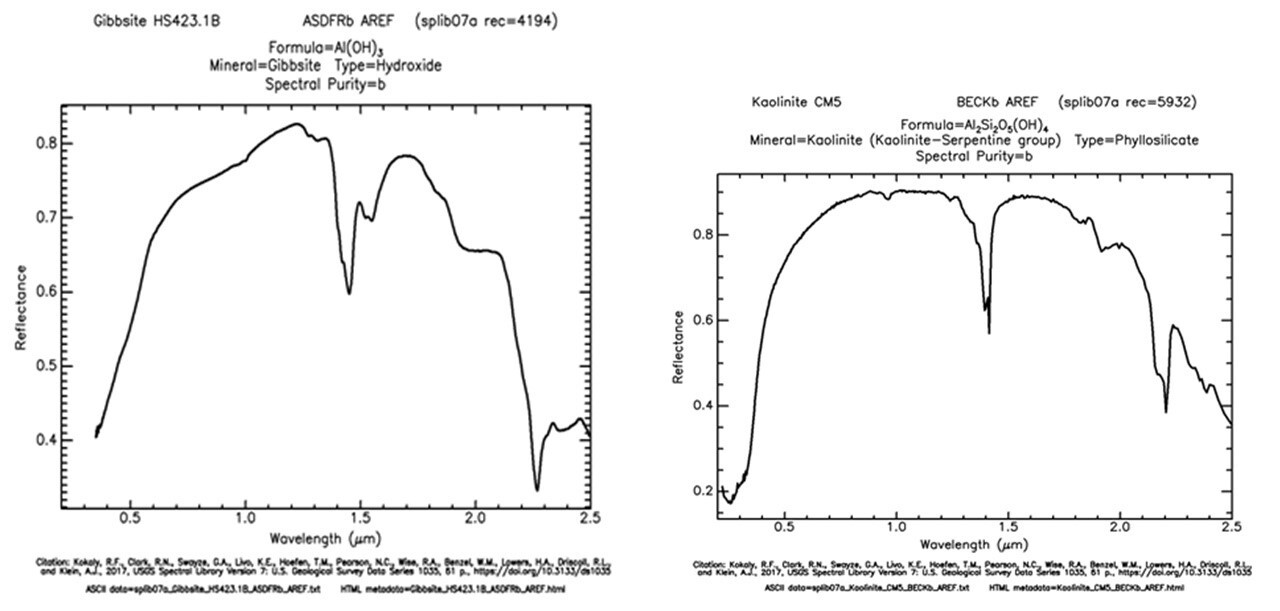
SpectraFlow’s online analyser now measures an ever-changing material mix on the belt and therefore sees the accumulated absorbance of energy from all materials – organic (moisture, carbon, oxalates, …) and inorganic (minerals). So, we see the combined fingerprint of all the bonding structures present.
Regarding your question if this will enhance the quality of the bauxite, the pure analysis does not change anything with the bauxite, but it influences, e.g. how the different ores available (maybe domestic and imported) are mixed to get stable key parameters like available alumina and reactive silica (feedback control loop), or how the process parameters are being adjusted to react to the changes in Gibbsite and Kaolinite, respectively Available alumina and reactive silica (feed-forward control loop).
AL Circle: Can you please explain the approach SpectraFlow adopts in identifying Gibbsite or Kaolinite content in bauxite ore? Is the technology integrated with Industry 4.0 to automate the process?
Petra Mühlen: SpectraFlow uses near-infra-red technology. The energy, and here we look at the NIR wavelength range from 0.5 to 2.5 µm, emitted by specialised halogen light bulbs, is being absorbed in parts by the bonding structures of the material passing underneath the analyser. The remaining energy is reflected, and the detector measures this reflection. One hundred fifty data points are collected for 1 minute and processed to a final absorbance spectra per minute, which is then interpreted by the SpectraFlow calibration. This resulting chemical information, e.g. total and available alumina, total and reactive silica, Fe2O3, CaO, Solium Oxalate, … is then sent to the operator’s DCS so it can be used for real-time process control and decision making: does the material mix need to change? Which feeder needs to be adjusted? Does the dosing of the caustic need to be updated? So yes, the data provided by the real-time analyser goes directly into 4.0 process automation.
AL Circle: How does this technology address common challenges in bauxite mining and processing?
Petra Mühlen: Bauxite mining reserves were “built” by nature over millions of years. The alumina concentrations change within the shortest distances. Today, miners are no longer in a comfortable situation to just pick the best and most stable material but have to use what is there – may the quality be better or lower. As the quality of locally available reserves may decline, other bauxite may be brought from afar or imported.
On the other hand, the Bayer process requires a stability of available alumina in the feed and needs to be able to manage the content of reactive silica at the same time.
So, with a single source, an operator needs to know what he is “up against” and react accordingly with adjustments in the process or a plant using multiple sources (which have clearly different pricing) to get the most economical and stable mix of material for the refinery process.
A process analyser which can provide mineral information vs. just elemental information (e.g. available vs. total alumina and reactive vs. total silica) is required to provide real time process control answers to the challenges above. Elemental analysis or taking samples to the lab will not be sufficient.
AL Circle: How well is the acceptance of this technology in bauxite mining, being it a traditional industry?
Petra Mühlen: Refineries and smelters are increasingly realising the need for real-time process information. Raw materials and energy are becoming more expensive, and with all Industry 4.0 initiatives, real-time sensors need to be deployed.
Yet, I see your point about the acceptance of the technology: Bauxite mining and processing, much like a lot of other minerals processing industries, lack the “playbook” and the examples of the “neighbour” who has already adopted the same solution. Today we rarely find the mindset of early adopters / pioneers in adopting new technologies and more decision makers who want to have proof with exactly their setup.
In the cement industry, though I would also call that a traditional industry, the online analysers are being used for process control decisions since 20 years – so there is not question if this brings a benefit or not – and keep in mind, this is an industry with much smaller and more fragmented plants – so getting an return on investment for them is even hard than in such big bauxite mining operations or a refinery.
AL Circle: Does this technology minimise time and optimise the efficiency of bauxite ore extraction? What is the success rate of this technology?
Petra Mühlen: The technology optimises the blending of the different qualities of bauxite ore, whether it is extracted from one or multiple mines or mixed with domestic and imported ore. Mines do not have the luxury of being selective with the ore they mine – the ore has to go to get to the next bench. Refineries have to use the ore they are provided with. So, the SpectraFlow NIR technology provides the solution to best blend what you have received and, on the other hand, best adapt your process to what you feed it.
On the other hand, if in the mine, the refinery or the smelter, the real time analysis gives you the relevant information instantly, without the extra (service intensive) equipment for sampling manpower and additional laboratory resources required – ha huge time saving factor.
In this respect, yes, time is minimised, and efficiency is optimised, not just in the extraction process but also in the refinery.
AL Circle: Is this technology widely accepted in the Asian bauxite industry? Can you share a case study of an Asian company where this technology has significantly improved operational outcomes?
Petra Mühlen: The SpectraFlow NIR analysers are finding their way more and more into the Asian markets – not just on bauxite applications, but also in the Cement and Iron Ore mining and processing industries. India is adapting the technology, with Tata Steel being at the forefront as they did not just implement the NIR analyser into their process but are forward-thinking to immediately use the data provided in their digital twin. This way they are able to make the necessary process predictions, see the predicted quality results and can make timely adjustments to get the quality parameters on target.
But not just users in India see the benefit; also, China and Australia.
AL Circle: How do you plan to expand your business in the Asian bauxite market? Will you need to adapt or enhance your technology to meet the needs of Asian companies?
Petra Mühlen: We do have strong partners in India, China, and Australia as the main bauxite markets in Asia. I think as a European supplier it is key that users of the equipment have a local contact who can assist with service and speaks their language to give the safety to provide close to 100% availability of the equipment. On the technical side, we continuously look at improvements but do not see specific requirements for the Asian markets. Climate and environmental conditions are well handled by the equipment.

