AL Circle x Elliot Mari: The journey of aluminium towards decarbonisation, 25% of low-carbon target achieved and way to go

In conversation with Elliot Mari, a Technical Lead for material industries at the Industrial Transition Accelerator (ITA), wherein he has shed his insights into the aluminium industry's decarbonisation journey. He has several years of experience working on industry decarbonisation roadmaps with a focus on the cement, steel and aluminium sectors in France. Elliot also worked as a reservoir engineer at Oil & Gas major TotalEnergies in Angola. He holds a Master of Engineering Science from the Ecole Centrale de Nantes in France and a Master of Sustainable Energy from the University of Queensland, Brisbane.
AL Circle: What notable progress has the global aluminium industry made in its decarbonisation journey so far? How does the Industrial Transition Accelerator (ITA) contribute to the decarbonisation efforts of energy-intensive sectors, particularly aluminium?
Elliot Mari: The global aluminium industry has emerged as a decarbonisation frontrunner among energy-intensive sectors. The sector accounts for the highest number of operational clean industrial plants - 39 in total - representing more than half of all operational clean projects, according to our latest Global Project Tracker analysis. These facilities have the collective capacity to produce 18 million tonnes of clean aluminium per year, while eliminating up to 154 million tonnes of carbon emissions.
This figure exceeds the combined reductions from all other industrial sectors we analysed, including steel, cement, chemicals, aviation and maritime, which stand at 146 million tonnes. A significant portion of this progress is due to the sector’s use of legacy assets that are already powered by renewable hydropower. Hydropower’s ability to provide clean, reliable, and large-scale baseload electricity makes the technology especially well-suited to aluminium production, which is highly energy intensive.
The Industrial Transition Accelerator (ITA) plays a key role in fast-tracking decarbonisation in high-emitting industrial sectors, including aluminium, by helping to accelerate projects to Final Investment Decision. We bring together leaders across industry, finance and governments, to unlock investment at scale – providing targeted project support through collaborations with governments, and strengthening the economic conditions for investment. This includes working on critical policy levers to accelerate industrial decarbonisation, supporting the development of international low-emission product standards for industrial goods, and identifying solutions to de-risk projects.
For example, in May 2025, in partnership with the Brazilian Ministry of Development, Industry, Commerce, and Services (MDIC), we selected seven new clean-industry flagship projects for support from the ITA to accelerate decarbonisation in Brazil. This latest round of projects represents a significant investment, exceeding USD 7.5 billion, and has high potential to speed up clean industrial solutions in various parts of Brazil, strengthening the country’s position as a leader in the transition globally.
AL Circle: According to the latest Mission Possible Partnership report, the aluminium sector has achieved 25 per cent of its 2030 low-carbon target, outpacing steel and cement. What factors are driving this momentum, and what key initiatives are being implemented?
Elliot Mari: The aluminium sector’s decarbonisation momentum is largely driven by its mature portfolio of clean production projects. Hydropower has played a central role due to its ability to supply clean, baseload electricity at scale. Renewable powered smelters can contribute to emissions reductions of up to 70–80 per cent compared to traditional production methods, making it one of the most effective technology levers currently available.
However, recent data shows that this momentum may be slowing, and moving beyond existing hydropower-based smelters is a challenge. According to our Global Project Tracker, only five new clean aluminium projects are currently in the sector’s pipeline. In the past six months, just one clean aluminium project has reached final investment decision, suggesting a decline in new investment activity. To stay on track for 2030 targets, the sector needs to see a dramatic scale-up: 121 new clean aluminium plants must come online by the end of the decade to meet demand and deliver necessary emissions reductions.
Additionally, hydropower may not be a suitable solution to decarbonise aluminium production in all markets due to geographical challenges or policy blockers. Remaining potential for increasing global hydropower capacity is limited and may not enable decarbonisation at the scale required to reach clean industrial milestones.
The falling cost of variable renewable electricity sources such as wind and solar presents a huge opportunity for the sector – helping to lower costs and emissions. However, to meet the stable power profile required to produce clean aluminium, collocating these assets with battery storage or connecting to a wider power grid will be essential.
In addition, progress can be made through using the material more efficiently. Recycling scrap metal and reducing waste with more efficient sorting processes is integral to meeting consumer need at a lower emissions intensity than with new aluminium production.
Finally, while not operating at a commercial scale in the sector, innovations like inert anodes and carbon capture and storage could become the foundations of a low carbon aluminium sector.
AL Circle: Despite progress, do you believe the aluminium industry still lags in certain sustainability areas? What further actions would you recommend to bridge these gaps?
Elliot Mari: Despite its early gains, the aluminium sector faces several critical challenges that risk slowing its decarbonisation progress. Aluminium production is highly energy-intensive. As sectors across the world decarbonise in concert, competition for low-carbon electricity sources could pose problems in some markets. In these contexts, greater investment in renewable energy technologies is crucial. The ITA champions the identification and scaling of alternative technology pathways that can enable aluminium decarbonisation where hydropower is not accessible.
Governments also have a key role to play in addressing systemic barriers to progressing new clean industrial plants, such as high electricity costs and fierce competition for renewable power. To bridge the gaps, policy makers can work with industry to create more supportive market and regulatory frameworks to:
- Scale up clean energy infrastructure through public-private collaboration.
- Accelerate project pipelines by streamlining permitting and regulatory processes.
- Incentivise investment in research, development, and deployment of emerging technologies, including inert anodes and direct electrification.
- Strengthen sustainability standards to ensure environmental and community safeguards are met in all new developments.
By taking these steps, the aluminium sector can build on its early leadership and continue to play a vital role in the global transition to a low-carbon industrial economy.
AL Circle: What role is digitalisation playing in accelerating decarbonisation within the aluminium industry?
Elliot Mari: Similar to other heavy industry sectors, digitalisation is expected to improve energy efficiency of aluminium production by optimising automation and process control. In particular, early detection of anode effects can improve cell stability and prevent the formation of harmful fluorinated gases. Additionally, the introduction of variable power load through renewables, like wind and solar, makes it critical for aluminium smelters to improve short-term predictability of electricity supply and to manage the heat balance in the cells. Those are examples where digitalisation tools should play a major role.
AL Circle: In regions with limited access to renewable energy sources like hydro or solar, what viable alternatives can alumina refineries and primary smelters pursue to ensure more sustainable production?
Elliot Mari: Besides hydro, solar and wind as renewable sources, there are three main technological solutions that can be pursued to reduce emissions in the aluminium industry:
- Carbon Capture, Utilisation and Storage (CCUS) is a possibility in locations with potential for underground sequestration or access to CO2 infrastructure. This option can be particularly relevant for legacy captive power plants running on fossil fuels and providing electricity to smelters. The technology is also being investigated to capture process CO2 emissions originating from the anode consumption and can theoretically apply to alumina refining as well.
- Nuclear energy can provide large volumes of stable, low-carbon power output, ideal for aluminium smelters. In 1991 for example, the Aluminium Dunkerque smelter in the north of France was strategically implemented next to the Gravelines nuclear plant for its electricity supply. More recently, UAE aluminium company EGA announced the production of its first low-carbon primary aluminium MinimAL using electricity from the Barakah nuclear plant. Although still a long way from commercial readiness, Small Modular Reactors (SMRs) have the potential to become a reliable source of low-carbon electricity for aluminium smelters.
- Bioenergy is already substituting conventional fossil fuels in industry, especially for heating purposes. For instance, CBA (Companhia Brasileira de Alumínio) commissioned a new biomass boiler at its alumina refinery in Brazil in 2020 and Vedanta Aluminium started using biomass briquettes in its fuel mix at its Lanjigarh alumina refinery in India. In addition, Norsk Hydro is planning to replace 70 per cent of its natural gas consumption with biomethane at one of its aluminium smelters in Norway. However, bioenergy can only be a climate solution for geographies with access to sustainably sourced biomass.
AL Circle: How is the progress in adopting low-carbon technologies like green hydrogen, inert anodes, or CCUS (carbon capture, utilisation, and storage) in the aluminium industry?
Elliot Mari: The aluminium industry has made progress in adopting low-carbon technologies, with renewable energy sources still being the most widely used method to meet decarbonisation targets. However, more approaches such as inert anodes, Mechanical Vapour Recompression, and flexible power systems are beginning to gain traction, particularly at the pilot stage.
Around 15 per cent of greenhouse gas emissions in the aluminium sector arise from the smelting process, where aluminium ore is converted into alumina through energy-intensive electrolysis. One method to reduce emissions is the replacement of carbon anodes with inert anodes. This substitution could drastically cut carbon dioxide emissions by releasing oxygen instead of CO2 during electrolysis. An added benefit is the reduction in sulphur dioxide (SO2) emissions, which would help mitigate local air pollution.
Currently, three major players are at the forefront of developing commercial-scale inert anode technology. Elysis, a joint venture between Rio Tinto and Alcoa based in Québec, is one of the leading initiatives. Arctus Aluminium, in partnership with Trimet in Germany, and Russia's Rusal are also actively pursuing this technology.
Another noteworthy innovation is EnPot, which has been developed in New Zealand and tested at commercial scale at Trimet’s Essen smelter in Germany. EnPot enables aluminium smelters to vary their power consumption without disrupting the thermal balance of the electrolysis cells. Functioning as a “virtual battery,” the system supports the integration of intermittent renewable energy into the power grid by providing greater operational flexibility. EnPot has reportedly progressed beyond testing and is now being deployed commercially.
Despite still being a promising technology, the development of Mechanical Vapour Recompression (MVR) for alumina refining has experienced setbacks. Alcoa, the main company working on the development of the technology, officially abandoned its project to build a demonstrator in 2024 at Wagerup refinery in Australia. The company cited major cost overruns that eventually made the project financially unviable.
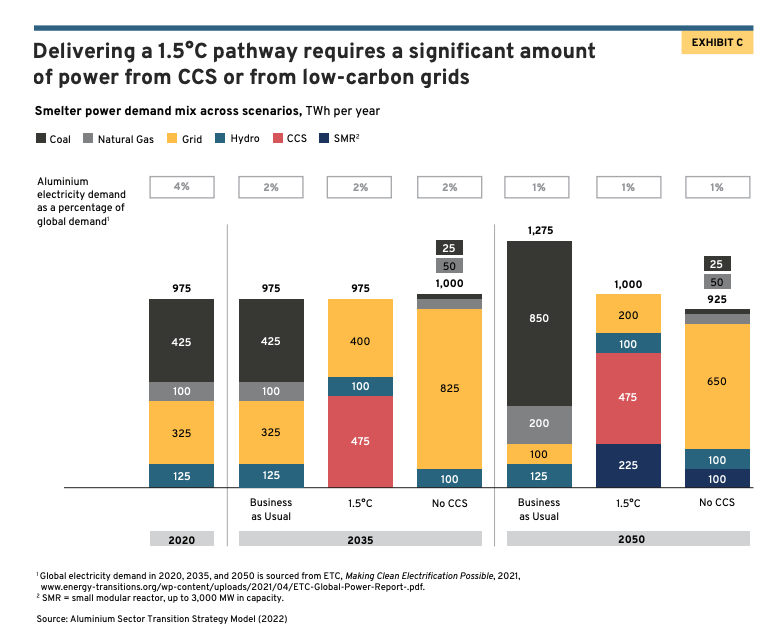
Depending on global grid decarbonisation progress, carbon capture and storage could also play a key role in a future, clean aluminium sector. Enabling this technology to make an impact hinges on the availability of captured CO₂ transport and storage infrastructure. CCS could be preferable in locations without access to a grid or where emissions are intensive and without a clear roadmap to decarbonisation. Companies such as the C4Capture consortium are also investigating the capture of process CO2 originating from anode consumption. The CO2 concentration in the electrolysis cells is very low, typically less than 1 per cent, making it very challenging to capture.
AL Circle: What kind of policy support or regulatory frameworks do you think are needed to enable the aluminium industry to achieve its net-zero commitments?
Elliot Mari: To help the aluminium industry meet its decarbonisation targets, intervention to support policy and regulatory frameworks that can enable growth is key, alongside public/private sector collaboration on specific technologies.
For example, in the US, the Century Aluminium Green Aluminium project is slated to receive USD 500mn in US government funding for a primary aluminium smelter which could produce 0.6Mtpa of green aluminium.
Because it represents 30-50 per cent of production costs and about 2/3 of the emissions, electricity is undoubtedly the centrepiece of aluminium’s competitiveness and sustainability. To cut these emissions, public policies must support access to affordable clean electricity for the industry. Ensuring appropriate design of the electricity market and enabling rapid penetration of renewable capacities through accelerated planning and permitting processes are two examples.
The ITA Green Demand Policy Playbook outlines how demand policy options such as mandates for low-carbon content and the introduction of a Carbon Border Adjustment Mechanism in the EU can help drive demand for lower-carbon aluminium. Measures like these could encourage manufacturers exporting to Europe to invest in the clean production of the material. More generally, projecting robust demand signals is necessary to give confidence in the long-term viability of an investment.
With 95 per cent less carbon content than primary production, recycling is perhaps one of the areas with the most room for public intervention. Governments can play a central role in improving scrap collection rates by introducing specific schemes by end-use sectors such as automotive, construction or packaging. While the global average recycling rate of post-consumer scrap is around 70%, there are wide discrepancies between regions and sectors, mainly caused by differences in public policies. For example, the average recycling rate of aluminium beverage cans in Europe ranges from 50% or lower (for countries like France, Ireland, Hungary or Czech Republic) to more than 95% for countries like Germany and Finland. Germany’s spectacular recycling rates are largely due to its deposit return scheme, which favours product-to-product loops (i.e. turning an old beverage can into a new beverage can) and prevents downcycling. Governments can also decide to intervene by supporting new scrap treatment technologies.
AL Circle: What key suggestions would you like to give to the aluminium industry for its sustainability drive from your experience in industrial decarbonisation?
Elliot Mari:There are multiple opportunities for the aluminium industry, from continued innovation in scrap sorting and treatment, to new aluminium alloys, breakthrough production processes, energy efficiency, and operational flexibility. Investment in these areas is key to enabling the transition to low-carbon aluminium, while also enhancing the industry’s competitiveness through cost reductions and improved product quality.
Recycling is a powerful lever for decarbonisation. It already accounts for 35 per cent of global aluminium production and is projected to grow to around 50 per cent by 2050. Secondary aluminium production generates only about 5 per cent of the greenhouse gas emissions associated with primary production and relies on scrap as its feedstock rather than geographically concentrated raw materials like bauxite or alumina. Enhancing scrap collection and treatment is an environmentally responsible approach and a strategy to secure a more resilient and localised aluminium supply.
Improving aluminium recycling would also reduce dependence on imported feedstocks, helping to mitigate supply chain risks. This move not only strengthens economic security and resilience but also contributes to a 95 per cent reduction in emissions compared to primary aluminium production.

