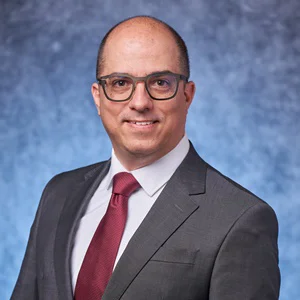
“In terms of specific sectors, we see the potential for continued growth in transportation and recovery in the packaging and in the building and construction sectors,” Renato Bacchi, Executive Vice President and Chief Commercial Officer, Alcoa Corp.
- Category
- Interview
- Date
- 07 November 2023
- Source
- AlCircle.com
Renato Bacchi is the Executive VP and CCO of Alcoa Corp, overseeing sales, marketing, supply chain, and more. He previously held roles in strategy, finance, and treasury at Alcoa. Renato joined Alcoa in 1997, working on energy projects and material procurement in Brazil. He holds an MBA and CFA designation and completed the Advanced Management Program at Harvard University. Renato also serves on the board of directors for The Tull Family Theatre, a nonprofit in Pittsburgh.
AL Circle: Alcoa has a strong commitment to sustainability. What are the key sustainability initiatives that Alcoa has undertaken to reduce its environmental footprint in the Americas?
Renato Bacchi: At Alcoa, we are reinventing the aluminium industry for a sustainable future. We believe the market for sustainable solutions is strong and will only continue to grow. Our vision keeps us focused on providing the solutions our customers – and our planet – need.
We know that meeting the moment for a sustainable future does not just mean providing low-carbon solutions for our customers. It also means decarbonizing our operations, and we're determined to show, not tell, the world what a sustainable aluminium company looks like.
Alcoa has an ambition to achieve net-zero greenhouse gas (GHG) emissions across all our global operations by 2050. We're proud of our progress toward net zero – today, 86 per cent of our smelting portfolio runs on renewable energy. We're proud that our net zero ambition does not stand alone. It is supported by a robust technology roadmap of research and development projects that will drive value for our business and society.
AL Circle: How does Alcoa ensure responsible sourcing of materials and maintain sustainable practices throughout its aluminium production process in the Americas?
Renato Bacchi: We use various third-party certifications, as they can ensure that suppliers and our downstream partner companies are working toward sustainability goals – ultimately delivering on their commitments. Our responsible sourcing program is integrated into how we identify, select, contract, and manage the goods and services that we procure.
We are proud members of the Aluminium Stewardship Initiative (ASI), the industry’s most comprehensive system for third-party certification of sustainable manufacturing practices.
Alcoa has earned both ASI’s Performance Standard and Chain of Custody certifications, earning us the right to market and sell ASI-certified bauxite, alumina, and aluminium. We also have a partnership with EcoVadis, and we have been recognized as an EcoVadis Platinum supplier, the highest ranking possible from a supplier. This provider of business sustainability rankings has put Alcoa in the top 1% of companies across more than 200 industries globally, and we were the first metals and mining company to have subscribed to EcoVadis for our corporate supplier sustainability program.
AL Circle: Innovation is crucial in the aluminium industry. Could you provide examples of how Alcoa is incorporating state-of-the-art technology to enhance the quality and efficiency of its aluminium production in the Americas?
Renato Bacchi: We inherited more than a century of technologies and techniques, tracing our company’s lineage to the very discovery of the aluminium smelting process in 1883. Today, we are working to reinvent the industry we created, developing new processes to make mining bauxite, refining alumina, and smelting aluminium more efficient and sustainable.
Our innovation strategy is driven by our technology roadmap, which drives value for our business and society as it fuels our net zero ambitions. In the Americas, specifically, we first developed a breakthrough smelting process that eliminates all direct greenhouse gas emissions, replacing those with pure oxygen. The technology became the basis for our ELYSIS™ partnership with Rio Tinto and the government of Quebec in Canada.
ELYSIS is the technology company that is working to ramp up this technology to a commercial scale. Research and development quantities of metal produced with the ELYSIS’s processes are already in the market. Alcoa has supplied aluminium to RONAL GROUP for the manufacture of the Audi e-tron GT’s high-performance alloy wheels, produced with a combination of metal from the ELYSIS zero-carbon emissions smelting technology and EcoLum™, Alcoa’s low-carbon aluminium brand. What’s more, technology leader Apple has used zero-carbon aluminium produced by ELYSIA in their iPhone SE and MacBook Pro 16 inch.
AL Circle: As a major player in the Americas, how does Alcoa contribute to the growth and development of the aluminium industry in this region? How has Alcoa positioned itself to meet the evolving demands and challenges of the aluminium industry in the Americas?
Renato Bacchi: Today, Alcoans are working to build on our history of innovation. Our processes are focused on optimizing operational performance and continuous improvement to create more efficient, more effective, and more sustainable solutions. This relentless focus has allowed us to deliver value during evolving market conditions and reflects our belief in the critical role aluminium will play in a low-carbon future.
In the United States specifically, we recognize that the country has the opportunity to be a leader in low-carbon aluminium production. We appreciate government efforts to develop solutions to improve infrastructure. Meeting the demand for aluminium in the United States also includes finding new ways to use aluminium scrap, which is often exported. New technologies like our ASTRAEA scrap purification process could convert low-quality, non-ferrous scrap into high-purity aluminium, keeping the material in the country to supply to the domestic industry.
Maintaining a steady supply of aluminium is also critical to promising domestic industries like solar panels, on-shore and off-shore wind, and electric vehicles – and bolstering the competitiveness of the American companies that build these products. In fact, we recently won an award for our C611 EZCast alloy for megacasting in the automotive industry, where we see a place for low-carbon aluminium to fulfil the expected demand.
AL Circle: How have market trends, including shifts in demand or pricing, influenced Alcoa's production strategies? Are there any specific products or market niches where your company sees growth opportunities?
Renato Bacchi: We continue to believe the market fundamentals for aluminium are strong. We are focusing on productivity across our system to continue improving stability. In fact, each of the three smelters in Quebec – Deschambault, Baie Comeau, and ABI in Bécancour – have set year-to-date production records through the third quarter of 2023 for tonnes per day.
We are also encouraged by the reception from customers for our Sustana™ line of low-carbon products, which includes EcoLum™ metal and EcoSource™ alumina, showing continued demand for low-carbon solutions. In the third quarter of 2023, as noted in our recent earnings call, we made our first sale of the non-metallurgical variety of EcoSource™. Alcoa is one of the world’s largest producers of non-metallurgical alumina, which is used in everything from refractories, sandpaper, and water treatment processes across the world.
In terms of specific sectors, we see the potential for continued growth in transportation and recovery in the packaging and in the building and construction sectors.
Within transportation, we anticipate year-on-year growth in tons for aluminium as automotive production continues to ramp up to pre-COVID-19 levels, driven by trends like increased EV adoption.
In packaging, downstream inventory levels have largely normalized, and we expect to see demand increasing. In building and construction, high interest rates have negatively affected that sector in the last year, particularly in North America and Europe. A relative recovery in building and construction is expected next year compared to 2023.
AL Circle: How is Alcoa adapting to changes in the global aluminium market, including trade dynamics and supply chain resilience?
Renato Bacchi: Despite a range of geopolitical and macroeconomic factors, we remain focused on where we are going from a strategic perspective. We are bullish that aluminium is the material of choice for a sustainable future. In fact, megatrends continue to drive increased aluminium usage globally, from further electric vehicle penetration to the substantial future demand for solar installations.
We are well – and uniquely – positioned in the aluminium industry for a world focused on carbon emissions and other sustainability issues, which we are addressing from three vectors in our technology roadmap:
- Primary metal production, with our joint venture ELYSIS
- Post-consumer scrap usage with our ASTRAEA technology
- Carbon and residue emissions with our Refinery of the Future initiative
As it relates to macro external pressures, in March 2022, we made the proactive decision to cease buying raw materials from, or selling our products to, Russian businesses. We continue to support sanctions on Russian-origin metal. We also provided a formal response to a London Metals Exchange (LME) discussion paper, urging the exchange to act immediately and delist Russian metal, regardless of production date. Such an action would protect the short- and long-term stability of the global aluminium market from the risks of surplus metal from Russia, which launched an unprovoked war against Ukraine and caused an energy crisis that is acute in Europe.
AL Circle: What are some of the social responsibility projects Alcoa is involved in to make a positive impact on the lives of people in the Americas?
Renato Bacchi: Alcoa has an affiliated non-profit, the Alcoa Foundation, that helps to protect and preserve the environment. Its legacy continues to grow, with more than 70 non-profit partners receiving more than $20 million in environmental grants since 2017, when the legacy foundation separated into two standalone foundations.
Approximately half of the foundation’s annual giving is directed to projects that provide environmental and social benefits through biodiversity conservation and climate change mitigation and adaptation. The remaining funds are earmarked for promoting equitable access to education and skills-building opportunities.
One such example of an Alcoa Foundation’s support of Nature Conservancy, including in North America. Through our donation, The Nature Conservancy (TNC) has worked to conserve North American songbirds through TNC’s Forestry for the Birds initiative.
It is estimated that around 3 billion songbirds have been lost throughout North America over the past several decades, primarily due to habitat loss.
Completed in 2022, the project targeted landowners and foresters in the state of Indiana (97% of the state’s forest is privately owned). It focused on the proper management of nearly 5 million acres of forests to create beneficial habitats for 12 of the state’s songbirds.
AL Circle: Where do you see America's primary aluminium production industry heading in the next 5-10 years and Alcoa's?
Renato Bacchi: We are optimistic about our business, as the structural factors in the aluminium market remain positive. The world needs aluminium, which is vital for the ongoing transition to building electric vehicles and renewable energy infrastructure. The world will need to transition to a low-carbon future. In fact, the International Aluminium Institute forecasts global demand for aluminium will increase up to 80% by 2050 from a baseline of 2018.
In North America specifically, we are seeing ambitious carbon reduction goals set both at the federal level – including the Biden Administration’s 2030 GHG reduction target – and the state level – such as California’s target to achieve carbon neutrality by 2045. These goals and an increased focus on ESG investing principles mean that companies across the region will be focused on reducing their carbon footprint. Alcoa is well positioned for this environment.
