








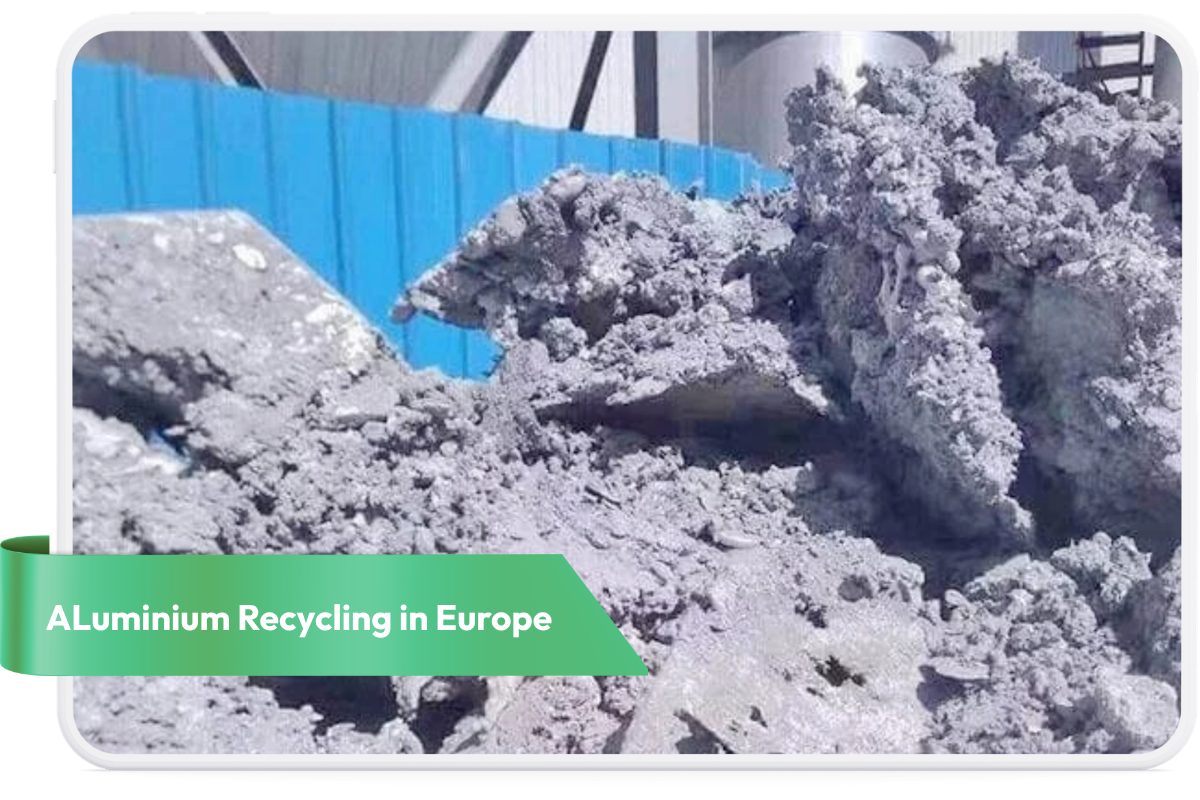
As the global landscape of aluminium recycling continues to grow, managing aluminium dross has evolved into something much more than just a routine task. Once seen mainly as a waste by-product, aluminium dross is now increasingly viewed as a valuable asset that can aid in metal recovery, save costs and support circular economy goals. However, companies approach dross management in various ways, each method bringing its own set of benefits, challenges and long-term effects.
In this blog, we’ll dive into the main aluminium dross management strategies used in the industry, from on-site recycling and third-party processing to integrated recovery systems and landfill and stockpiling. We’ll further explore how these approaches are influencing the future of sustainable aluminium dross utilisation as explained in AL Circle’s specialised report, “ALuminium Dross Processing: Generation, Recovery & Strategic Roadmap”.
On-site recycling at smelters
On-site recycling at smelters is all about reclaiming metallic aluminium right at the production facility, possible because of the specialised dross processing systems. In this system, the white dross that comes from smelting or casting is treated using various technologies, including tilting rotary furnaces, hot dross presses, mechanical skimming systems and rotary recovery units. The aluminium that gets recovered is fed back into the production cycle, while the leftover oxide-rich residue is either sent off to external recyclers for more processing or disposed of safely under controlled conditions.
Some of the advantages of this model are:
- Reduced transportation costs & enables immediate recovery of valuable aluminium before oxidation
- Improves metal recovery rates through the processing of hot dross directly after skimming
- Lowers energy consumption by eliminating the need for cooling and re-melting operations
- Minimises landfill disposal by recovering more material on-site
- Helps reduce hazardous emissions associated with dross handling and disposal
- Supports compliance with increasingly stringent environmental regulations
- Contributes to more sustainable and resource-efficient aluminium production
While on-site dross recovery has its perks, it does come with a hefty price tag for processing infrastructure and emission control systems. Facilities also need to handle the gases produced during dross treatment to stay in line with environmental regulations. Still, many large smelters are embracing this approach because it enhances metal recovery and aligns with their long-term sustainability goals.
Third-party dross processors
A large portion of aluminium dross is managed by specialised recycling companies that have dedicated facilities for recovery. These recyclers gather dross from aluminium smelters, foundries, die-casting operations and scrap dealers, processing it with various technologies like rotary salt furnaces, salt-free induction furnaces, plasma systems and mechanical separation tools. The metal that gets recovered is usually sold as secondary aluminium ingots, while by-products such as alumina-rich residues, salts and soda ash are utilised in industries like cement, refractory, and chemicals.
Some of the advantages of this model are:
- Achieves higher aluminium recovery rates by using specialised dross processing technologies
- Utilises large-scale facilities designed specifically for efficient dross treatment
- Provides access to advanced environmental management systems
- Ensures safer handling of hazardous compounds, salt slag and gaseous emissions
- Supports circular economy initiatives by maximising resource recovery
- Allows smelters and recyclers to outsource dross processing without investing in dedicated recovery infrastructure
While using third-party processing can lead to impressive recovery rates and specialised know-how, it does come with extra costs for transportation and logistics since the dross needs to be transported from production sites to outside facilities. Nonetheless, this approach is gaining popularity around the world, with top recyclers increasingly pouring resources into salt-free technologies, better metal recovery rates and innovative solutions for utilising residues in a circular economy.
Integrated smelter recovery systems
Currently, there are many aluminium producers who have embraced fully integrated recovery systems, bringing aluminium smelting, dross processing, salt recovery and residue utilisation in a closed-loop production model. These innovative systems leverage cutting-edge technologies like continuous rotary furnaces, automated hot dross processing units and salt recovery loops to optimise resource recovery throughout the entire production cycle. The aluminium that gets recovered is fed back into the process, while leftover materials are frequently repurposed in various industries, including cement, refractories, mineral wool and ceramics.
Some of the advantages of this model are:
- Recovers and reuses salt fluxes, lowering operating costs
- Minimises waste generation through closed-loop processing
- Reduces environmental impact by promoting resource reuse
- Supports the utilisation of residual materials in other industrial applications
- Delivers lower long-term operating costs per tonne of processed dross
- Reduces reliance on external dross recyclers
While this processing model brings good recovery rates, it also adds extra costs for transportation and logistics. This is mainly because dross needs to be transported from production sites to outside facilities. Irrespective of this, the approach is gaining popularity around the world, with top recyclers increasingly pouring resources into salt-free technologies, better metal recovery rates and innovative solutions for utilising residues in a circular economy.
Landfill and stockpiling
Managing aluminium dross, especially black dross and salt slag with lower metallic aluminium content, used to rely heavily on landfilling and stockpiling. In many areas, the common practice was to simply cool the dross and toss it into industrial landfills with little to no treatment, which made it a popular choice because of its low disposal costs. However, as awareness of the environmental dangers linked to untreated dross has grown, the industry’s approach has started to shift.
Some of the advantages of this model are:
- Relatively low disposal costs compared to advanced recovery technologies
- Minimal infrastructure and processing requirements
- Simple and straightforward method for handling low-value residues
- Historically accessible in regions with available industrial landfill capacity
Unlike the other three methods, this method does pose certain limitations. This is because historically, landfill and stockpiling used to be the go-to methods for dealing with aluminium dross, especially when it comes to black dross and salt slag residues that contain less metallic aluminium. This approach was popular mainly because it was cost-effective and required little processing; dross would often just be cooled down and dumped in industrial landfills without much treatment.
However, as awareness of the environmental issues linked to untreated dross has grown, this practice is facing more scrutiny. The reactive compounds in the material can produce gases when they come into contact with moisture and some contaminants can seep into the soil and groundwater, leading to long-term environmental problems.
Due to this, many regions now mandate that dross residues undergo stabilisation treatments before they can be disposed of. With regulations tightening and the industry shifting its focus towards resource recovery and sustainability, we’re seeing landfill disposal being gradually replaced by more eco-friendly recycling and recovery options.
Aluminium dross management: How China, Europe & the US are doing it
The way we manage aluminium dross is evolving, and you can see it happening in key aluminium-producing areas around the world. Here are some regional examples:
In China, major state-owned companies are increasingly turning to in-house recovery systems because of the government policies, which promote high recycling rates for dross and discourage sending it to landfills. The rise of salt-free recovery technologies also shows the country’s commitment to cutting down emissions linked to traditional dross processing methods.
Over in Europe, regulations aimed at fostering a circular economy are driving collaborations between aluminium manufacturers and experienced dross recyclers. Companies are pouring resources into technologies that not only reclaim aluminium but also generate value from by-products like alumina-rich materials and recovered salts, which boosts resource efficiency throughout the entire value chain.
Meanwhile, in the United States, closed-loop recovery systems are on the rise as producers aim to maximise metal recovery while transforming non-metallic waste into valuable industrial products. Stricter environmental regulations are also pushing investments in advanced emission-control and off-gas treatment technologies, underscoring the industry’s increasing commitment to sustainable dross management.
Conclusion
As the push for aluminium recycling and sustainability picks up speed, managing dross effectively is becoming a key player in the industry’s journey towards a circular economy. Whether it’s through on-site recovery, tailored recycling methods, integrated systems or innovative disposal practices, the emphasis is increasingly on maximising resource recovery, reducing waste and finding greater value in what was once seen as just a by-product. To further get the complete 360-degree picture of dross management models in detail, refer to AL Circle’s specialised report, “ALuminium Dross Processing: Generation, Recovery & Strategic Roadmap”.

 Voyagerman Technology


