





Introduction
While the world continues to watch tensions in the Middle East as just another energy crisis, the aluminium industry is already experiencing the consequences, directly, immediately, and in many cases, quietly. The potential closure, or even prolonged disruption, of the Strait of Hormuz is not simply a geopolitical headline; it is a structural stress test for one of the most energy-dependent industrial systems in the world.
Aluminium, more than almost any other industrial material, is energy transformed into matter. That idea is often repeated, but rarely fully internalised in decision-making. When energy becomes unstable, when gas and oil prices react to geopolitical pressure, when maritime logistics are disrupted, aluminium doesn’t just become more expensive, it becomes uncertain. And uncertainty, in an industry built on tight margins and continuous operations, is far more dangerous than any short-term price increase.
The Strait of Hormuz is not just a geographic chokepoint; it is a regulator of global energy dynamics. When that balance is disrupted, the effects do not remain local. They propagate across markets, influence production decisions and reshape the competitive landscape of entire industries. Aluminium is one of the first to reflect this shift, because its cost structure is fundamentally tied to energy.
When energy instability reshapes global competitiveness
In this context, the issue is not limited to temporary supply disruptions or isolated production cuts. The deeper problem is structural: the system becomes less flexible, more constrained and more expensive to operate. Producers that rely heavily on energy-intensive processes begin to lose margin; planning becomes more complex and decision-making shifts from strategic to reactive. When this happens across multiple regions simultaneously, the global aluminium market enters a state of persistent tension.
US aluminium dependency moves from manageable to vulnerable
For the US, this situation exposes a reality that has been developing for years but is now becoming impossible to ignore. The country is not self-sufficient in primary aluminium production. It relies, to varying degrees, on international supply flows to meet demand. In stable conditions, this dependency can be managed. In a scenario defined by energy volatility and geopolitical disruption, it becomes a structural vulnerability. The issue is no longer just cost, it is availability, reliability and timing.
Image used for representational purpose
The intuitive response to this type of disruption is to push for increased domestic primary production. On the surface, it makes sense. But a closer look reveals important limitations. Primary aluminium production depends on access to large amounts of stable, low-cost energy, along with significant capital investment and long-term planning horizons. In an environment where energy prices are volatile, regulatory pressure is increasing and global uncertainty is persistent, relying solely on primary production does not necessarily solve the problem. In many cases, it simply relocates the risk.
This is where a deeper shift begins to take shape, one that is less visible but far more consequential: The gradual transition from a primary-driven model to one centred on recycling. Not as a sustainability narrative, but as an industrial strategy. Secondary aluminium fundamentally changes the equation. It requires significantly less energy, offers greater operational flexibility and reduces exposure to global shocks.
In a world where energy is the primary risk factor, recycling is no longer an environmental choice; it is a strategic one.
However, this transition is not as simple as increasing scrap utilisation. Many companies underestimate the complexity involved. The real challenge lies in how recycling is executed. Scrap quality, classification, contamination removal, process integration and metallurgical control all determine whether recycling becomes a competitive advantage or a source of instability.
In high-demand applications, especially those requiring tight metallurgical specifications, the margin for error is minimal. This is particularly relevant in campaigns where advanced process control is required, including those involving low-frequency electromagnetic stirring (LFE). In these scenarios, variability in scrap composition or process instability can directly impact product quality. Access to scrap alone is not enough; control over that scrap is what ultimately defines performance.
Redefining value: from production volume to operational control
What we are witnessing today, accelerated by geopolitical pressure and energy uncertainty, is a redefinition of priorities within the aluminium industry. Companies that once viewed recycling as a supplementary activity are beginning to recognise it as a core strategic pillar. Not only as a way to reduce costs, but as a way to reduce exposure to energy markets, to global supply chains and to volatility itself.
This shift is not driven solely by technology. It requires a rethinking of the operating model. It demands control over raw material sourcing, integration of processes that have traditionally been disconnected, optimisation of melting systems to maximise energy efficiency and, perhaps most importantly, a change in mindset. One that understands that value is no longer defined by how much you produce, but by how well you control the process.
Rethinking the role of primary aluminium in a high-risk energy environment
At the same time, this evolving landscape raises important questions about the future of primary aluminium investment in the US. This is not about eliminating primary production, but about redefining its role. In a high-risk energy environment, primary aluminium loses part of its relative attractiveness compared to more flexible, less energy-intensive solutions. It will continue to exist, but its growth will be increasingly constrained by factors beyond demand alone.
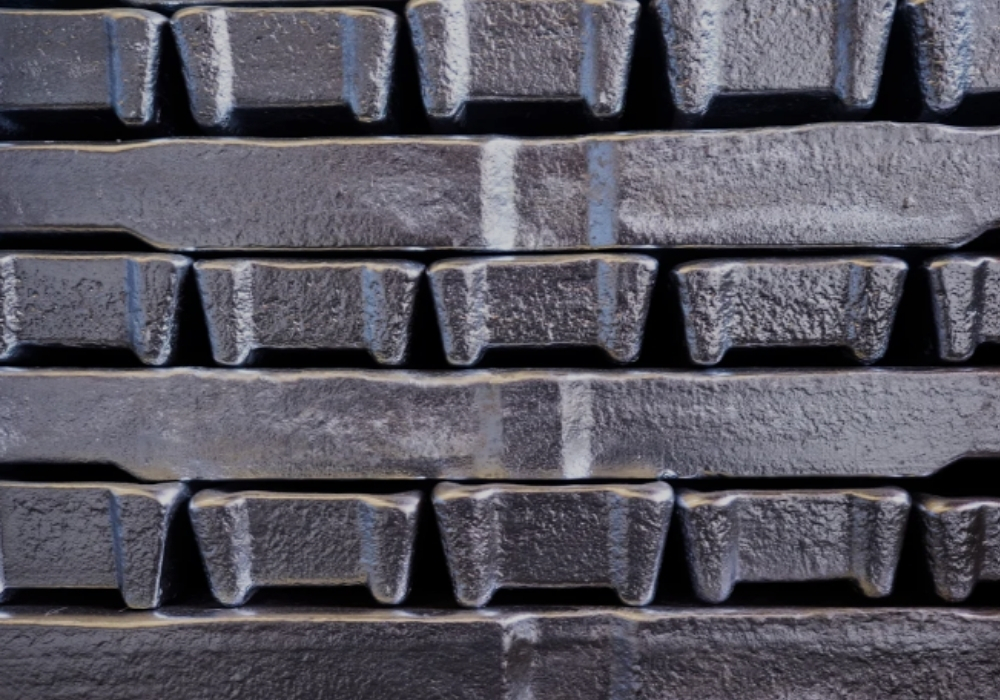
Image used for representational purpose
Historically, the aluminium industry has proven to be resilient. It has navigated cycles of expansion, energy crises, regulatory shifts and technological change. But the current moment is different. Multiple critical variables are shifting simultaneously, including energy, geopolitics, sustainability and technology. When these forces converge, the result is not gradual evolution, but structural transformation.
The Strait of Hormuz, in this context, is not just a risk; it is a signal. A signal that the stability many industrial decisions have relied on can no longer be taken for granted. And that operating models built for a predictable world may not be sufficient in an unpredictable one.
The future belongs to adaptable, controlled and resilient operations
The opportunity for the US aluminium industry does not lie in replicating past models, but in anticipating what comes next. In building operations that are more efficient, more integrated and less dependent on external variables that cannot be controlled. In recognising that competitiveness is no longer defined solely by cost, but by adaptability.
Because in the environment that is emerging, the winners will not be those who can access the cheapest metal at any given moment. They will be those who can produce consistently, efficiently, and with control, regardless of what is happening outside.
And that changes everything.
Also read: Beyond oil: How Middle East tensions could reshape US aluminium recycling

 Voyagerman Technology


